Our Short List of 3
All 3 Picks at a Glance
| Product | Specs | Action |
|---|---|---|
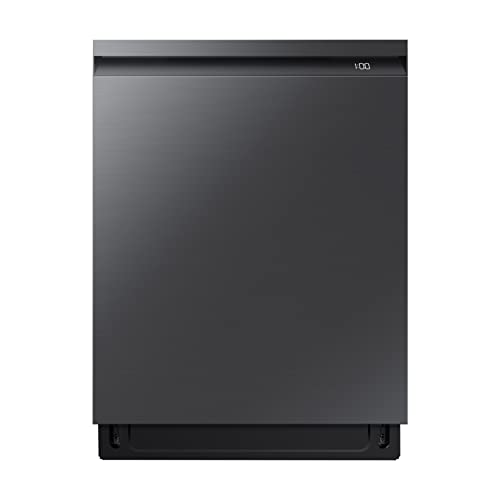 Samsung DW80B6060UG/AA — wash power and heat | Check price on Amazon | |
 LG LDFN4542S — sensor cleaning with full rinse-aid support | Check price on Amazon | |
 Kenmore 22-14675 — efficient certified figures with soil sensing | Check price on Amazon |
Key takeaways
- Compare the best cleaning dishwashers for hard water, with built-in softeners, sanitize cycles and rinse-aid systems that fight limescale, film and spots.
Hard water changes what “clean” means inside a dishwasher. The calcium and magnesium in mineral-heavy water react with detergent, leave white film and spots on glassware, and build limescale on the heating element, spray arms and tub walls over time. A machine that washes well in soft water can slowly lose cleaning power in a hard-water home, because scale narrows spray-arm jets, coats the soil sensor and dulls every load a little more. This guide is for households on hard municipal or well water who want a dishwasher that attacks both halves of the problem: strong wash systems for dried-on food, and hard-water defences — a built-in softener, effective rinse-aid delivery, high-temperature and sanitize options, and stainless surfaces that resist scale staining.
The picks below are based on manufacturer specifications and Amazon listing details for each exact model. Only one dishwasher sold on Amazon US in this group has a true built-in water softener, so the guide is honest about the split: one softener-equipped pick that treats the water itself, and three picks that pair powerful cleaning systems with the rinse-aid, heat and filtration support hard-water homes rely on when a softener is not in the machine.
Disclosure: As an Amazon Associate, we earn from qualifying purchases. Product details and availability can change; check the Amazon listing before you buy.
Quick picks at a glance
| Product | ASIN | Best for |
|---|---|---|
| Bosch 300 Series SHE53B75UC | B0BT5SJB1F | Homes that want a built-in water softener |
| Samsung DW80B6060UG/AA | B0B9GHTQ1F | Heavy soil plus high-temperature wash options |
| LG LDFN4542S | B0BDMR9745 | Sensor-driven cleaning and a full rinse-aid system |
| Kenmore 22-14675 | B0CFPNG5TW | Low certified water use with soil-sensing cycles |
What matters most for hard water cleaning
A built-in water softener. This is the only feature that removes hardness minerals before they can form scale. A softener-equipped dishwasher has a salt reservoir and an ion-exchange unit inside the machine; you set the hardness level to match your water and refill the salt when the indicator lights. Softened wash water lets detergent work at full strength, keeps glassware clear and protects the heating element. It is rare in US-market machines, which is why it leads this list.
Rinse-aid delivery. Rinse aid lowers the surface tension of the final rinse water so it sheets off dishes instead of beading and drying into spots. In hard water it is the main defence against spotting on glass and plastic. Look for an adjustable dispenser and keep it filled.
High-temperature and sanitize options. Heat helps dissolve mineral film and boosts detergent action on greasy, baked-on loads. A sanitize option certified to reduce bacteria also runs the final rinse hotter, which improves drying on plastics that hard-water film clings to.
A soil sensor that still reads accurately. Auto cycles adjust time, temperature and water to the soil level they detect. Scale coating on the sensor window can fool it, so machines with strong filtration and a machine-clean cycle hold their cleaning accuracy longer in hard water.
Filtration and tub material. Fine filtration keeps mineral grit and food particles from recirculating onto dishes. A stainless steel tub resists the staining and rough scale texture plastic tubs develop, and stays easier to wipe down.
A machine-clean routine. Every hard-water dishwasher needs periodic descaling. A dedicated machine-clean cycle and removable filters decide how easy that upkeep is.
Bosch 300 Series SHE53B75UC — the built-in softener pick
ASIN: B0BT5SJB1F — View on Amazon
| Spec | Detail |
|---|---|
| Type | 24-inch built-in, recessed handle |
| Capacity | 15 place settings |
| Noise | 46 dBA |
| Wash cycles | 6 (Heavy, Auto, Normal, Speed60, Favorite, Rinse) |
| Options | 6, including Sanitize and Extra Dry |
| Water softener | Yes, built-in, with salt refill indicator |
| Wash system | PrecisionWash with intelligent sensors, five-level wash |
| Drying | PureDry condensation drying |
| Tub | Stainless steel |
| Third rack | Standard 3rd rack, RackMatic adjustable upper rack |
| Leak protection | 24/7 AquaStop Plus |
| Energy use | 269 kWh per year, Energy Star certified |
| Dimensions | 34 1/16 x 23 9/16 x 22 9/16 inches |
| Weight | 90 lb |
Why it fits hard water cleaning. The SHE53B75UC is the one pick here that treats the water before it washes. Its built-in softener takes dishwasher salt and exchanges the calcium and magnesium ions that cause scale, so detergent is not wasted neutralising minerals and the wash water stops depositing film. You set the softener level to your local hardness; a control-panel indicator tells you when the salt needs refilling. On the cleaning side, PrecisionWash uses intelligent sensors to read how dirty the load is and aims precision spray arms accordingly, and the five-level wash system covers the tub from multiple heights. The Sanitize option raises the final rinse temperature, and the concealed heating element cannot bake scale onto an exposed element in the tub floor.
Trade-offs. The softener adds a consumable routine: you must keep dishwasher salt on hand and refill the reservoir, and the setting needs to match your water or you waste salt or under-soften. PureDry is condensation drying, so plastics come out less dry than with a fan or door-open system. It is also a single-model answer; there is no second softener pick on Amazon US to cross-shop.
Best for / Skip if. Best for homes with genuinely hard water, visible scale on the current machine, or chronic glassware film. Skip it if your water is already softened at the whole-house level, since the built-in softener then adds upkeep without adding benefit.
Samsung DW80B6060UG/AA — wash power and heat
Why it fits hard water cleaning. Without a softener, the Samsung fights hard-water soil with pressure and heat. StormWash+ adds a high-pressure jet aimed at the lower rack’s heavily soiled zone, where mineral-bonded, baked-on residue on casseroles and roasting pans sits. Pre Blast loosens dried soil at the start of a cycle, and Hi-Temp Wash plus a Sanitize option certified by NSF raise temperatures so detergent and rinse aid cut through film more effectively. The AutoRelease Door opens at the end of the cycle to vent steam, which matters in hard water because standing droplets are what dry into spots.
Trade-offs. There is no softener, so rinse aid discipline and periodic descaling are on you. The listing’s own capacity fields are inconsistent between sources, so judge the interior by its three-rack layout rather than a single place-setting number. The black stainless finish shows hard-water splashes on the door front more than a plain stainless finish would.
Best for / Skip if. Best for households whose hard-water problem shows up as stubborn, dried-on soil and dull cookware rather than pure spotting. Skip it if your water is hard enough to scale a kettle in weeks; that home needs the softener pick above or a whole-house system.
LG LDFN4542S — sensor cleaning with full rinse-aid support
Why it fits hard water cleaning. QuadWash arms rotate and spin at the same time, hitting dishes from more angles than a two-arm layout, which helps where hard water has weakened detergent action and soil needs mechanical help. SenseClean reads soil through a turbidity sensor and adjusts the Auto cycle, and the 3-stage filtration traps the grit hard-water loads carry so it is not redeposited. The listing confirms a combined detergent and rinse-aid dispenser, and rinse aid is the frontline spot defence in any non-softener machine. High Temp and Extra Dry add heat where film forms, and the dedicated Machine Clean cycle gives you a built-in descaling routine, keeping the sensor window and spray jets clear of scale.
Trade-offs. At 48 dBA it is the loudest pick here, though still in the quiet class. No softener, so very hard water will still spot if the rinse-aid reservoir runs dry. The front-control panel is visible and easy to bump, and the fixed third rack trades some upper-rack height flexibility for its simpler layout.
Best for / Skip if. Best for mixed family loads in moderately hard water, where sensor adjustment and a proper machine-clean cycle keep cleaning consistent month after month. Skip it if your kitchen is open-plan and the machine runs during conversation, since two quieter picks sit above it.
Kenmore 22-14675 — efficient certified figures with soil sensing
Why it fits hard water cleaning. The Kenmore’s SmartWash cycle senses the soil level and adjusts water and cycle intensity to match, which keeps it from under-washing the mineral-heavy loads hard water produces. UltraWash Plus is its high-coverage wash system, and TurboDry uses a fan to pull moisture off dishes at the end of the cycle; moving air across glassware shortens the time droplets sit on the surface, which is when spots form. Its certified figures are the leanest in this group at 234 kWh per year and 3.0 gallons per cycle, so the extra cycles a hard-water home tends to run carry a smaller resource cost. The stainless tub resists scale staining, and the listing notes leakage protection.
Trade-offs. No built-in softener, and Kenmore does not publish as deep a spec sheet as Bosch or LG, so some details rest on the listing and the federal registry record. The listing’s own water-consumption field differs from the certified registry figure; the certified 3.0 gallons per cycle is the figure used here. Fan-assisted drying helps glass but plastics still benefit from rinse aid.
Best for / Skip if. Best for hard-water homes that run the machine daily and care about certified energy and water figures as much as cleaning hardware. Skip it if a built-in softener is the whole point of the purchase; that is the Bosch above.
How to choose between these picks
Start with your water, not the wash system. If a kettle or coffee maker in your home grows visible scale within weeks, your hardness is high enough that only the Bosch SHE53B75UC addresses the cause, because its softener removes minerals before they reach your dishes. Every other pick manages symptoms, and they manage them well, but the symptom load scales with your hardness.
If your water is moderately hard and the visible problem is food soil that will not shift — grey, gritty casseroles, cloudy pans — the Samsung’s StormWash+ jet and high-temperature options are the strongest cleaning tools here. If the problem is inconsistency, with some loads fine and others filmed, the LG’s soil sensing, filtration and machine-clean cycle hold a steady standard. If you run daily loads and want the lowest certified figures while keeping soil sensing and fan drying, take the Kenmore.
Whichever machine you choose, two habits decide the result: keep the rinse-aid reservoir full, and descale on a regular schedule. A strong wash system in a scaled tub slowly becomes an average one.
Setup, workflow and care in a hard-water home
At installation, find your water hardness before the first load. Your water utility publishes a hardness figure, and test strips give a close enough reading at the tap. If you bought the Bosch, set the softener level to that figure and fill the salt reservoir with dishwasher salt — never table salt — before running it. On the other picks, set the rinse-aid dispenser to a mid-to-high dose for the first weeks and adjust down only if you see streaking rather than spotting.
Load with hard water in mind. Angle glasses so rinse water runs off instead of pooling in the base, keep plastics on the upper rack where drying air reaches them, and avoid nesting bowls that trap mineral-heavy water. Use the high-temperature or sanitize option for glassware loads when film has been building, and run full loads so the softening, sensing and filtration systems work on a complete soil sample rather than a partial one.
Monthly, check the spray-arm jets for white scale blocking the holes and clear them with a pin or by soaking the arm in a descaling solution. Rinse the filter assembly under the tap; hard-water grit collects there faster than food alone. Run the machine-clean cycle, or the hottest empty cycle with a dishwasher cleaner, on the schedule the manual sets out. On the Bosch, top up the salt before the reservoir runs dry, because an empty softener silently stops softening.
FAQ
Does a dishwasher with a built-in softener replace a whole-house water softener?
No. It softens only the water the dishwasher uses, which is exactly the water that touches your dishes and the machine’s heating element. That is enough to stop dishwasher scale and glassware film, but your shower, laundry and kettle still get hard water.
Why do my glasses still come out cloudy in a new dishwasher?
Two causes look identical. Spots and film from the current load wash off with a rinse-aid refill and a hotter cycle. Etching is permanent damage from soft water combined with strong detergent and high heat, and it cannot be reversed. If cloudiness wipes off with a vinegar-dampened cloth, it is mineral film; if it does not, it is etching, and lowering detergent dose is the fix.
How often should I descale a dishwasher on hard water?
Follow the manual first. As a working pattern for hard-water homes, run a machine-clean or descaling cycle about once a month, rinse the filters at the same time, and check spray-arm jets whenever cleaning seems to dip. Homes with a built-in softener running correctly can stretch that interval, because less scale forms in the first place.
Can I use extra detergent to beat hard water?
More detergent is the wrong lever. Hardness minerals consume detergent, but overdosing leaves its own residue and raises the etching risk on glassware. The effective levers are softened water where available, a full rinse-aid reservoir, hotter wash options for filmed loads, and a hard-water detergent at the dose on its label.
Does a stainless steel tub really help with hard water?
Yes, in a specific way. Scale still forms, but stainless stays smooth and releases deposits more easily when you wipe or descale, and it does not develop the rough, stained texture that lets scale anchor onto plastic tubs.
Conclusion
For hard water that scales everything it touches, the Bosch SHE53B75UC is the clear recommendation: its built-in softener is the only feature in this group that removes hardness instead of working around it, and PrecisionWash gives it the cleaning system to match. For heavy, dried-on soil in moderately hard water, the Samsung DW80B6060UG/AA brings the strongest jet-and-heat combination. For steady, sensor-managed cleaning with a proper machine-clean routine, the LG LDFN4542S is the balanced pick. And for daily loads at the lowest certified figures, the Kenmore 22-14675 earns its place. Match the machine to your hardness first, then keep the rinse aid full and the descaling schedule honest.