Our Short List of 3

All 4 Picks at a Glance
| Product | Specs | Action |
|---|---|---|
| Fisher & Paykel DD24DV2T9 Double DishDrawer — the drawer-format design | Check price on Amazon | |
 LG LDTH7972S — rack engineering as the headline | Check price on Amazon | |
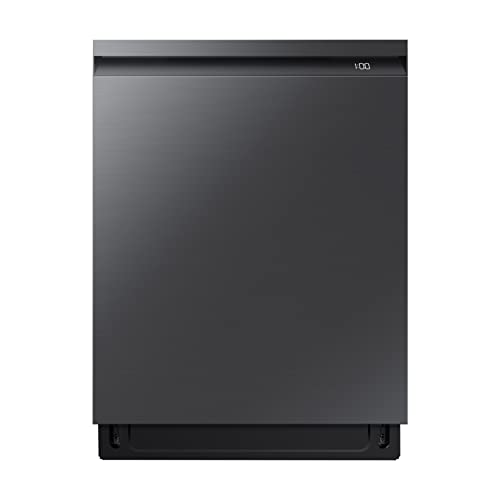 Samsung DW80B6060UG — a door that opens itself | Check price on Amazon | |
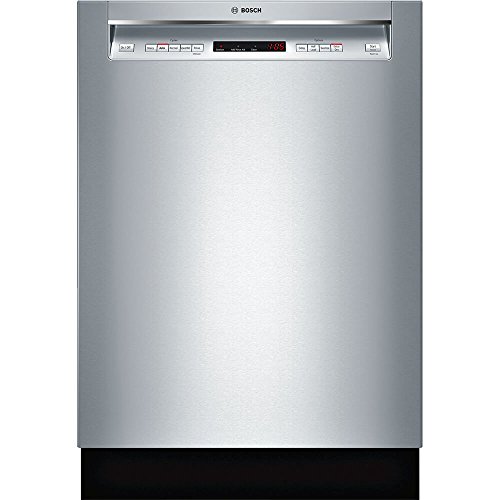 Bosch SHEM63W55N 300 Series — the front-console alternative | Check price on Amazon |
Key takeaways
- The best designed dishwashers compared on rack engineering, drawer formats, control layouts and status displays, from full listings and maker spec sheets.
A dishwasher’s design shows up every day in small ways: whether a tall stemmed glass fits without tilting, whether the controls are visible or hidden, whether you can see the dishes clearly when you load at night, and whether the door opens like a door at all. This guide is for buyers who care about that engineering — rack systems that reconfigure in seconds, a drawer format that loads at bench height, status displays that tell you where a cycle stands, and interiors laid out around real dish collections rather than a fixed grid.
Every pick below is a dishwasher whose layout design is documented in its Amazon listing or the maker’s own specification sheet: adjustable rack systems with named mechanisms, a true two-drawer format, auto-opening door designs, and control layouts that differ meaningfully from model to model. The picks are based on manufacturer specifications and Amazon listing details only — no testing claims, no design awards, and no score of any kind. Where a widely discussed design-led model could not be verified against an Amazon US listing, it was left out and the reason is noted in the relevant section.
Disclosure: As an Amazon Associate, we earn from qualifying purchases. Product details and availability can change; check the Amazon listing before you buy.
Quick picks at a glance
| Product | ASIN | Best for |
|---|---|---|
| Fisher & Paykel DD24DV2T9 Double DishDrawer | B07GSDDXJV | Drawer-format design and bench-height loading |
| LG LDTH7972S | B0BX7FHNYM | The most adjustable rack system in this guide |
| Samsung DW80B6060UG | B0B9GHTQ1F | Auto-opening door and reconfigurable lower rack |
| Bosch SHEM63W55N 300 Series | B06Y25S9CT | Front-console controls with a time display and RackMatic |
What matters most when design is the priority
Rack adjustability you can use one-handed. Look for a named mechanism rather than a fixed rack: height-adjustable upper or third racks, fold-down tines, and cup shelves decide whether serving platters, mixing bowls and stemware share a load or need separate runs.
Third-rack design. A third rack is not one design. Some are fixed trays for flatware only; others adjust in height, carry their own spray coverage, or free the lower rack’s cutlery basket space entirely. The layout matters more than the mere presence of the rack.
Control placement and feedback. Top controls keep the door face clean but hide the cycle status until you open the door or check an app. Front consoles show time remaining at a glance. Drawer models move the selector inside the drawer itself. Pick the feedback style that matches how you actually run the machine.
Interior visibility and status lighting. LED tub lighting and front status indicators decide whether you can load a dark kitchen at night and tell a running cycle from a finished one across the room.
Door and drawer ergonomics. A standard door drops to shin height; a drawer pulls toward you at bench height. Auto-opening doors add a drying function to the door design itself. Handle style — recessed, pocket, bar or scoop — changes how the machine sits with surrounding cabinetry.
Tub and rack materials. Stainless tubs resist staining and help condensation drying; nylon-coated racks and stainless baskets affect how the interior ages. These are specification-sheet facts, and they are listed for every pick below.
Fisher & Paykel DD24DV2T9 Double DishDrawer — the drawer-format design
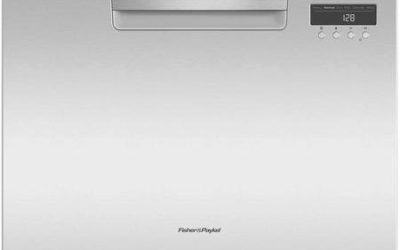
Why it fits a design-led brief. This is the only mainstream dishwasher format that abandons the drop-down door entirely. Each drawer opens and closes like a kitchen drawer and can be installed at bench height, so loading happens with minimal bending and the racks come toward you instead of you reaching into a tub. The two drawers run independently — different programs at the same time — and each holds a true half load, so a small load gets its own drawer instead of rattling around a full-size tub. Inside, the racking uses fold-down and pitch-adjustable tines, and the flow-through detergent dispenser dissolves detergent before it reaches the dishes, a layout detail Fisher & Paykel has kept across generations of the format.
Trade-offs. The drawer format caps plate size — the bottom drawer takes plates up to 11 inches — and very tall items that fit a deep standard tub may not fit either drawer. The internal wash selector is hidden when the drawer is closed, so there is no at-a-glance cycle display on the door face. Per-drawer capacity is seven place settings, which suits smaller households better than large daily loads.
Best for / Skip if. Best for design-led kitchens, cooks with limited mobility, and households that run frequent small loads. Skip if you regularly wash oversize platters or stockpots and need one deep, uninterrupted tub.
LG LDTH7972S — rack engineering as the headline
Why it fits a design-led brief. LG’s design work here is concentrated in the racks. The third rack adjusts in height with a one-touch mechanism across three levels, so it can drop to take small espresso cups or rise to clear taller items in the rack below. The EasyRack Plus layout adds fold-down tines on both main racks — fully folding on the upper rack — plus a cup rack and a stemware holder, which means the same load can be reconfigured for a dinner party’s glassware or a baking day’s bowls without swapping any parts. Dish height limits are published and generous: 7.1 inches in the upper rack and 12.5 inches in the lower rack. The top-control layout keeps the door face unbroken, with an LED display on the door edge and ThinQ app feedback standing in for a front readout.
Trade-offs. Hidden controls mean no visible countdown on the door face — you check the edge display or the app. TrueSteam and the 1-Hour Wash and Dry cycle are wash features rather than layout features, and the steam cycle adds time. The rack system’s moving parts reward owners who actually reconfigure them; if you load the same way every day, a simpler fixed rack does the same job.
Best for / Skip if. Best for households whose loads change shape constantly — stemware one night, sheet pans the next — and for buyers who want the cleanest possible door front. Skip if you want cycle status visible from across the room without opening an app.
Samsung DW80B6060UG — a door that opens itself
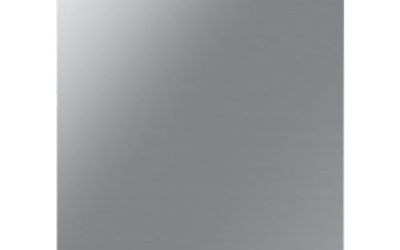
Why it fits a design-led brief. Samsung’s signature design decision is the door itself: at the end of a cycle the AutoRelease Door opens automatically so air circulates and dishes dry faster, turning the door from a passive panel into part of the drying system. Inside, the layout is built to be rearranged — the middle rack adjusts in height, the lower rack reconfigures for cookware, and the cutlery basket moves around the lower rack or comes out to free space. The digital display counts down the hours and minutes remaining, which answers the usual top-control complaint about hidden status, and the fingerprint-resistant finish keeps the bar-handle front looking uniform with heavy daily use.
Trade-offs. The auto-opening door needs clearance and a household comfortable with a door that pops open on its own schedule — a consideration with curious pets or toddlers. The third rack is shallow, so it does not substitute for lower-rack height. SmartThings features only matter if you use Samsung’s app.
Best for / Skip if. Best for buyers who prioritise dry plastics and cups, want a visible countdown, and like rearranging the interior around cookware. Skip if an automatically opening door does not suit your kitchen layout or household.
Bosch SHEM63W55N 300 Series — the front-console alternative
Why it fits a design-led brief. Bosch takes the opposite control philosophy from the hidden top-control models: a full front console with physical buttons and an LED display that shows the time remaining, readable from anywhere in the kitchen with no app and no opening the door. The rack design is the other half of the story — RackMatic lets the upper rack sit at three heights for up to nine combined rack positions, so tall stemware can go in the middle while pots still fit below, and the standard third rack takes the flatware and utensils that would otherwise fill the lower basket. Flip tines and cup shelves in both racks round out a layout designed around adjustment rather than capacity alone. The tall stainless tub installs flush, and the recessed handle keeps the front profile flat.
Trade-offs. The visible console is a deliberate look — it does not disappear into the cabinetry the way a top-control or panel-ready model does. There is no interior tub light, and the five-cycle program list is shorter than the LG’s ten. PureDry condensation drying is gentler on plastics than heated drying but can leave them less dry than the Samsung’s door-open approach.
Best for / Skip if. Best for buyers who want status and controls on the door face, maximum place settings, and a rack that adjusts in fine increments. Skip if your kitchen design calls for controls that are completely hidden.
How to choose between these picks
Start with format, because it cannot be changed later. If loading at bench height and running two small independent loads appeals to you, the Fisher & Paykel DishDrawer is the only pick built that way — and the only one with an 11-inch plate limit in its lower drawer. If you want a conventional tub, the choice becomes about racks and feedback. Choose the LG if your loads vary the most: its one-touch height-adjustable third rack and fold-down tines on both levels are the deepest rack toolkit here. Choose the Samsung if drying design matters most — the auto-opening door and the movable cutlery basket solve the two most common layout complaints, wet plastics and a basket that is always in the way. Choose the Bosch if you read a dishwasher by its console: front buttons, a time-remaining display, and RackMatic’s nine positions make it the most legible machine in this guide. Noise figures are close across the four (42 to 44 dBA), so let layout, not sound, make the decision.
Setup, loading workflow and care
Whichever design you choose, measure the cutout before ordering and confirm the door or drawer swing against adjacent cabinet handles — drawer models need straight pull-out clearance, and the Samsung’s door needs room to open itself at cycle end. During the first weeks, deliberately reconfigure the racks for different load types rather than settling into one pattern; adjustable tines and movable baskets only pay off if they move. Keep fold-down tines and height mechanisms free of food residue by rinsing the filter on the maker’s schedule, and wipe drawer seals and door gaskets monthly so the moving parts keep their seal. For models with a time display or app feedback, run one cycle of each main program early on so you know what the indicators look like mid-cycle versus finished. Use the rinse aid indicator rather than guessing — every pick here signals it — and descale on the maker’s interval if your water is hard, since mineral film on racks and spray arms quietly undoes careful loading design.
FAQ
Does a third rack actually change how a dishwasher loads?
Yes, when it is designed to. A height-adjustable third rack like the LG’s takes flatware, utensils and small cups at a level you set, which frees the lower cutlery basket space entirely; a fixed shallow tray mainly helps with long utensils. The Bosch and Samsung third racks sit between those poles — fixed, but shaped to leave taller room below.
Are drawer dishwashers just a styling exercise?
No. The Fisher & Paykel format changes the loading posture (bench height, minimal bending), splits capacity into two independent seven-place-setting drawers that can run different programs at once, and uses its own SmartDrive wash design with a flow-through detergent dispenser. The trade-off is real too: plate clearance tops out at 12.25 inches in the tall drawer.
Top controls or front controls — which design is better?
Neither is better in absolute terms; they optimise different things. Top controls (LG, Samsung) keep the door face clean and rely on an edge display, a countdown on the door edge, or an app for status. The Bosch front console shows time remaining and a sanitized indicator at a glance. Decide based on whether you check cycle status from across the room.
What does an auto-opening door do for drying?
On the Samsung, the door opens automatically at the end of the cycle so humid air escapes and room air circulates over the dishes. It is a mechanical design feature rather than a heated drying element, and it is most noticeable on plastics and cups that condensation drying alone leaves wet.
Why are some well-known design-led models not in this guide?
Because every pick had to verify against an Amazon US listing. Bosch’s 800 Series CrystalDry models and Miele’s built-in range are often discussed for their design, but their Amazon US evidence in this batch’s checks was mirror-only or absent, so they were excluded.
Conclusion
Design in a dishwasher is not a finish or a logo — it is the rack that moves, the control you can read, and the door or drawer that fits how you move around your kitchen. Pick the Fisher & Paykel DD24DV2T9 if the drawer format itself is the design you want. Pick the LG LDTH7972S if rack adjustability decides your loads. Pick the Samsung DW80B6060UG if an auto-opening door and a rearrangeable interior solve your daily frustrations. Pick the Bosch SHEM63W55N if you want the most legible front console and the finest-grained rack positioning. All four are documented in their listings and maker specification sheets, so the design feature you choose is one you can confirm before the machine arrives.