Our Short List of 3
All 3 Picks at a Glance
| Product | Specs | Action |
|---|---|---|
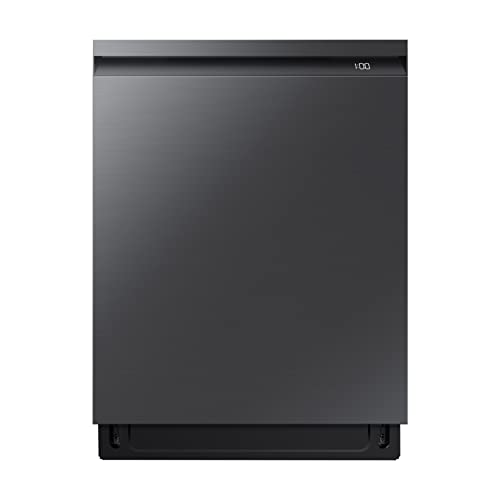 Samsung DW80B6060UG/AA — the door opens, the steam leaves | Check price on Amazon | |
 LG LDTH7972S — heated air for the plastic-heavy load | Check price on Amazon | |
 Kenmore 22-14675 — fan-assisted drying, family format | Check price on Amazon |
Key takeaways
- The best dishwashers drying dishes well enough to unload without a towel: auto-open, heated air and fan dry models compared on cups, plastics and racks.
A dishwasher can wash beautifully and still fail the moment that matters most: opening the door to find cup bottoms holding puddles, plastic containers beaded with water, and a towel coming out before anything can go back in the cupboard. This guide is for buyers whose real goal is unloading, not washing — dishes that come out dry enough to put straight away. The four picks below were chosen for the hardware that decides that outcome: whether the door opens itself at the end of the cycle, whether heated air or a fan moves moisture off the load, how hot the final rinse runs, and how the racks let water escape from cup rims and hollow plastic lids. Picks are based on manufacturer specifications and Amazon listing details for each exact model.
Disclosure: As an Amazon Associate, we earn from qualifying purchases. Product details and availability can change; check the Amazon listing before you buy.
Quick picks at a glance
| Product | ASIN | Best for |
|---|---|---|
| Samsung DW80B6060UG/AA | B0B9GHTQ1F | Doors that open themselves so steam escapes before unloading |
| LG LDTH7972S | B0BX7FHNYM | Heated-air drying for mixed loads with lots of plastic |
| Kenmore 22-14675 | B0CFPNG5TW | Fan-assisted drying in a straightforward family built-in |
| Bosch 300 Series SHE53B75UC | B0BT5SJB1F | Quiet condensation drying with an Extra Dry option for stubborn items |
What matters most when the goal is dry dishes at unload time
How the moisture leaves the tub. Water on a dish has three ways out: it evaporates into hot air, it condenses on a cooler surface, or it is carried away when steam vents. Auto-opening doors attack the problem directly by letting steam escape at the end of the cycle instead of re-condensing on your cups. Heated-air and fan systems keep hot, moving air in contact with the load. Plain condensation drying relies on a hot final rinse and a stainless tub, and it works well on ceramic and glass while struggling most with plastic.
Plastic is the honest test. Plastic holds far less heat than ceramic or metal, so rinse water does not flash off it the way it does from a hot plate. Any guide about dry dishes should be judged on plastics first: storage containers, lids, sippy cups and mixing bowls. Models with heated air, a fan, or an auto-open door have a structural advantage here; a model that only condenses will usually leave plastics needing a shake over the sink.
Final rinse temperature and rinse aid. A hotter final rinse loads every item with more heat, and that stored heat is the engine of evaporation once the wash ends. Rinse aid lowers the surface tension of water so it sheets off surfaces instead of beading, which matters most on glass and on the concave tops of mugs. Every pick below has a rinse-aid dispenser, and using it is the single cheapest drying upgrade for any of them.
Rack geometry and loading angles. Puddles form where water can sit: upturned cup bottoms, nested bowls, and lids lying flat. Adjustable racks, fold-down tines and a third rack for shallow items all help you tilt pieces so water runs off instead of pooling. Drying hardware cannot rescue a load packed with water traps, which is why rack flexibility appears in every product section below.
Dry options you can add per load. Extra Dry, Dry Boost and heated-dry options let you spend more drying effort only on the loads that need it — the plastic-heavy lunchbox wash, for example — instead of paying the time and energy cost on every cycle. Overnight or night-dry settings that hold the door or fan state for hours suit households that run the machine after dinner and unload in the morning.
Tub material. Stainless steel tubs, fitted to all four picks, hold heat from the final rinse and support condensation drying. A stainless tub does not dry a load by itself, but it makes every other drying method work better.
Samsung DW80B6060UG/AA — the door opens, the steam leaves
Why it fits dishes coming out dry. The AutoRelease Door is the most direct answer to the wet-unload problem in this guide. When the cycle finishes, the door opens on its own so steam escapes into the room instead of condensing back onto cool cup rims and plastic lids as the tub cools. Samsung positions the feature as improving drying performance and speeding up the dry, and it is registered as the model’s drying method in the federal efficiency registry. In practical unloading terms, it attacks exactly the items that stay wet longest — small, light pieces near the top rack — because those benefit most from fresh air exchange.
Trade-offs. The door needs clearance to open, so a galley kitchen with an island close opposite the dishwasher deserves a second thought. There is no heated dry element to fall back on for a sealed-tub dry, so a load you leave closed for hours after the door has opened and closed again gains less than the LG’s heated air. Samsung’s own documents give conflicting capacity figures for this model family, so this guide describes it by its three-rack layout rather than printing a place-setting count.
Best for / Skip if. Best for households that unload soon after the cycle ends and hate towel-drying cups and containers. Skip it if your kitchen layout blocks the door swing or you routinely leave loads sealed overnight and want heated air instead.
LG LDTH7972S — heated air for the plastic-heavy load
Why it fits dishes coming out dry. Dynamic Heat Dry circulates heated air through the tub after the wash, which is the approach that treats plastics most kindly: the items do not need to store their own heat, because the air brings the heat to them. LG pairs it with a Dry Boost option for loads that need more drying effort and a Night Dry option for cycles run overnight, and the 1-Hour Wash and Dry cycle is built for the quick turnaround of a load you want back in service fast. TrueSteam also helps the dry indirectly — steam loosens residue during the wash and the final hot rinse leaves items hotter, so evaporation starts from a better position.
Trade-offs. Heated drying uses more energy than condensation or door-venting, and the longer dry options add cycle time. The feature set is deep, which means more settings to learn than the Kenmore below. Its top-control panel is hidden when the door is closed, so checking cycle progress means looking at the floor-level indicator or the app rather than glancing at the door.
Best for / Skip if. Best for families whose loads are full of plastic containers, kids’ cups and lids that must go straight back into cupboards or lunchboxes. Skip it if you prefer the simplest possible control set or want to minimise energy use per cycle above all else.
Kenmore 22-14675 — fan-assisted drying, family format
Why it fits dishes coming out dry. TurboDry pairs hot water with a fan to move moisture off the load and promote condensation inside the tub, and the federal registry classifies this model as fan-assisted dry — a middle path between passive condensation and a full heated-air system. The practical result for unloading is moving air across the racks, which is what cup tops and container rims need. SmartWash sensing also matters at the margin: a cycle matched to the soil level ends with a final rinse at the right temperature rather than a shortened one, and the Extra Dry option is there for the loads you know are plastic-heavy.
Trade-offs. The Amazon listing’s own water field conflicts with the federal registry figure for this model; the registry figure is the one printed above. There is no Wi-Fi or app control, and no auto-opening door, so a load left sealed for many hours will not gain the Samsung’s venting benefit. The cycle list is shorter than the LG’s, with fewer specialty programs.
Best for / Skip if. Best for households that want fan-driven drying in a conventional, easy-to-live-with built-in and do not care about smart features. Skip it if you want the door to open itself or app control from another room.
Bosch 300 Series SHE53B75UC — condensation drying done properly
| Spec | Value |
|---|---|
| Drying system | PureDry condensation drying, with an Extra Dry option |
| Noise figure | 46 dBA |
| Capacity | 15 place settings |
| Wash system | PrecisionWash with intelligent sensors |
| Cycles | 6, including Speed60 and a Sanitize option |
| Racks | Standard third rack, RackMatic adjustable upper rack |
| Energy use | 269 kWh per year (maker figure) |
| Water use | 3.5 gallons per cycle (maker figure) |
| Dimensions | 34.06 x 23.56 x 22.56 inches (H x W x D) |
| Weight | 90 lb |
| Extras | Built-in water softener, Home Connect Wi-Fi, AquaStop Plus leak protection |
Why it fits dishes coming out dry. Bosch’s PureDry is a condensation system: the final rinse runs hot, moisture condenses on the cooler stainless tub walls, and no heating element is exposed in the tub — which is gentle on plastics and on delicate items that sit near the bottom rack. The Extra Dry option raises drying effort for stubborn loads, and the Sanitize option’s hotter final rinse leaves the whole load hotter, which shows up at unloading as faster evaporation. RackMatic height adjustment helps you angle bowls and keep cup rows from nesting, the unglamorous detail that decides whether water pools in the first place.
Trade-offs. Condensation drying is the weakest of these four approaches on plastics specifically; expect the occasional container to need a shake even with Extra Dry selected. It is the loudest pick here at 46 dBA, though still quiet in absolute terms. The Amazon listing’s water field conflicts with Bosch’s own spec sheet; the maker’s figure is printed above.
Best for / Skip if. Best for buyers who prioritise gentle, element-free drying for mixed ceramic, glass and cookware loads, and who value the built-in softener in hard-water homes. Skip it if your loads are dominated by plastic storage ware and you want the driest possible result on those items.
How to choose between these picks
Start with what stays wet in your current machine. If the problem is cups and glasses holding water on top and a steamy tub at unload time, the Samsung’s self-opening door addresses that exact failure, and it is the pick to beat. If the problem is plastic — containers, lids, bottles and kids’ tableware that never dry in any condensation machine — heated air is the structural fix, and the LG is the strongest answer here. If you want moving air without the LG’s deep option list, the Kenmore’s fan-assisted TurboDry is the simpler route to a drier unload. If your loads are mostly ceramic, glass and metal, and you prefer no exposed heating element and a softener for hard water, the Bosch’s condensation system will satisfy you, with Extra Dry held in reserve.
Then check the practicalities. Measure your cutout: all four are standard 24-inch built-ins, but depths and heights differ slightly, and the Samsung also needs room for its door to open at the end of the cycle. Think about when you unload: door-venting rewards prompt unloading, heated and fan systems forgive a load left for a few hours, and the LG’s Night Dry is designed for the overnight pattern. Finally, be honest about options discipline — Extra Dry and Dry Boost only help if someone in the household actually selects them for the loads that need them.
Loading and care habits that make any of these dry better
Angle every cup, mug and bowl so its opening faces down and slightly tilted; a cup placed flat upside down is a small bucket. Put plastics on the upper rack, spread out rather than nested, and keep lids vertical in the rack slots where they fit. Do not block the door vent or the fan path with a large tray at the front of the lower rack. Fill the rinse-aid dispenser and set its dosage for your water hardness — sheeting action is half of drying performance on glass. Run the hot water tap near the dishwasher briefly before starting if your home’s hot water takes a long time to arrive, so the final rinse reaches its intended temperature. Unload the bottom rack first, so water on top-rack items does not drip onto dry dishes below. Every few months, clean the filter and check spray-arm holes; a weak final rinse leaves more water behind than any drying system can remove.
FAQ
Why do plastics stay wet when plates come out dry? Plastic stores very little heat from the final rinse, so water on it has almost no evaporation energy of its own. Heated-air, fan-assisted and auto-open drying all compensate by moving warm air across the load; pure condensation drying compensates least, which is why plastic-heavy households should weight the LG, Samsung or Kenmore approaches.
Does rinse aid really change how dry dishes are? Yes. Rinse aid makes water sheet off surfaces instead of beading, so less water remains on each item when the dry phase starts. It shows most on glassware and on the rims and tops of cups — exactly the places that otherwise hold puddles.
Is an auto-opening door better than a heated dry? They solve different halves of the problem. Opening the door vents steam before it can re-condense, which is excellent for glass, ceramic and cup tops, and it uses no extra energy. Heated air keeps working on plastics inside a closed tub. The better choice depends on whether your wettest items are cups and glasses or containers and lids.
Will a hotter sanitize rinse help drying? Indirectly, yes. A hotter final rinse leaves every item carrying more heat into the dry phase, so evaporation runs faster. On the Bosch and Kenmore above, the sanitize or high-temp option doubles as a drying aid for loads you plan to unload promptly.
What if I usually unload hours after the cycle ends? Favour systems that keep working or hold their gains: the LG’s Night Dry option, the Kenmore’s fan, or the Samsung left with its door ajar after AutoRelease. A condensation-only load left sealed will slowly equalise, and the first items you touch will feel wetter than they were at cycle end.
Conclusion
For the single most common complaint — opening the door to a steamy tub and wet cup tops — the Samsung DW80B6060UG/AA is the clearest recommendation, because its door opens itself and lets the problem leave. For plastic-heavy family loads, choose the LG LDTH7972S and its heated-air Dynamic Heat Dry with Dry Boost. For a simpler fan-assisted machine that still unloads dry, the Kenmore 22-14675 is the balanced pick. And for gentle, element-free drying of ceramic and glass with a softener on board, the Bosch SHE53B75UC remains the right answer, as long as you accept a shake for the occasional plastic tub.