Our Short List of 3
All 4 Picks at a Glance
| Product | Specs | Action |
|---|---|---|
 LG LDFN4542S — big capacity, honest per-setting efficiency | Check price on Amazon | |
 Kenmore 22-14675 — low water, lowest energy figure here | Check price on Amazon | |
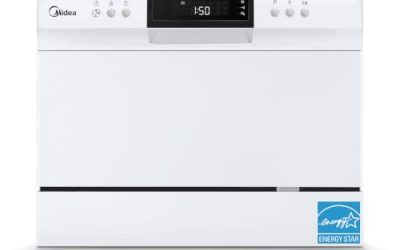
 EdgeStar BIDW1802SS — the 18-inch option | Check price on Amazon | |
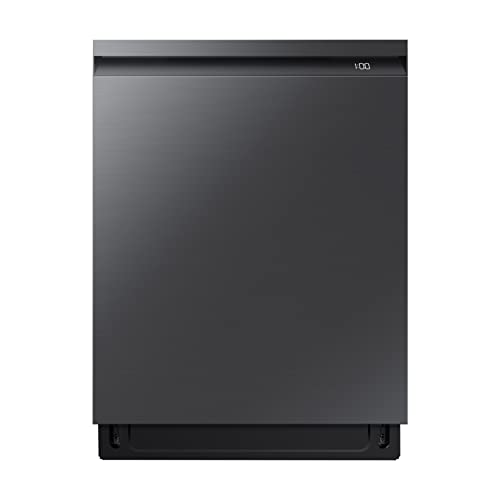 Samsung DW80B6060UG/AA — quiet, with a fast low-water cycle | Check price on Amazon |
Key takeaways
- The best water saving dishwashers ranked by certified gallons per cycle, from 2.6 to 3.2 gallons, with capacity, cycles and drying compared for each pick.
If a septic system, a well, or local watering rules make every gallon count, the dishwasher is one appliance where the efficiency figure is printed, certified, and directly comparable across brands. Every model in this guide is ranked on one headline number: its certified water use in gallons per cycle, taken from the federal ENERGY STAR registry and the Amazon listing for that exact model. The federal standard for a full-size dishwasher is 5.0 gallons per cycle; the five picks below run from 2.6 to 3.2 gallons, so each one uses roughly two-fifths to one-half less water than the standard allows.
This guide is for households replacing a full-size built-in who want the lowest water figure without giving up capacity, and for small kitchens that need an 18-inch model. Every figure below comes from manufacturer specifications, the federal registry entry, and the Amazon listing for that exact model. Where a model’s documents give different figures for different cycles, the certified test-cycle figure is used for ranking, because it is the only basis on which all five can be compared fairly.
Disclosure: As an Amazon Associate, we earn from qualifying purchases. Product details and availability can change; check the Amazon listing before you buy.
Quick picks at a glance
| Product | ASIN | Best for |
|---|---|---|
| Bosch 300 Series SHE53B75UC | B0BT5SJB1F | Lowest certified water figure in a full-size machine |
| LG LDFN4542S | B0BDMR9745 | Big capacity with a half-load option for small days |
| Kenmore 22-14675 | B0CFPNG5TW | Low water and the lowest annual energy figure here |
| EdgeStar BIDW1802SS | B07RP2S2R9 | 18-inch kitchens that still want a built-in |
| Samsung DW80B6060UG/AA | B0B9GHTQ1F | Quiet running and a fast cycle that sips water |
What matters most for saving water
The certified gallons-per-cycle figure. This number is produced by the federal test procedure and published in the ENERGY STAR registry. It is the only water figure measured the same way for every brand, so it is the right basis for ranking; manual cycle charts give ranges that vary with soil level.
Soil sensing. A dishwasher that can sense how dirty the water is can stop early on a light load instead of running a fixed program. Auto cycles with soil sensors (Bosch’s AquaSensor, LG’s SenseClean, Kenmore’s SmartWash, Samsung’s Auto cycle) are the main reason modern machines use far less water than older ones — they do not fill and drain on a timer alone.
Half-load and zone options. A half-load or single-rack option lets a small load wash with less water instead of waiting days for a full tub or running a full cycle for six plates. LG’s Half Load and Dual Zone options and Samsung’s lower-rack option exist for exactly this.
Gallons per place setting, not just per cycle. A compact 18-inch machine uses little water in absolute terms but washes half the dishes. Dividing the certified figure by capacity gives the honest efficiency measure: the LG below uses about 0.19 gallons per place setting, the EdgeStar about 0.39. If you run a compact machine twice to do one full-size load, the water advantage disappears.
Cycle choice in daily use. Heavy cycles can use close to double the water of an auto or express cycle on the same machine. The model sets the floor; the cycle you pick each night decides what you actually use, and express cycles here run as low as 1.8 to 2.9 gallons for light loads.
Leak protection. A slow inlet or drain leak can waste more water in a month than the gap between the best and worst machine in this guide. Leak sensors and aqua-stop style inlet systems (standard on the Bosch and EdgeStar here) shut the water off when something goes wrong.
Bosch 300 Series SHE53B75UC — lowest certified figure in the group
| Spec | Figure |
|---|---|
| Water use (certified/listing figure) | 2.6 gallons per cycle |
| Annual energy use | 269 kWh per year |
| Capacity | 15 place settings |
| Noise | 46 dBA |
| Wash cycles | 6 |
| Tub | Stainless steel |
| Drying | PureDry condensation drying |
| Extras | Built-in water softener, AquaStop leak protection, Home Connect Wi-Fi, standard third rack |
Why it fits a water-saving brief. The Amazon listing for this model states water consumption of 2.6 gallons per cycle, the lowest figure in this guide and close to half the 5.0-gallon federal standard. Bosch achieves it with the AquaSensor soil sensor, which measures how dirty the rinse water is and reuses or replaces it accordingly, plus a built-in water softener: in hard-water homes, softened water cleans properly the first time, so loads do not need to be re-run — a hidden waste no spec table shows.
Trade-offs. Drying is condensation-based with an Extra Dry option rather than a heated dry element, so plastics can come out with droplets on them. Annual energy use, at 269 kWh, is the highest in this group even though water use is the lowest — heating less water more often is not how this machine is tuned.
Best for / Skip if. Best for hard-water households and anyone who wants the single lowest water figure in a full-size, 15-place-setting machine. Skip it if dry plastics matter more than water use, or if you want a heated dry cycle.
LG LDFN4542S — big capacity, honest per-setting efficiency
Why it fits a water-saving brief. At 2.9 gallons per cycle for a full 15-place-setting load, this LG has the best water-per-place-setting figure in the guide — about 0.19 gallons for every setting washed. Its SenseClean system measures soil level and adjusts the cycle; LG’s cycle chart shows the real-world range, from 1.8 gallons on Rinse to past 5 gallons on Heavy. The Half Load option does the real work here — it washes a half-filled tub without running the full program, which is where most households actually waste water.
Trade-offs. The third rack is fixed rather than height-adjustable, so tall items up top are limited. At 48 dBA it is the loudest of the full-size picks. Dynamic Dry is a fan-assisted condensation system, so, as with the Bosch, plastics are the last things to dry.
Best for / Skip if. Best for families who run full loads most days and want the most dishes washed per gallon. Skip it if your kitchen is open-plan and you run the machine while people are in the room — one of the quieter picks below will suit you better.
Kenmore 22-14675 — low water, lowest energy figure here
Why it fits a water-saving brief. The registry figure of 3.0 gallons per cycle sits 40 percent below the federal standard, and this Kenmore pairs it with the lowest annual energy use in the group, 234 kWh per year — on the federal test basis of 215 loads a year, that is about 645 gallons of water annually, against 1,075 gallons for a machine that merely meets the standard. The SmartWash cycle reads soil level and load size and sets temperature, wash time, and water amount from what it finds, so a light load is not washed like a roasting pan. Fan-assisted TurboDry also dries without a long heated hold.
Trade-offs. There is no Wi-Fi or app control, which the LG and Samsung here both offer in some form. Kenmore’s support runs through its own service network rather than a maker-direct channel, which some buyers find slower to work through. The cycle menu is smaller than the LG’s nine-cycle list.
Best for / Skip if. Best for buyers who look at the combined water-and-energy picture and want both figures low in a straightforward, front-control machine. Skip it if smart-home control or a sanitize-heavy cycle menu is a priority.
EdgeStar BIDW1802SS — the 18-inch option
Why it fits a water-saving brief. For a small kitchen, a rental conversion, or a two-person household, an 18-inch built-in uses little water in absolute terms — 3.1 gallons per cycle — and this EdgeStar is certified at 234 kWh per year, matching the Kenmore’s energy figure. It includes a leak sensor that shuts off the water supply if a leak is detected, and a heated dry option that the full-size condensation models above do not offer.
Trade-offs. The arithmetic matters: 3.1 gallons for 8 place settings is about 0.39 gallons per setting, roughly double the LG’s per-setting figure. If your household regularly fills a full-size machine, this compact will use more water across two runs than one run of the LG or Bosch. At 52 dBA it is also the loudest pick here, and the 8-setting tub will not take large serving platters flat.
Best for / Skip if. Best for small households and narrow kitchens where a full-size machine does not fit and loads are genuinely small. Skip it if you cook for a family — a full-size pick will use less water per dish you own.
Samsung DW80B6060UG/AA — quiet, with a fast low-water cycle
Why it fits a water-saving brief. The certified figure of 3.2 gallons per cycle is 36 percent below the federal standard, and the day-to-day picture is better than the headline: Samsung’s cycle chart puts the Express 60 cycle at 2.9 gallons, so the quick load most households run uses less than the test-cycle number suggests. The AutoRelease Door pops the door open at the end of the cycle so residual heat and room air finish drying without a long heated phase, and SmartThings lets you confirm a cycle finished instead of re-running a load you were unsure about.
Trade-offs. On the certified figure alone, this is the thirstiest machine in the guide, and households that mostly run the Normal cycle will use more water than with any other pick here. The top-control panel is hidden when the door is closed, so checking cycle progress means opening the app or the door. StormWash+ is a targeted zone rather than a whole-tub difference.
Best for / Skip if. Best for open-plan homes that want the quietest machine here (44 dBA) and mostly run quick cycles. Skip it if you judge purely on the certified gallons-per-cycle figure — the Bosch and LG beat it on that number.
How to choose between these picks
Start with the space. If your opening is 18 inches, the EdgeStar is the only pick that fits, and its 3.1-gallon figure is strong for the class. For a standard 24-inch opening, rank by how you actually wash. If you run full loads of mixed dishes most days, the LG’s 2.9 gallons across 15 place settings is the most efficient pattern in the group. If your water is hard and loads sometimes need a second run, the Bosch’s built-in softener attacks the real problem, and its 2.6-gallon listing figure is the lowest here regardless. If the electricity figure matters as much as the water figure, the Kenmore pairs 3.0 gallons with the lowest annual energy use. If the machine runs at night in an open-plan space, take the Samsung’s 44 dBA and accept the slightly higher certified water figure, knowing its express cycle uses less.
One check before ordering: confirm the certified figure for the exact model number, including suffix letters. Near-identical models can carry different efficiency figures, and the suffix is where the difference lives.
Habits and care that decide what you actually use
The machine sets the floor; habits set the bill. Scrape plates into the bin instead of rinsing them under the tap — pre-rinsing a load by hand can use more water than the entire machine cycle, and every model here is designed to handle scraped, unrinsed dishes. Run full loads: a half-empty run of any cycle uses nearly the same water as a full one, so use the half-load option or wait. Choose Auto or Normal for everyday loads and keep Heavy for genuinely baked-on soil; on the LG’s own chart, that choice alone is the difference between roughly 3 and 5-plus gallons. Keep the filter clean — a clogged filter makes the machine work harder and can leave soil that tempts a re-run. If your water is hard and your machine has no softener, keep rinse aid topped up; spots and film are the main reason loads get washed twice. Finally, check the inlet hose and connections once a year — a slow drip quietly wastes more than any cycle choice saves.
FAQ
How much water does a dishwasher use compared with washing by hand?
A standard modern dishwasher uses about 5 gallons or less per full load on its certified figure, and the models here use 2.6 to 3.2 gallons. Washing the same load by hand under a running tap typically uses well over 20 gallons; even a filled-basin wash usually exceeds what these machines use.
What does the gallons-per-cycle figure actually measure?
It is the water delivered to the machine during one cycle under the federal test procedure, run on a standard soiled load. It is the figure published in the ENERGY STAR registry and is measured the same way for every certified model, which is why this guide ranks on it; real use varies with cycle and soil level.
Do eco or express cycles really use less water?
Yes, on the models that publish cycle charts. LG’s chart for the LDFN4542S shows its Rinse cycle at 1.8 gallons against more than 5 gallons for Heavy, and Samsung’s chart shows Express 60 at 2.9 gallons against 4.7 gallons for its pots-and-pans cycle. Light cycles use fewer fills and rinses and are meant for light soil.
Is a compact dishwasher always the water-saving choice?
Not per dish. The 18-inch EdgeStar here uses 3.1 gallons for 8 place settings; the full-size LG uses 2.9 gallons for 15. A compact saves water only if your loads are genuinely small enough that you run it the same number of times you would run a full-size machine.
Does hard water increase how much water a dishwasher uses?
Indirectly, yes. Hard water leaves film and spots that lead people to re-wash loads. A built-in softener, like the one in the Bosch pick, or regular rinse aid use prevents most re-runs, which is where the real waste is.
Conclusion
For the lowest certified water figure in a full-size machine, choose the Bosch SHE53B75UC at 2.6 gallons per cycle, especially if your water is hard. For the most dishes washed per gallon, choose the LG LDFN4542S — 2.9 gallons across 15 place settings, with a half-load option for small days. For low water and low energy together, the Kenmore 22-14675 pairs 3.0 gallons with the joint-lowest energy figure here. For an 18-inch opening, the EdgeStar BIDW1802SS is the certified, leak-sensed compact to buy. For a quiet open-plan kitchen, the Samsung DW80B6060UG trades a slightly higher certified figure for 44 dBA running and a 2.9-gallon express cycle. The certified figure gets you most of the way; scraping instead of pre-rinsing and running full loads does the rest.