Our Short List of 3
All 4 Picks at a Glance
| Product | Specs | Action |
|---|---|---|
| Bosch 300 Series SHEM63W55N — recommended for large family loads | Check price on Amazon | |
 LG LDTH7972S — recommended for quiet, open-plan kitchens | Check price on Amazon | |
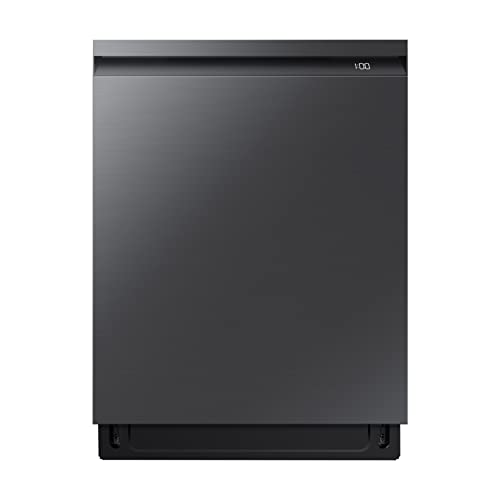 Samsung DW80B6060UG/AA — recommended for baked-on cookware | Check price on Amazon | |
 Kenmore 22-14675 — recommended for straightforward modern basics | Check price on Amazon |
Key takeaways
- Our best recommended dishwashers matched to real households: quiet open-plan runs, big family loads and baked-on cookware, with the key specs for each pick.
A dishwasher recommendation only helps if it matches the household it lands in. The model that suits a family loading two full racks of plates, bowls and lunch containers every night is not the model that suits an open-plan apartment where the machine runs a few feet from the sofa, and neither is the right answer for a cook who regularly faces a roasting pan with baked-on residue. This guide therefore recommends four built-in dishwashers by scenario rather than by a single ranking: one for large family loads with simple controls, one for quiet open-plan living, one for heavy soil and cookware, and one straightforward mid-feature model for buyers who want modern basics without a long options list.
Every pick below is a standard 24-inch built-in dishwasher currently listed on Amazon US. The recommendations are grounded in manufacturer specifications and Amazon listing details — wash systems, decibel figures, rack layouts, energy and water consumption, dimensions — rather than in scores, endorsement lists or testing claims. Where a published figure differs between sources, this guide leaves the figure out instead of guessing.
Disclosure: As an Amazon Associate, we earn from qualifying purchases. Product details and availability can change; check the Amazon listing before you buy.
Quick picks at a glance
| Product | ASIN | Best for |
|---|---|---|
| Bosch 300 Series SHEM63W55N | B06Y25S9CT | Large family loads, simple front controls |
| LG LDTH7972S | B0BX7FHNYM | Quiet open-plan kitchens, steam-assisted cleaning |
| Samsung DW80B6060UG/AA | B0B9GHTQ1F | Baked-on cookware, app-connected controls |
| Kenmore 22-14675 | B0CFPNG5TW | Straightforward controls with a third rack and fan drying |
What matters most when choosing a recommended dishwasher
Capacity in place settings. Place settings are the common yardstick across brands. Sixteen settings suit households that cook most meals at home and entertain; fifteen settings cover most families of four to six; smaller households can trade capacity for a lower decibel figure or a simpler cycle list.
The decibel figure. Noise is published in dBA, and the gap between 42 and 48 dBA is plainly audible in an open-plan room. If the dishwasher shares space with seating or a home office, treat the dBA figure as a first-order spec, not a footnote. If the machine sits in a closed kitchen, a mid-40s figure is rarely a problem.
The wash system. Soil sensors adjust water and time to the load; targeted jet zones and pre-wash blasts address baked-on cookware; steam loosens dried food and reduces water spots on glass. Match the wash system to the soil you actually produce — daily cereal bowls do not need a heavy-duty jet zone.
The drying method. Fan-assisted and heated drying handle plastics best. Condensation drying is quiet and energy-frugal but leaves plastic items damp. Auto-opening doors release steam at the end of the cycle and noticeably improve results on mixed loads.
Rack flexibility. A third rack takes cutlery and long utensils off the lower rack, freeing space for pots. Height-adjustable upper racks decide whether tall glasses and large plates can ride in the same load.
Energy and water figures. Federal figures — kilowatt hours per year and gallons per cycle — are published for every model here, so running consumption can be compared directly instead of guessed from marketing language.
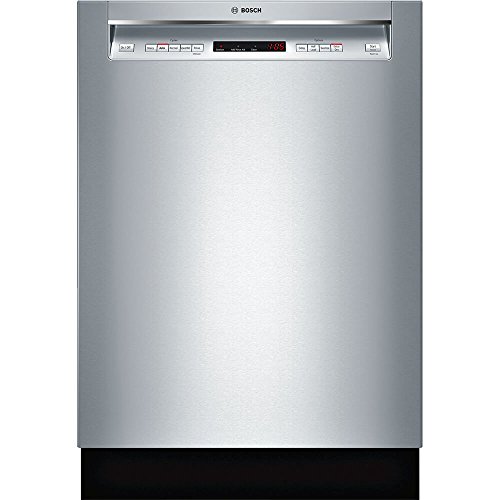
Bosch 300 Series SHEM63W55N — recommended for large family loads
Bosch 300 Series SHEM63W55N on Amazon
The Bosch SHEM63W55N is the capacity pick of this guide. Its 16 place settings are the most of any model here, and the RackMatic upper rack adjusts to three heights, so a load can mix tall stockpots below with long-stemmed glasses above. Front, full-console controls keep every cycle visible and reachable — a practical advantage in households where several people run the machine and nobody wants to open the door to read a hidden top-edge panel.
Why it fits the scenario. Sixteen place settings plus a third rack mean a full day of family dishes, serving pieces and cutlery fits in one run, and the 44 dBA figure is quiet enough for evening loads in most layouts. Bosch’s PrecisionWash system uses intelligent sensors to check soil levels through the cycle and adjust accordingly, which suits the mixed, unpredictable loads family kitchens produce.
Trade-offs. Condensation drying leaves plastics damp compared with fan or heated systems. The cycle list is short and deliberate — five cycles rather than a long menu — and there is no steam function or app connectivity. Energy use per year is the highest of the four picks here.
Best for / Skip if. Best for larger households that prioritise capacity, simple controls and a stainless tub. Skip it if dry plastics matter more than capacity, or if you want steam or smart features.
LG LDTH7972S — recommended for quiet, open-plan kitchens
At 42 dBA, the LG LDTH7972S is the quietest model in this guide, which makes it the natural recommendation where the kitchen flows into living space. It pairs that low figure with LG’s strongest wash package: QuadWash Pro multi-motion spray arms, TrueSteam for loosening dried-on food, and Dynamic Heat Dry. The 1-Hour Wash & Dry cycle gives a full wash-and-dry turnaround in about an hour for lightly soiled loads.
Why it fits the scenario. The 42 dBA figure is the headline: in an open-plan room, this is the difference between a background hum and a machine you talk over. Steam helps with the two loads open-plan cooks notice most — dried breakfast bowls left until evening, and glassware that shows every water spot. Heat drying means plastics come out ready to put away, and yearly energy use is the lowest of the four picks.
Trade-offs. Top controls are hidden when the door is closed, so checking cycle status means glancing at the display through the door edge or opening the app. Steam cycles run longer than standard cycles. The feature set is deep, and buyers who only ever run one programme will pay for capability they never use.
Best for / Skip if. Best for open-plan homes, evening and overnight runs, and anyone who wants steam plus heated drying in one machine. Skip it if you prefer visible front controls or a short, simple cycle menu.
Samsung DW80B6060UG/AA — recommended for baked-on cookware
Samsung DW80B6060UG/AA on Amazon
The Samsung DW80B6060UG is built around soil removal. StormWash+ adds a dedicated high-pressure wash zone for the lower rack, and the Pre Blast cycle starts with a soaking blast before the main wash — a combination aimed squarely at roasting pans, casserole dishes and sheet pans with cooked-on residue. The AutoRelease Door opens automatically at the end of the cycle to vent steam and speed drying.
Why it fits the scenario. Households that roast, bake and braise produce the heaviest soil in home cooking, and this is the only pick here with both a targeted jet zone and a pre-wash blast cycle. The third rack absorbs the spatulas, ladles and long knives that cookware-heavy loads generate, and the adjustable middle rack makes room below for tall pots. Water use of 3.2 gallons per cycle is frugal for a full-size machine, and remote start through SmartThings suits cooks who load up after dinner and run the machine later in the evening.
Trade-offs. Published place-setting figures for this model family differ between Samsung’s materials and the federal registry, so this guide describes capacity by its three-rack layout rather than printing a contested number — check the listing if an exact count matters to you. The black stainless finish will not match a conventional stainless suite. Door-open drying works best when the kitchen air can circulate.
Best for / Skip if. Best for keen cooks with heavy, baked-on loads and anyone who wants app control. Skip it if your suite is standard stainless and finish matching matters, or if your loads are mostly light daily ware.
Kenmore 22-14675 — recommended for straightforward modern basics
The Kenmore 22-14675 covers the modern checklist — stainless tub, third rack, soil sensing, fan-assisted drying, 45 dBA — without a deep options menu or app layer. Its SmartWash cycle reads soil levels and adjusts water and temperature, the EasyFlex third rack handles cutlery and utensils, and TurboDry uses a fan to pull moisture off dishes, which shows most on plastics.
Why it fits the scenario. For a household replacing an older machine and wanting the current basics done well, this is the simplest decision in the guide: fifteen place settings, a third rack, sensor washing and fan drying, with the lowest yearly energy figure of the four picks. Half Load suits smaller households that run partial loads, and Accela Wash shortens the cycle when time matters more than soil level.
Trade-offs. At 45 dBA it is the loudest pick here — fine in a closed kitchen, noticeable in a studio layout. There is no steam cycle and no targeted jet zone, so baked-on pans may still want a soak. There is no app connectivity.
Best for / Skip if. Best for straightforward replacements, smaller households using Half Load, and buyers who value fan drying for plastics. Skip it if you need the quietest possible run or heavy-duty soil features.
How to choose between these picks
Start with your room, then your loads. If the dishwasher runs within earshot of seating, the LG’s 42 dBA figure decides the question on its own. If your loads are dominated by cookware with cooked-on residue, the Samsung’s StormWash+ zone and Pre Blast cycle are the features that will actually change your results. If the machine must swallow a full day of family dishes in one run and be operable by everyone in the house, the Bosch’s 16 place settings and front controls are the practical choice. If you are replacing an ageing unit and want the current feature set — third rack, soil sensing, fan drying — with the least to learn, the Kenmore is the direct answer.
Two checks apply to all four. First, measure your cutout: every pick here needs the standard 24-inch-wide opening, but heights and depths vary slightly by model, and the Samsung is the deepest at 25 inches. Second, confirm the finish against your other appliances — three picks are conventional stainless, while the Samsung listed here is black stainless.
Setup, workflow and care
All four models are standard built-ins: they slide into a 24-inch cutout, connect to a hot water line, a drain and a 120-volt supply, and are secured to the countertop or cabinet sides. Level the machine front to back and side to side before the first run; an unlevel dishwasher is the most common cause of door leaks and rack rolling. Keep the installation kit and inlet hose requirements from the listing in mind, since included parts vary by brand.
For daily workflow, scrape rather than rinse — every pick here has soil sensing that expects some soil to measure, and pre-rinsing wastes water the sensor then cannot account for. Load the third rack with cutlery and utensils to keep the lower rack free for cookware, and angle cups so water cannot pool in their bases.
Care is mostly filtration and rinse aid. Clean the filter monthly; a clogged filter is the leading cause of weak wash results and lingering odour. Keep rinse aid topped up — it materially improves drying on the condensation and door-open models especially. On the LG, run the Machine Clean cycle periodically to keep the steam system and tub fresh. Wipe door seals monthly and leave the door slightly ajar between runs if the machine sits unused for days.
FAQ
Which of these is the quietest?
The LG LDTH7972S, at 42 dBA. The Bosch and Samsung follow at 44 dBA and the Kenmore at 45 dBA. All four are quieter than the previous generation of family dishwashers, but the LG is the one to choose if the machine runs near seating or bedrooms.
Which model fits the most dishes?
The Bosch SHEM63W55N, with 16 place settings and a third rack. The LG and Kenmore hold 15 place settings each. The Samsung’s capacity is best judged by its three-rack layout, since published counts for that model family differ between sources.
Do any of these handle baked-on pans well?
The Samsung DW80B6060UG is the pick for that job: StormWash+ concentrates spray on a lower-rack zone and the Pre Blast cycle soaks residue before the main wash. The LG’s TrueSteam is the alternative approach, using steam to loosen dried food before washing.
Which uses the least energy and water?
On published federal figures, the Kenmore uses the least energy at 234 kWh per year, followed closely by the LG at 238 and the Samsung at 239, with the Bosch at 269. For water, the Samsung publishes the lowest figure here at 3.2 gallons per cycle.
Will these fit a standard kitchen cutout?
Yes — all four are 24-inch-class built-ins. Check the exact height and depth in each spec table against your opening before ordering, particularly the Samsung’s 25-inch depth and the Bosch’s 33 7/8-inch height.
Conclusion
There is no single best dishwasher here — there is a best match for each kitchen. Choose the Bosch SHEM63W55N for maximum capacity and controls everyone can use. Choose the LG LDTH7972S if quiet running, steam and heated drying matter most. Choose the Samsung DW80B6060UG for baked-on cookware and app-connected convenience. Choose the Kenmore 22-14675 for a straightforward, efficient replacement with a third rack and fan drying. Match the pick to your room and your loads, verify the dimensions and current listing details before ordering, and any of the four will serve as a sound, spec-backed recommendation.