Our Short List of 3
All 4 Picks at a Glance
| Product | Specs | Action |
|---|---|---|
 Sharp SDW6757ES | Check price on Amazon | |
 GE GDT670SYVFS | Check price on Amazon | |
 Kenmore 22-14789 (2214789) | Check price on Amazon | |
 Midea MDF18A1AST | Check price on Amazon |
Key takeaways
- Compare the best dishwashers with heated drying: element-based dry cycles from Sharp, GE, Kenmore and Midea that leave plastics and glass ready to shelve.
Most modern dishwashers dry by condensation: hot rinse water heats the dishes, moisture condenses on the cooler tub walls, and whatever is left simply has to evaporate. That works well on ceramic and glass, but it is exactly why plastic tubs, sippy cups and storage lids come out wet. A dishwasher with heated drying takes a different approach. It runs a heating element during the dry phase, raising the air temperature inside the tub so water flashes off surfaces instead of sitting on them. If your household unloads the machine straight into cupboards, washes a lot of plastic, or runs the dishwasher overnight and expects a dry load in the morning, that element is the feature that matters most.
This guide covers four built-in dishwashers sold on Amazon US whose listing or manufacturer spec sheet confirms a heated dry cycle or element: a traditional heated dry option on the Sharp, a fan-free element dry with selectable intensity on the Kenmore, GE’s Dry Boost system built around a Calrod heater, and a heated dry function on an 18-inch Midea for compact kitchens. Picks are based on manufacturer specifications and Amazon listing details, not on any in-person testing program.
Disclosure: As an Amazon Associate, we earn from qualifying purchases. Product details and availability can change; check the Amazon listing before you buy.
Quick picks at a glance
| Product | ASIN | Best for |
|---|---|---|
| Sharp SDW6757ES | B08GFP9ZS7 | Best overall heated dry in a quiet 24-inch built-in |
| GE GDT670SYVFS | B0F7GMK9VR | Hard-to-dry plastics, with Dry Boost and a Calrod heater |
| Kenmore 22-14789 (2214789) | B0FMHFK6MR | Straightforward full-size heated dry with simple controls |
| Midea MDF18A1AST | B0C84MCVWM | 18-inch compact kitchens that still want heated dry |
What matters most when you want dishes dry at unload time
The dry system itself. A true heated dry cycle uses an electric element in the tub base. Some brands add a fan to move the hot air around; others rely on the element and a vent. Either way, check that the listing names a heated dry or heat dry option rather than only a hot final rinse, because a hot rinse alone is condensation drying by another name.
Selectable dry intensity. Loads differ. A short heated dry is enough for plates and cutlery, while plastic-heavy loads benefit from a longer or hotter dry setting. Models that let you choose the dry level, or turn it off for delicate items, give you control over both results and energy use.
Tub material. Stainless steel tubs hold heat from the wash and work with the element during drying, and they resist staining from tomato-based foods. Hybrid tubs pair a stainless interior door with a coated steel or polymer base and still dry well with an element, though they hold residual heat a little less effectively.
Rinse aid support. Every maker of a heated-dry machine still recommends rinse aid. It lowers surface tension so water sheets off dishes instead of beading, which lets the element finish the job faster. A rinse aid dispenser with an adjustable dose is worth having if your water is hard.
Cycle pairing. Heated dry is usually an option added to a wash cycle rather than a standalone program, and on some models it is unavailable on the fastest cycles. If you live on the one-hour wash, confirm the dry option can be paired with it before you buy.
Vent style and kitchen layout. Element drying pushes warm, moist air out of a vent, often near the top of the door or the countertop edge. In a tight galley kitchen that steam has to go somewhere, so check where the vent sits and keep heat-sensitive cabinet finishes in mind.
Sharp SDW6757ES
Why it fits heated drying. Sharp states the point plainly in its own materials: the traditional heated dry option is more dependable than condensation drying, and it is a named option you add to the cycle rather than a side effect of a hot rinse. Paired with a full stainless steel tub and interior LED lighting, it is aimed squarely at buyers who unload once and put everything away. Soil sensors adjust the wash to the load, and the Power Wash zone concentrates spray on the most soiled pots in the lower rack.
Trade-offs. At 45 dBA it is quiet, but the heated dry option lengthens the cycle and adds energy use compared with running air dry only. The third rack is adjustable, yet the cutlery still competes for space with tall glasses on some layouts, and there is no Wi-Fi or app control at this level of the Sharp range.
Best for / Skip if. Best for households that want a classic element dry in a quiet, full-size machine and wash mixed loads of glass, ceramic and plastic. Skip it if you specifically want fan-assisted drying or smart-home connectivity.
GE GDT670SYVFS
Why it fits heated drying. GE builds this model around Dry Boost, a heated dry system that pairs the Calrod element with extended dry time. GE positions Dry Boost against standard heated dry itself, claiming it gets hard-to-dry items like plastics up to three times drier than a conventional heated dry cycle. The Normal and High settings let you match the dry intensity to the load, and the Off setting protects anything you would rather air dry. Steam + Sani is certified to NSF/ANSI Standard 184, and four bottle jets reach inside tall bottles and jars that normally come out both dirty and dripping.
Trade-offs. The Amazon evidence for this model is thinner than for the other picks here: the listing record is a marketplace record rather than a page we could open directly, so confirm the exact configuration on the listing before ordering. Dry Boost on High also adds noticeable time to the cycle, and the optional Wi-Fi adapter is a separate purchase.
Best for / Skip if. Best for families whose loads are heavy on plastic containers, sports bottles and baby gear that condensation drying leaves wet. Skip it if you want a front-control panel or the quietest possible dry phase, since the disposer and pumps are tuned for cleaning power.
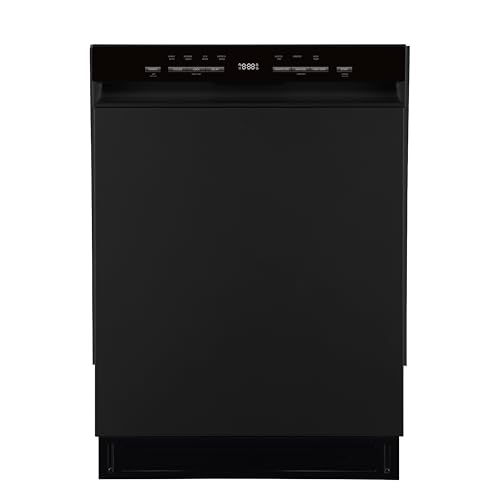
Kenmore 22-14789 (2214789)
Why it fits heated drying. This Kenmore keeps the formula simple: a named Heated Dry setting on a full-size machine with a sensor wash cycle that adjusts temperature, pressure and time to the soil level it detects. The three-stage UltraWash filter captures fine particles so they are not redeposited on dishes you are about to dry, and Sani Rinse adds a high-temperature final rinse that also leaves dishes hotter going into the dry phase, which helps the element finish faster. The adjustable, removable upper rack makes room for taller items that trap water when they sit at an angle.
Trade-offs. The hybrid tub does not hold heat quite like a full stainless interior, and at 54 dBA this is the loudest machine in this guide, so it suits a closed-plan kitchen better than an open one. Capacity is 12 place settings rather than the 15 or 16 of larger rivals, and there is no third rack.
Best for / Skip if. Best for buyers who want heated dry and sensor washing in a lighter, simpler full-size machine without paying for a flagship feature set. Skip it if your kitchen is open-plan and you run the dishwasher during conversation, or if you regularly wash for a large household.
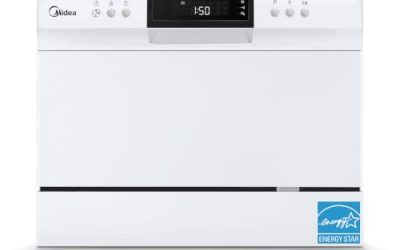
Midea MDF18A1AST
Why it fits heated drying. Slim 18-inch dishwashers often drop the heating element to save space and cost, and many compact rivals dry by condensation only. The Midea keeps a dedicated Heated Dry function that its listing says delivers thorough drying with no towel drying needed, and it pairs that with a stainless tub, a Hi-Temp wash and a Sanitize function in a machine that fits an 18-inch cabinet opening. For apartments, small family kitchens and second dishwashers in a pantry or bar area, it is the compact option that does not ask you to give up dry plastics.
Trade-offs. Eight place settings is a hard ceiling, and heated dry is disabled on the Rapid and Self-clean cycles, so the fastest wash still ends with condensation drying. There is no third rack, and the manual filter needs regular rinsing to keep wash performance up.
Best for / Skip if. Best for compact kitchens, couples and small households that want real heated drying in an 18-inch format. Skip it if you host often or wash large cookware daily, where a 24-inch machine is the better fit.
How to choose between these picks
Start with size. If your cabinet opening is 18 inches, the Midea is the only pick here that fits, and it gives up nothing on the drying feature itself. For a standard 24-inch opening, decide how much of your load is plastic. Households washing lunch containers, kids’ cups and bottle parts every day get the most from the GE and its Dry Boost settings, because the selectable High mode is built for exactly those items. If your loads are mostly ceramic, glass and metal, the Sharp’s traditional heated dry is more than enough, and you gain a quieter wash and an adjustable third rack. Choose the Kenmore if you want heated dry with the least complexity: sensor wash, a heated dry setting, and physical simplicity, accepting more noise and a smaller capacity.
Also think about when the cycle ends. Heated dry works best when dishes stay in the warm tub briefly after the cycle rather than sitting for hours, so a delay start that finishes the load just before you wake or get home pairs well with any of these machines.
Getting the best dry results: setup and care
Heated drying rewards a few habits. Load plastics on the upper rack, angled so water runs off instead of pooling in rims and lids, and leave space between items so hot air can circulate. Keep the rinse aid dispenser filled and set the dose higher if you see beading on glass. Run the hot water tap near the dishwasher briefly before starting so the first fill is already warm; the element then spends its energy on drying rather than compensating for a cold start.
For care, clean the filter on the schedule the manual sets out, since a clogged filter leaves soil in the water that can spot dishes during drying. On models with a removable filter alongside a hard food disposer, rinse the filter rather than relying on the disposer alone. Wipe the door gasket and the vent outlet monthly; a vent blocked by grease film traps moist air in the tub and undoes the element’s work. If dishes start coming out wetter over time, check the rinse aid level first, then the filter, before assuming the element is failing.
FAQ
Is heated drying hard on plastic dishes?
It can be if the wrong items sit near the element. Keep plastics on the upper rack, away from the tub base where the element sits, and use the lower dry setting or turn heated dry off for thin or heat-sensitive items. The dishwasher-safe marking on the item is the final word.
Does heated dry use much more energy than condensation drying?
It uses more, because the element draws power after the wash ends. Makers do not publish a separate per-cycle figure for the dry phase, so the practical control is the setting itself: use the normal dry level for everyday loads and reserve the high or extended setting for plastic-heavy ones.
Why do my cups still hold water on top with heated dry?
Concave cup bases pool water that no dry system fully removes. Load cups at an angle so the base drains, and unload the bottom rack first so water from the top rack does not drip onto dry dishes below.
Can I turn heated dry off to save time?
Yes, on all four picks here the dry function is an option rather than a fixed part of the cycle. Turning it off shortens the cycle and leaves the machine to condensation dry, which is fine for ceramic and glass loads you plan to towel off or leave overnight.
Does a stainless tub dry better than a hybrid tub?
Stainless holds heat longer and supports both condensation and heated drying, which is one reason the Sharp and GE feel more forgiving with mixed loads. A hybrid tub with a working element, like the Kenmore here, still dries well; loading angle and rinse aid matter more than the tub difference for most households.
Conclusion
For most kitchens, the Sharp SDW6757ES is the balanced choice: a genuine heated dry option, a stainless tub and a quiet 45 dBA wash in a standard 24-inch frame. If plastics dominate your loads, step up to the GE GDT670SYVFS and its Dry Boost settings, and confirm the listing configuration before you order. If you want heated dry kept simple in a lighter full-size machine, the Kenmore 22-14789 covers the essentials. And if your opening is 18 inches, the Midea MDF18A1AST is the compact pick that still dries with heat instead of hope.