Our Short List of 3

All 4 Picks at a Glance
| Product | Specs | Action |
|---|---|---|
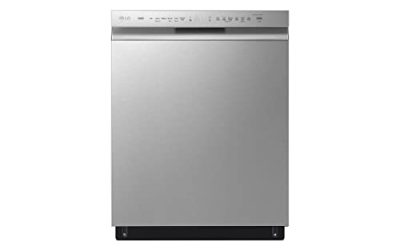
 LG LDFN4542S — the capacity pick with a fixed third rack | Check price on Amazon | |
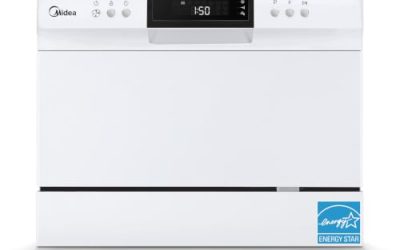
 Sharp SDW6736MS — sliding third rack, heated dry, quiet running | Check price on Amazon | |
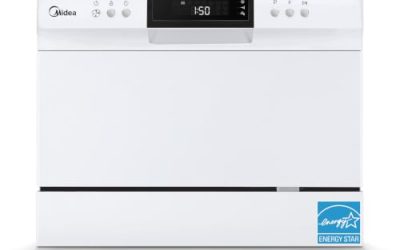
| Sharp SDW6726MS — adjustable tray with wash zones for smaller households | Check price on Amazon | |
 Sharp SDW6506JS — the straightforward front-control option | Check price on Amazon |
Key takeaways
- Compare the best dishwashers with 3rd rack trays for flatware, utensils and small items, with capacity, noise figures, rack types and cycle specs compared.
A third rack is the shallow tray at the very top of the tub, above the upper rack, and it changes how a dishwasher gets used every day. Instead of dropping flatware into a basket on the lower rack, where forks and spoons nest together and come out spotted, you lay each piece flat in its own slot on the top tray. That one habit frees the whole footprint of the cutlery basket, so the lower rack suddenly has room for the roasting pan, the big mixing bowl or the extra dinner plates. Long utensils that never fit anywhere sensible — spatulas, tongs, ladles, whisks, serving spoons — lie flat up top instead of poking through the upper rack at odd angles. Small lids, measuring cups and container tops that used to flip over and fill with water get a stable, shallow home of their own.
This guide is for households that run the dishwasher daily and feel the squeeze at loading time: families whose cutlery basket overflows, home cooks with a drawer full of long tools, and anyone who has hand-washed the awkward leftovers because the racks were full. The picks below are built-in 24-inch dishwashers with a third rack, chosen because the rack solves a real loading problem rather than because it pads a feature list. Picks are based on manufacturer specifications and Amazon listing details for each exact model — rack type, place settings, noise figure, dimensions and cycle lists are taken from those sources.
Disclosure: As an Amazon Associate, we earn from qualifying purchases. Product details and availability can change; check the Amazon listing before you buy.
Quick picks at a glance
| Product | ASIN | Best for |
|---|---|---|
| LG LDFN4542S | B0BDMR9745 | Larger households that want 15 place settings plus a third rack |
| Sharp SDW6736MS | B0FG9ZKV69 | Quiet running with a sliding third rack and heated dry |
| Sharp SDW6726MS | B0FG9QGZPX | Targeted wash zones and a power sprayer in a 12-setting machine |
| Sharp SDW6506JS | B0FGB5YPXX | Simple front controls and the lightest build of the group |
What matters most when the third rack is the point
Fixed tray versus adjustable tray. The simplest third racks are fixed trays: a flat grid that accepts flatware and utensils up to a set height. Adjustable versions slide sideways or change height, which matters when you want to park a tall ladle on the tray and still close the door, or shift the tray across so taller glasses fit below. If your loads mix flatware with bulky cooking tools, an adjustable or sliding tray earns its keep; if the tray will carry cutlery and nothing else, a fixed tray is enough.
What you actually plan to load up top. For flatware-only households, any of these trays works, and the bigger decision is whether you will remove the lower cutlery basket and enjoy the extra plate space. Households that cook a lot should look at tray depth and utensil slots, because spatulas and tongs need length more than slots. Small cups and lids need a tray tall enough that they do not foul the top of the tub.
The height trade-off below the tray. A third rack is not free space; it borrows a few inches from the top of the tub. A height-adjustable upper rack hands that height back, letting you raise the middle level for tall stemware or drop it for stockpots below. Check the listed dish height limits against your tallest glasses and pans.
Capacity in place settings. Place settings run from 12 to 15 across these picks. The third rack makes the smaller machines workable for families, because flatware no longer competes with plates for lower-rack space. Bigger households should still lean toward the 15-setting machine, where the tray supplements capacity instead of substituting for it.
Wash coverage and drying for the top tray. Items on the third rack sit farthest from the main spray arms, so look for a top spray arm or a wash system that covers three levels. Flatware laid flat sheds water well, but cups on the top tray can hold puddles, so a heated dry option is worth having if you load small cups up top.
LG LDFN4542S — the capacity pick with a fixed third rack
Why it fits the third-rack use case. The LG pairs the group’s largest capacity with a fixed third rack, so the tray handles the full flatware load for a big family dinner while the racks below take plates, bowls and pans without the cutlery basket in the way. QuadWash drives three spray arms, including a top arm — exactly the coverage a top tray needs. The height-adjustable upper rack, with a listed 7.1-inch dish height limit, lets you trade space between stemware in the middle and the tray above, and the 12.5-inch lower limit covers most stockpots once the basket is out. The SenseClean system adjusts the wash to the soil level it detects.
Trade-offs. The fixed tray does not slide or change height, so very bulky utensils still compete for the upper rack. At 48 dBA it is the loudest machine here. Drying is condensation-based Dynamic Dry rather than a heated element, so plastics benefit from the Extra Dry option.
Best for / Skip if. Best for larger households that fill 15 place settings and want the tray for a full set of flatware and utensils. Skip if you run loads during the evening in an open-plan room — one of the 47 dBA Sharp models below will intrude less.
Sharp SDW6736MS — sliding third rack, heated dry, quiet running
Why it fits the third-rack use case. The sliding third rack is the most flexible tray in this group: it shifts side to side, so you can open up headroom over one half of the rack below for taller glasses while the other half still carries flatware. That suits cooks whose top tray alternates between cutlery, long utensils and small bowls. The Power Wash sprayer aims extra force at baked-on cookware below, and Wash Zones let you run a half load on one level. Heated Dry is a genuine plus for the small cups and lids that live on a third rack, because it drives off the water that pools in them.
Trade-offs. Fourteen place settings is one down from the LG, and at 93.3 pounds it is the heaviest machine here, which matters for a one-person install. The cutout height runs to a 35-inch maximum, so measure a taller opening carefully. Six cycles is a shorter list than the LG’s nine.
Best for / Skip if. Best for households that want the tray to flex between flatware and bulky utensils, and for open-plan homes that value the 47 dBA figure and heated drying. Skip if you need the full 15 place settings every night.
Sharp SDW6726MS — adjustable tray with wash zones for smaller households
Why it fits the third-rack use case. This is the smaller-household version of the same idea: an adjustable third rack for flatware and serving tools, in a 12-setting tub that suits couples and small families who run a load a day. The adjustable upper rack takes taller glasses, fold-down tines flatten out for roasters and serving bowls, and the Power Wash sprayer plus Wash Zones carry over from the larger Sharp, so a casserole dish in the corner gets targeted spray while utensils wash up top.
Trade-offs. Twelve place settings is the joint-smallest capacity here, so a big family will run it twice on entertaining days. Some listing fields describe the noise figure inconsistently, so treat 47 dB as the headline figure. The drying method is not spelled out as clearly as on the SDW6736MS, so check the listing if heated drying is a priority.
Best for / Skip if. Best for one-to-three-person households that want an adjustable third rack and targeted wash power without unused capacity. Skip if you regularly wash for five or more people at one sitting.
Sharp SDW6506JS — the straightforward front-control option
Why it fits the third-rack use case. The SDW6506JS keeps the formula simple: a third rack for silverware and cooking utensils, an upper rack that moves two inches to make room for taller items, front touch controls, and a half load option for days when only the tray and a few plates are dirty. At 70.6 pounds it is the lightest machine here by a wide margin, which makes it the easiest to manoeuvre into place during a kitchen refresh or a rental upgrade. Heated Dry is included, which helps the small items stored on the top tray.
Trade-offs. The hybrid tub pairs stainless walls with a plastic floor, a step down from the full stainless tubs above. At 49 dB it is the loudest on paper here, its cycle list is the shortest at five, and 12 place settings caps its usefulness for bigger families. The feature set is deliberately plain: no wash zones and no power sprayer.
Best for / Skip if. Best for buyers who want the third rack itself, front controls and heated dry in a lighter, simpler machine — a sensible rental or first-home upgrade. Skip if a full stainless tub or targeted wash features matter to you; the two Sharp models above add exactly those.
How to choose between these picks
Start with the tray, because that is why you are here. If the top tray will carry flatware and the occasional spatula, the LG’s fixed tray is fine and you gain the largest capacity and the longest cycle list. If your cooking tools are the problem — long tongs, ladles and whisks that fit nowhere — the sliding tray on the SDW6736MS adapts to them best, and its heated dry looks after the small cups that migrate up top. If the household is small but the utensil drawer is not, the SDW6726MS gives you the adjustable tray and wash zones in a 12-setting tub. If the priority is a simple machine that is easy to install and run, the SDW6506JS covers the brief with the least complexity and the lightest body.
Then check the two numbers that decide daily happiness: place settings against your biggest regular load, and the noise figure against your room layout. A load that overflows a 12-setting machine every Sunday costs more time than a slightly louder cycle ever will. Finally, measure your cutout against the listed dimensions before ordering, because these machines differ by more than an inch in depth and height.
Loading, setup and care for a third rack
Load the tray the way it was designed to be used: flatware laid flat, one piece per slot where the tray provides them, handles aligned so spoons do not nest into each other. Nesting is the one habit that defeats a third rack, because two spoons locked together shield each other from the spray. Alternate forks and spoons along the tray, lay knives blade-down, and give long utensils the length of the tray. Small lids and container tops sit rim-down at a slight angle so they drain instead of pooling.
Before the first wash, confirm the top spray arm — where fitted — spins freely with the tray loaded, and run the upper rack through its height positions so you know the stemware height in each. Keep the tray’s rails clean; crumbs migrate upward during loading and a gritty rail makes the tray judder. Wipe the tray monthly, since its fine grid traps starch film faster than the open racks below. Clean the filter on the maker’s schedule, and keep the rinse aid dispenser filled if you rely on condensation drying.
FAQ
Does a third rack replace the cutlery basket? It can. Most owners move flatware to the tray full-time and take the basket out, which frees a large block of lower-rack space for pans and serving dishes. If you prefer the basket for unloading speed, the tray still works as overflow — but you gain the most when the basket comes out.
What actually fits on a third rack? Flatware of every kind, plus the long flat tools: spatulas, tongs, ladles, whisks, serving spoons and knives. Shallow items such as small lids, measuring cups and espresso cups fit on trays with enough height, and sliding trays handle bulkier tools by shifting to make room.
Does a third rack steal space from the racks below? Yes, a few inches at the top of the tub. A height-adjustable upper rack, as on the LG and both adjustable Sharp models, lets you rebalance the middle level, and the listed dish height limits tell you what fits where. Check those figures against your tallest glasses.
Do items on the third rack get washed properly? They do when the machine is built for it. Look for a top spray arm or a three-arm wash system, like the LG’s, and load the tray without nesting so water reaches every surface. Flatware laid flat in slots generally comes out cleaner than flatware bunched in a basket, because nothing is shielded by its neighbour.
Can I add a third rack to a dishwasher that lacks one? Only where the maker offers a rack kit designed for that exact model; a tray from another model will not track or clear the door correctly. It is far simpler to buy a machine that ships with one, as all four picks here do.
Conclusion
For most households, the LG LDFN4542S is the complete package: 15 place settings, a fixed third rack that swallows a full family’s flatware, three spray arms to wash it, and an adjustable upper rack to balance the space. If your loads mix cutlery with long, awkward utensils and you want them dried properly, the Sharp SDW6736MS and its sliding tray with heated dry is the better tool. Smaller households should take the SDW6726MS for the same tray flexibility in a 12-setting tub, and anyone who wants the third rack without the extras — in the lightest, simplest machine here — should take the Sharp SDW6506JS. Whichever you choose, the habit that makes it worthwhile is the same: flatware flat on the tray, basket out, and the lower rack free for the pans.