Our Short List of 3
All 4 Picks at a Glance
| Product | Specs | Action |
|---|---|---|
 COMFEE’ CDC22P2AWW Countertop Dishwasher | Check price on Amazon | |
 Midea MDF18A1AST 18-Inch Built-In Dishwasher | Check price on Amazon | |
 Kenmore 22-14675 24-Inch Built-In Dishwasher | Check price on Amazon | |
 LG LDFN4542S 24-Inch Built-In Dishwasher | Check price on Amazon |
Key takeaways
- The best dishwashers for the money, tier by tier: which tubs, cycles, racks and drying systems you get at each level, and where stepping up stops paying off.
A dishwasher earns its keep through build and specification, not through a number on a tag. The machines that give the most for the money share a pattern at every tier: a tub made of the right material, a wash system that covers the whole load, a drying method that actually finishes the job, and a cycle menu matched to real household loads rather than padded with novelty programs. What changes as you move up the tiers is how many of those boxes are ticked at once, and how quiet and flexible the machine is while it works.
This guide is for shoppers who want to judge value from the specification sheet: renters and apartment households starting with a countertop, owners filling a slim 18-inch opening, and families replacing a full-size built-in who want to know exactly what each step up adds. Every pick below was chosen from manufacturer specifications and Amazon listing details for the exact model, not from any claimed personal trial. Four formats are covered, one per tier, so you can see what the money buys at each level and where stepping up stops adding anything useful.
Disclosure: As an Amazon Associate, we earn from qualifying purchases. Product details and availability can change; check the Amazon listing before you buy.
Quick picks at a glance
| Product | ASIN | Best for |
|---|---|---|
| COMFEE’ CDC22P2AWW Countertop Dishwasher | B096RYWSQM | Renters and small households that need a full cycle menu with no installation |
| Midea MDF18A1AST 18-Inch Built-In Dishwasher | B0C84MCVWM | Slim openings where a stainless tub and heated dry matter more than capacity |
| Kenmore 22-14675 24-Inch Built-In Dishwasher | B0CFPNG5TW | Families that want a third rack, sensor washing and quiet running in one machine |
| LG LDFN4542S 24-Inch Built-In Dishwasher | B0BDMR9745 | Buyers stepping up for spray coverage, rack flexibility and long motor cover |
What matters most when judging a dishwasher’s value
Tub material. A stainless steel tub resists staining, tolerates high wash temperatures and helps condensation drying along. Plastic tubs appear at the entry end of the market and work fine, but stainless is the single clearest build marker that a machine was specified to last, and three of the four picks here include it.
Wash coverage. One lower spray arm leaves the corners of the upper rack to chance. Multi-arm systems, targeted jets and soil sensors that adjust the cycle to the load do more for real cleaning than a long list of named programs. Judge a machine by how water reaches the dishes, not by how many buttons it has.
Drying method. Heated dry, fan-assisted dry and condensation drying behave differently on plastics and on quick cycles. A named drying system backed by a fan or a heated element is worth more than a basic hot final rinse, especially if you unload straight into cupboards.
The noise figure. The decibel figure is printed on every listing and it is one of the few specs you feel every day. The mid-40s dBA range suits open-plan rooms; the low 50s are easy to live with in a separate kitchen. Paying for silence below the low 40s is a premium-tier habit that most households never notice.
Energy and water figures. Annual energy use in kilowatt hours and water use per cycle are published for every model here. The spread between tiers is narrower than the feature spread, so treat these numbers as a tiebreaker between close picks rather than the main reason to step up.
Rack flexibility and warranty terms. An adjustable upper rack and a third rack turn the same tub into more usable space. Warranty length on the motor and tub tells you how the maker expects the machine to age; a ten-year motor term is a genuine value signal, not a marketing line.
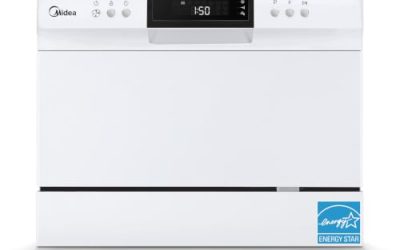
COMFEE’ CDC22P2AWW Countertop Dishwasher
Why it fits the value brief. This is the entry tier done properly. Eight programs is a full-size cycle menu on a countertop body, and it includes the cycles small households actually rotate through: a 45-minute Speed program for lightly soiled loads, a Baby-Care cycle for bottles and children’s tableware, a Glass cycle, and an ECO program. The extra-drying function addresses the classic countertop weakness of wet plastics. Because it connects to the faucet with the included adapter, there is no installation work and nothing to undo when you move, which is part of what you are paying for at this tier: capability without commitment.
Trade-offs. Six place settings is a ceiling, not a starting point; a household cooking full dinners for four will run it twice. It needs counter clearance under wall cabinets and a faucet within hose reach, and unlike tank-fed countertop models it cannot run away from the sink. There is no soil sensor, so cycle choice is manual.
Best for / Skip if. Best for renters, dorm and apartment kitchens, and one-to-three-person households that want real programs instead of a rinse box. Skip it if you regularly wash stockpots and serving platters, or if your faucet is a pull-down sprayer type that will not take the adapter.
Midea MDF18A1AST 18-Inch Built-In Dishwasher
Why it fits the value brief. Slim built-ins are where makers usually cut the specification to protect the format, and this one keeps the parts that matter: a stainless steel tub instead of plastic, a sanitize function, a high-temperature wash and heated drying across six programs. The interior takes items up to 11 inches tall, which covers dinner plates and most everyday cookware, and the LED display with push-button controls is simple to live with. For a kitchen with an 18-inch opening, the value question is whether the slim machine behaves like a real dishwasher; on the specification sheet, this one does.
Trade-offs. Eight place settings suits one or two people, or a small household willing to run the machine daily. The extra drying function is not available on the Rapid cycle, so the fastest wash can leave plastics damp. The filter is a manual-clean design, and at 52 dB it is audible in an open-plan room, though unremarkable in a closed kitchen.
Best for / Skip if. Best for small kitchens, condos and in-law suites with a slim cutout, and for anyone replacing a worn compact built-in. Skip it if your household produces family-size loads every night; the full-size picks below hold nearly twice as much per run.
Kenmore 22-14675 24-Inch Built-In Dishwasher
Why it fits the value brief. This is the tier where the specification starts to overlap with premium machines. A 45 dBA noise figure is open-plan quiet. The EasyFlex third rack takes flatware and utensils out of the lower basket, the upper rack adjusts for tall items, and SmartWash sensing adjusts the cycle to how dirty the load actually is, so the Half Load and Accela Wash options are backed by a system that measures rather than guesses. TurboDry uses fan assistance, which is the drying method that handles plastics best in this group, and the certified energy and water figures are the lowest in this guide. Put together, the value case is that nothing in the everyday specification is missing.
Trade-offs. The filter is a manually cleaned type, so it needs a rinse under the tap on a regular rhythm. There is no Wi-Fi or app control, which some step-up models add. At 90.4 pounds it is a two-person installation job, and top controls mean you read the remaining time from the display edge rather than a front panel.
Best for / Skip if. Best for families in open-plan homes who run the machine daily and want quiet, capacity and drying handled in one purchase. Skip it if you specifically want front controls or connected features; the LG below covers the connected-adjacent ground with its cycle downloads and tag-on diagnostics.
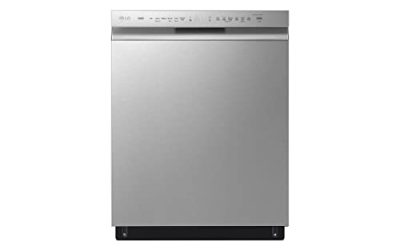
LG LDFN4542S 24-Inch Built-In Dishwasher
Why it fits the value brief. The step up from the Kenmore buys coverage and flexibility rather than headline capacity, which stays at 15 place settings. QuadWash uses four spray arms with multi-motion action to reach corners a two-arm system misses, the three-stage filtration keeps wash water cleaner through the cycle, and the EasyRack Plus upper rack adjusts to fit tall stems above or deep pots below. The warranty structure is the other half of the value case: a ten-year term on the Inverter Direct Drive motor and five years on the control board and rack parts say the maker expects the wash system to outlast the typical ownership window. Front controls with a visible display suit households that like to check the cycle at a glance.
Trade-offs. The third rack is fixed rather than height-adjustable, so it takes flat items only. At 48 dBA it is a step louder than the Kenmore, noticeable in a fully open-plan space though fine in most kitchens. The annual energy figure is higher than the Kenmore’s, and the Download Cycle and NFC tag-on features are extras many owners will never open.
Best for / Skip if. Best for cooks who load awkward items, want the strongest spray coverage in this group, and value long motor cover. Skip it if the lowest possible noise figure is your priority; the Kenmore runs quieter at the same capacity.
How to choose between these picks
Start with the opening you have, because format decides the tier before preference does. No cabinet opening at all points to the COMFEE’, provided your faucet accepts an adapter and you have counter space near the sink. An 18-inch opening points to the Midea, and its specification is complete enough that you do not need to feel you settled. A standard 24-inch opening is where the real choice sits.
Between the two full-size machines, choose by the room and the load. If the kitchen opens into living space and the machine runs during evenings, the Kenmore’s 45 dBA figure and fan-assisted drying make it the balanced pick. If you cook with large, awkward pieces and want the wash system to be the strong point, the LG’s four-arm coverage and adjustable racking earn their step up. Both hold 15 place settings and both use stainless tubs, so neither is a wrong answer; the difference is quiet and drying against coverage and warranty length.
One honest note on stepping up further: beyond this level, extra money mostly buys lower noise figures in the low 40s, steam cycles, interior lighting and connected features. Those are pleasant, but they do not change how clean the dishes come out for most households, which is why this guide stops where it does.
Setup, care and keeping the value
Value is lost fastest through poor loading and neglected upkeep, and both are free to fix. Load so that spray can reach every surface: bowls angled down, large items at the sides and back, nothing nesting inside anything else. A soil-sensing machine can only adjust to the load it can measure, so scrape plates rather than rinsing them clean before loading.
Clean manual filters regularly; the Midea and the Kenmore both rely on them, and a clogged filter quietly undoes the wash performance you paid for. Keep the rinse aid dispenser filled, because every drying system in this guide works better with it, especially on plastics. Use the high-temperature or sanitize functions for baby items and after raw-meat preparation rather than as an everyday default, and run the machine-clean or a hot empty cycle when odours appear. On the countertop COMFEE’, drain and dry the hoses if the machine will sit unused, and check the faucet adapter seal when you reconnect it.
FAQ
What makes a dishwasher good value if price is not the measure?
The specification markers: a stainless tub, a wash system with more than one spray level or a soil sensor, a named drying method, a noise figure in the 40s, and published energy and water figures. A machine that ticks those boxes at any tier is specified to perform and last; a machine that substitutes extra named programs for them is not.
Is a stainless steel tub worth stepping up for?
For most households, yes. It resists staining and odour, tolerates the high-temperature cycles that handle greasy loads, and supports condensation drying. It is also the clearest sign that the rest of the machine was built to a similar standard.
Countertop or built-in: which gives more per tier?
They solve different problems. A countertop such as the COMFEE’ gives a full cycle menu with no installation and no permanent change to the kitchen, which is the whole value case for renters. A built-in gives capacity, quiet and a fitted finish. Neither is better value in the abstract; the right one is the one that matches your opening.
How many wash programs does a household actually use?
Most rotate through three or four: a normal or auto cycle, a heavy cycle for cookware, a quick cycle, and an eco cycle. All four picks cover that set. Extra programs are only worth weighing if one matches a real habit, such as the COMFEE’s Baby-Care cycle in a house with bottles to wash.
Do the energy figures differ enough to matter between tiers?
They differ, but modestly. The full-size Kenmore is certified at 234 kilowatt hours per year and the LG at 258, with water use close between them. Across a year of daily use that gap is a tiebreaker between two close picks, not a reason to choose a machine whose size or racks do not fit your kitchen.
Conclusion
For renters and small households, the COMFEE’ CDC22P2AWW is the value pick: a complete program menu, an extra-drying function and faucet setup with nothing to install. For a slim opening, the Midea MDF18A1AST keeps the stainless tub, sanitize function and heated dry that slim machines usually lose. For a full-size replacement in an open-plan home, the Kenmore 22-14675 combines the quietest figure here with a third rack, sensor washing and fan-assisted drying. And for buyers who load demanding cookware and plan to keep the machine for years, the LG LDFN4542S earns its step up with four-arm wash coverage, flexible racking and the longest motor cover in the group. Match the tier to your opening first, then let tub, drying and noise decide inside it.