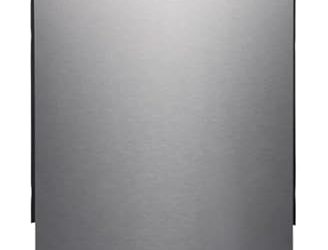
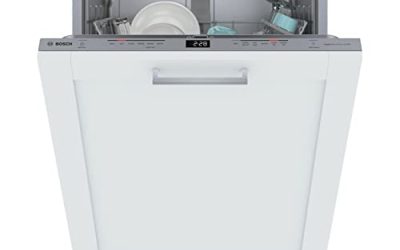
Our Short List of 3
All 3 Picks at a Glance
| Product | Specs | Action |
|---|---|---|
 GE GDT670SYVFS | Check price on Amazon | |
 GE GDT630PYRFS | Check price on Amazon | |
 GE GDF535PSRSS | Check price on Amazon |
Key takeaways
- Compare the best dishwashers with food grinders: built-in blades that pulverize scraps, cut pre-rinsing, and keep spray arms clear on every single load.
A dishwasher with a food grinder takes a different approach to food scraps than the filter-only machines that dominate the market now. Instead of trapping every particle in a mesh cup that you empty by hand, a grinder model carries a small stainless steel blade in the sump that pulverizes soft food scraps as wash water circulates, so the fine particles leave with the drain water. If your household loads plates straight from the table, cooks with sauces and grains that cling to everything, and resents the weekly filter scrub, a grinder is the mechanism built for that routine. This guide explains how the grinding hardware actually works, where its limits sit, and which grinder-equipped models can be verified on Amazon US right now. One honest note up front: true food grinders have become a niche feature, and GE’s Piranha line is where the verifiable Amazon US listings are, so all three picks below are GE models at different steps of that range. The picks are based on manufacturer specifications and Amazon listing details for each exact model, not on in-person testing.
Disclosure: As an Amazon Associate, we earn from qualifying purchases. Product details and availability can change; check the Amazon listing before you buy.
Quick picks at a glance
| Product | ASIN | Best for |
|---|---|---|
| GE GDT670SYVFS | B0F7GMK9VR | Quiet grinding with a stainless tub and third rack |
| GE GDT630PYRFS | B09QLJR3GP | Full-size grinding with bottle jets and a wash zone |
| GE GDF535PSRSS | B09BNXGZ5R | Front controls and the simplest grinder upkeep |
What matters most when buying a dishwasher with a food grinder
How the grinder does its work. In GE’s Piranha system, a stainless steel blade in the sump spins at 3,600 RPM and shreds food particles fine enough to pass through the wash system without lodging in a spray arm jet. The practical payoff is twofold: large particles never settle back onto clean dishes, and the jets that do the washing stay clear load after load. When you compare grinder models, the blade assembly and its pairing with a filter matter more than the badge on the door.
Grinder plus filter, not grinder instead of filter. Each pick here pairs the grinder with a removable filter, and that filter still collects fine residue over time. The grinder changes the maintenance bargain rather than deleting it: the filter gathers far less, far more slowly, and rinsing it is a quick job instead of a scrape-and-scrub chore. Any listing that implies a grinder machine needs no filter care at all is overstating the case.
What the grinder cannot take. The blade is built for soft and medium scraps: sauces, rice, cereal, cooked vegetable pieces, small pasta fragments. It is not a sink garbage disposal and it is not built for bones, fruit pits, corn cobs, or thick grease, which belong in the trash or compost. Feeding the machine those items anyway is the surest way to jam a pump, on any brand.
Noise, in bursts. A grinder adds short mechanical bursts on top of the wash sound each time the blade works through a batch of scraps. The published sound figure therefore matters more on a grinder model than on a filter-only one. The picks here run from 45 dBA to 55 dBA, and that spread maps neatly onto kitchen layout: the quiet end suits open-plan homes, the louder end suits a closed kitchen or a delayed overnight run.
Cycles that feed the grinder well. Soil-sensing cycles such as AutoSense lengthen or shorten the wash based on how dirty the water is, which pairs naturally with a grinder because the machine can push a genuinely dirty load through the blade without you pre-rinsing first. Steam options earn their keep here too: they soften baked-on soil before the main wash, so what reaches the grinder is loosened food rather than cement.
Tub and rack layout. A stainless steel tub shrugs off tomato and turmeric staining and sheds water better at drying time; a plastic tub is lighter and simpler and shows up on the more straightforward models. A third rack moves utensils, lids, and small prep bowls up top, which leaves the lower rack open for the roasting pans and stockpots that produce the heaviest scraps in a cooking household.
GE GDT670SYVFS
Why it fits a grinder-first kitchen. This is the pick for households that generate serious scraps and also live in spaces where the kitchen is never really closed off. The Piranha blade handles the grinding, the stainless tub tolerates the staining that comes with saucy cooking, and at 45 dBA it is the quietest machine in this guide by a wide margin, so the grinder’s short bursts sit inside a wash cycle you can run while people talk or watch television nearby. The third rack with its removable caddy absorbs the utensils and small bowls that pile up on cooking nights, the four bottle jets reach inside tall bottles and jars, and Dry Boost goes after the plastics that usually come out wet.
Trade-offs. Top controls disappear when the door is shut, which looks tidy but means reading cycle status from the small display window instead of a front panel. It is also the heaviest and most feature-dense model here, so a household that only ever runs one cycle is carrying options it will not touch. The filter paired with the grinder still wants its periodic rinse.
Best for / Skip if. Best for families who cook daily, refuse to pre-rinse, and need the grinder to stay quiet about it. Skip it if you want at-a-glance front controls or a lighter machine for a tricky install.
GE GDT630PYRFS
Why it fits a grinder-first kitchen. The GDT630PYRFS keeps the same grinding hardware and the same 16-place-setting capacity as the step-up model, then adds two features that suit scrap-heavy routines. The bottle jets aim water inside tall bottles, travel mugs, and jars, the items that otherwise collect at the sink waiting for a hand wash. The Wash Zone option runs a true half load in the upper or lower rack, which matters on grinder logic: a small, dirty load no longer has to wait for a full machine, so scraps go through the blade the same day instead of drying onto plates overnight. AutoSense reads the soil level and sets the wash length, and Steam + Sani loosens baked-on food before the main wash reaches it.
Trade-offs. The plastic tub is the clear step down: durable and easy to wipe, but it holds stains more readily and leans harder on Dry Boost at drying time. At 50 dBA it sits in the middle of this guide for noise, fine in most kitchens and noticeable in a very quiet open-plan room. As with every pick here, the removable filter still needs its occasional rinse.
Best for / Skip if. Best for households that want the grinder, third-rack loading, and bottle jets together, and run plenty of half loads. Skip it if a stainless steel interior is non-negotiable or your kitchen opens straight onto a quiet living area.
GE GDF535PSRSS
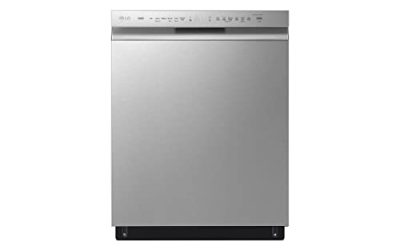
Why it fits a grinder-first kitchen. This is the grinder idea with everything extra stripped away: front controls anyone in the house can read at a glance, four essential cycles, and the same Piranha blade assembly doing the grinding underneath. The Steam + Sani option is certified to NSF Standard 184 and is described by GE as reducing 99.999 percent of bacteria on dishes, which is genuinely useful for households washing baby bottles, cutting boards, and canning jars in the same loads as dinner plates. Active Flood Protect adds a sensor that watches for overflow, a sensible partner for a machine you plan to start on a delay while you are out of the house.
Trade-offs. At 55 dBA it is the loudest pick in this guide, and the grinder bursts will be audible through a closed door. The two-rack, 14-place-setting layout fills up faster after a big family meal, and there is no soil-sensing cycle, so a heavily soiled load depends on you choosing Heavy rather than the machine judging for itself. The plastic tub and full-console styling are practical rather than premium.
Best for / Skip if. Best for buyers who want a real food grinder, a certified sanitize option, and controls that need no manual. Skip it if your kitchen is open to your living space or you regularly cook for more than six people at once.
How to choose between these picks
Start with where the machine will live. If the kitchen flows into the room where people work or watch television, the 45 dBA figure of the GDT670SYVFS deserves priority, because grinder bursts are brief but distinct, and on the quietest model they blend into the wash. If the dishwasher sits in a closed kitchen or mostly runs overnight on a delay, the 50 and 55 dBA models stop being a compromise.
Next, be honest about how you load. All three grinders are the same hardware, so the decision is really about the tub and racks around it. Sixteen place settings and a third rack, on either top-control model, absorb the utensils and prep bowls that scrap-heavy cooking creates and keep the lower rack free for pans. A smaller household that runs a load most days will fill the 14-place-setting GDF535PSRSS more easily, and a full machine is an efficient machine.
Then weigh the tub. Stainless steel, on the GDT670SYVFS, resists staining and helps drying; plastic, on the other two, keeps the machine lighter and simpler. Finally, decide how you want to interact with the controls day to day: top controls give a clean door front and stay out of reach of toddlers, while the front controls on the GDF535PSRSS show progress at a glance for a household where several people share loading duty.
Living with a food grinder: setup and care
Scrape, do not rinse. The habit that makes a grinder dishwasher work is also the simplest one: scrape plates into the trash or compost, skip the sink rinse, and load. Detergent works better with some soil present, and the grinder is designed to receive whatever is left. Keep bones, fruit pits, eggshells in quantity, and coffee grounds out of the machine; manuals name them again and again as poor candidates for the blade.
Respect the filter anyway. Pull the removable filter roughly once a month, rinse it under the tap, and glance into the sump for glass shards or jar labels that slipped past the racks. That short routine is the whole maintenance bargain of a grinder model, and skipping it for a year is how a low-upkeep machine turns into a smelly one.
Keep the spray arms and the drain path clear. The grinder exists partly to protect the spray arm jets, but a quick spin of each arm every few weeks confirms they turn freely and no jet is blocked by a stray seed or label fragment. On the drain side, the machine empties through the standard dishwasher hose to a sink disposal or a standpipe, with an air gap where local code requires one. If a sink disposal is ever replaced, check that the dishwasher inlet plug on the new unit has been knocked out; it is the most common cause of a fresh install that will not drain.
Run hot water first. Before starting a cycle, run the kitchen tap until the water runs hot. The first fill then arrives at temperature, which helps the steam and sanitize options work from the right baseline and gives the grinder softened scraps to work on instead of cold, set food.
Frequently asked questions
Does a food grinder mean I never clean a filter again?
No. Each model here pairs its Piranha grinder with a removable filter, and that filter still gathers fine residue over time. The difference from a filter-only dishwasher is frequency and effort: a quick rinse about once a month rather than emptying a cup of trapped scraps after heavy loads.
Can the grinder handle bones, pits, and corn cobs?
It is not designed to. The blade pulverizes soft and medium food scraps such as sauces, grains, and cooked vegetable pieces. Hard items like bones and fruit pits, and fibrous items like corn husks, belong in the trash or compost; loading them anyway risks a jam and a service visit.
Is a grinder dishwasher louder than a filter-only model?
It can be, in short bursts, because the blade makes a brief mechanical sound when it works through scraps. The steady wash sound is what the published dBA figure describes, which is why this guide spans the picks by that figure: 45 dBA for open-plan homes, 50 dBA for most kitchens, 55 dBA for closed kitchens and overnight runs.
Do I still need to scrape plates before loading?
Yes, scrape, but do not rinse. Large scraps go into the trash or compost; the film and small particles that remain are exactly what the grinder and the detergent are built to handle. Pre-rinsing wastes water and can leave detergent with too little soil to work against.
Why are all the verified picks from one brand?
Most major brands have moved to filter-only designs, and GE’s Piranha line is the grinder range that still sells broadly. For this guide, only models with a verifiable Amazon US listing for the exact model were included, and those listings are the three GE machines above. If a listing cannot be confirmed, the model is not recommended here, whatever its merits elsewhere.
Conclusion
For most households that want a food grinder, the GE GDT630PYRFS is the balanced starting point: the full Piranha grinding hardware, 16 place settings, a third rack, bottle jets, and a half-load wash zone, in a machine light enough for an easy install. Step up to the GDT670SYVFS if your kitchen is open-plan and the 45 dBA figure, stainless tub, and stronger drying matter every day. Choose the GDF535PSRSS if you prefer front controls, a certified sanitize option, and the simplest possible version of the grinder idea. Whichever you pick, the ownership routine is the same and it is short: scrape rather than rinse, rinse the filter monthly, and let the blade do the job it was put there for.