Our Short List of 3
All 4 Picks at a Glance
| Product | Specs | Action |
|---|---|---|
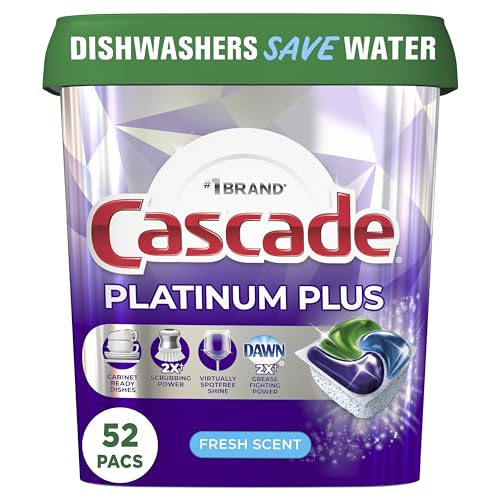 Cascade Platinum Plus ActionPacs, Fresh, 52 Count | Check price on Amazon | |
 Finish Quantum Dishwasher Pods, 14 Count | Check price on Amazon | |
 Finish Ultimate Dishwasher Pods with CycleSync, 52 Count | Check price on Amazon | |
 Seventh Generation Dishwasher Detergent Packs, Free & Clear, 45 Count (Pack of 2) | Check price on Amazon |
Key takeaways
- The best dish soap for new maytag dishwashers, compared on detergent form, dispenser fit and hard-water performance, with four verified Amazon US picks.
A brand-new Maytag dishwasher leaves the factory ready to clean, but the detergent you feed it decides how well its cycles actually perform. Newer Maytag models are built around a covered detergent dispenser, sensor-assisted cycles and high-heat options such as a heated dry and a sanitize setting, and each of those features interacts with the detergent form you choose. A pac that dissolves too slowly can under-dose a short cycle, while a formula without mineral-handling ingredients can leave film on glassware when the water supply is hard. This guide is for owners of recently bought Maytag machines who want a detergent that fits the dispenser properly, doses consistently and copes with hard water. Every pick below is an automatic dishwasher detergent — never a hand-washing liquid — chosen from manufacturer specifications and Amazon US listing details only, with no first-hand testing claims of any kind.
Disclosure: As an Amazon Associate, we earn from qualifying purchases. Product details and availability can change; check the Amazon listing before you buy.
Quick picks at a glance
| Product | ASIN | Best for |
|---|---|---|
| Cascade Platinum Plus ActionPacs, Fresh, 52 Count | B0BJW11NVL | Burnt-on and dried-on family loads |
| Finish Quantum Dishwasher Pods, 14 Count | B0DQQFZPW2 | A first detergent trial in a new machine |
| Finish Ultimate Dishwasher Pods with CycleSync, 52 Count | B0CBL82BSG | The toughest baked-on loads and hard water |
| Seventh Generation Dishwasher Detergent Packs, Free & Clear, 45 Count (Pack of 2) | B01FHUJ1FC | Fragrance-free, plant-based everyday washing |
What matters most for a newer Maytag machine
Detergent form and dispenser fit. Current Maytag dishwashers use a lidded dispenser cup on the door, sized for one tablet or pac, plus a smaller pre-wash section on many models. Pre-measured pacs and tablets drop into that cup cleanly and release when the lid opens at the right point in the cycle. Loose gel and powder give you dose control, but they are easier to overfill, and excess detergent is a common cause of cloudy film. Whichever form you pick, the pac or dose belongs in the covered dispenser — a pac tossed into the tub bottom dissolves during the first fill and rinse, leaving the main wash with little detergent.
Hard-water performance. Mineral-heavy water is the main enemy of a new machine’s early results: it dulls glassware, leaves white spots and can build scale on the heating element. Detergent formulas fight this with builder ingredients and polymers that keep minerals suspended so they rinse away instead of settling. If your home has hard water, prioritise a premium pac with an anti-film formula, and keep the machine’s rinse aid dispenser filled — rinse aid is a separate product from detergent, but the two work as a pair in hard-water homes.
Matching formula strength to the cycle. Newer Maytag models pair soil-sensing normal cycles with heavy options such as the PowerBlast cycle on many current models, aimed at baked-on cookware. A heavy cycle gives detergent more time and heat to work, so a mid-strength formula can be enough there, while short or light cycles reward a fast-dissolving, enzyme-rich pac that begins working early. Enzyme ingredients target starch and protein soils; oxygen-based cleaning agents in the formula help with tea, coffee and dried-on stains.
Residue and glass care. A new machine’s spray arms and filters are at their cleanest, so any film that appears in the first months usually traces back to detergent choice or dose rather than the appliance. Formulas that advertise residue removal and shine protection are worth favouring if you wash a lot of glassware, and a smaller dose of a strong pac often leaves less residue than a heaped measure of a basic one.
Storage and freshness. Pacs absorb moisture from the air, which can make them stick together or begin dissolving early. Makers package them in resealable tubs or pouches for this reason; keep the container sealed, store it somewhere dry, and handle pacs with dry hands so the film stays intact until the wash.
Cascade Platinum Plus ActionPacs, Fresh, 52 Count
Why it fits a new Maytag. Platinum Plus is Cascade’s strongest everyday formula, and its listing describes a pod built to remove both visible and invisible residue — the invisible part matters in a new machine, because early grease film inside the tub is what later loads pick up as odour and haze. The pod format suits the Maytag dispenser exactly: one pod in the covered cup, lid closed, and the machine’s cycle timing controls the release. For households running the heavy cycle on casserole dishes and roasting pans, the formula’s grease-cutting positioning is the natural match.
Trade-offs. It is a scented formula, so fragrance-sensitive households should look at the Free & Clear pick below. As a premium line it is positioned above Cascade’s basic tiers, and the 52-count tub is a mid-size commitment if you have never run the brand in your machine before.
Best for / Skip if. Best for busy family kitchens running mixed, greasy loads most days. Skip if you want a fragrance-free or plant-based formula.
Finish Quantum Dishwasher Pods, 14 Count
Why it fits a new Maytag. The three-chamber design separates jobs that a single-formula pod has to do all at once: the powder chamber works on stuck-on food, the gel chamber handles grease, and the Powerball chamber is there for the final shine — a useful spread for a new machine whose owner is still learning which cycles suit which loads. This 14-count pack is the smallest commitment in this guide, which makes it a sensible first purchase alongside a new appliance: you can run two weeks of varied loads through your Maytag before settling on a detergent long term. Finish also notes the pods come in resealable packaging to keep moisture out, and the listing carries a Cradle to Cradle Certified Silver level for the product.
Trade-offs. Fourteen pods run out quickly in a household washing daily, so the per-load routine means reordering sooner than with the larger tubs here. The formula is scented, and the shine chamber does not remove the need for rinse aid in genuinely hard water.
Best for / Skip if. Best for new Maytag owners who want to trial a premium pod in small quantity first. Skip if you prefer to stock up in bulk or need an unscented formula.
Finish Ultimate Dishwasher Pods with CycleSync, 52 Count
Why it fits a new Maytag. This is the heavy-duty end of the Finish range sold on Amazon US, positioned for burnt-on stains rather than everyday soil. The CycleSync name refers to the pod being built to release its cleaning agents in step with the wash cycle, which pairs well with the longer, hotter heavy cycles on newer Maytag models — the detergent is still working when the PowerBlast-style cycle reaches its hottest phase. For hard-water households, a maximum-strength formula is the usual first lever to pull against filming before looking at the machine itself, and this is the strongest formula in this guide. The 52-count pack matches the Cascade tub size, so switching between the two for comparison is straightforward.
Trade-offs. The listing notes that packaging may vary, and the formula is a maximum-strength option that is more than a light-soil household needs on a normal cycle — running it for a few glasses is wasted strength. Like the other Finish pick, it is a scented line rather than a free-and-clear one.
Best for / Skip if. Best for households with hard water, heavy cookware loads, or a habit of running full, baked-on loads. Skip if your loads are mostly light and you wash on short cycles.
Seventh Generation Dishwasher Detergent Packs, Free & Clear, 45 Count (Pack of 2)
Why it fits a new Maytag. Not every new-machine owner wants a fragranced, maximum-strength pod. Seventh Generation’s packs are the plant-based option here: the listing describes a biobased formula made with plant-based ingredients and kept free of fragrances, dyes, phosphates and chlorine bleach, which suits households that run the dishwasher near open-plan living spaces or wash baby and toddler items frequently. The pack format still fits the Maytag dispenser the same way as the other picks — one pack in the covered cup — so there is no dosing guesswork, and the twin-pack supply suits a household settling into a new machine for its first months.
Trade-offs. A plant-based, bleach-free formula gives up some of the stain-handling aggression of the premium pods above, so heavily burnt-on loads may need the heavy cycle and a longer soak phase to come out clean. In very hard water, the absence of the strongest anti-film chemistry means keeping the rinse aid dispenser filled matters even more.
Best for / Skip if. Best for fragrance-free and ingredient-conscious households running everyday loads. Skip if your priority is burnt-on cookware or the hardest water performance.
How to choose between these picks
Begin with your water. If glasses already come out of your new Maytag with spots or a chalky feel, go straight to the Finish Ultimate pods and keep the rinse aid dispenser filled; water hardness, not the machine, is the usual cause. If your water is soft to moderate and your loads are ordinary family loads, the Cascade Platinum Plus ActionPacs are the balanced default — strong on grease, simple to dose, and sized for a month or more of daily washing. If the machine has just been installed and you have no detergent loyalty yet, the small Finish Quantum pack is the low-commitment way to learn how a three-chamber pod behaves across your cycles before buying a large tub of anything. Choose the Seventh Generation packs when the ingredient list is the deciding factor — fragrance-free washing, plant-based ingredients and no chlorine bleach — and your loads are everyday rather than burnt-on. Across all four, the routine is identical: one pod or pack in the covered dispenser, every load.
Using detergent well in a new Maytag
Load the dispenser, not the tub. Place the pod in the main detergent cup and close the lid. A pod dropped in the tub or the silverware basket dissolves in the opening rinse and is drained away before the main wash begins. If your model has a pre-wash section in the dispenser door and you use loose detergent, that section is for heavily soiled loads only — with pods, leave it empty.
Keep pods dry and sealed. Store the tub or pouch away from the sink’s splash zone, close the resealable packaging after each use, and pick pods up with dry hands. A pod that has absorbed moisture can stick to the dispenser cup and release late.
Never substitute hand dish soap. The phrase dish soap in this keyword means automatic dishwasher detergent. Hand-washing liquid foams heavily under spray pressure, can overflow the tub and will leave a new machine full of suds — if it happens, the fix is to remove the suds and run rinse-only cycles, not more detergent.
Pair detergent with rinse aid in hard water. Fill the rinse aid dispenser when the machine is new rather than waiting for spots to appear, and check the level monthly. Rinse aid helps water sheet off dishes during the final rinse, which is when hard-water spots form.
Run the hot, heavy cycle when it counts. Detergent enzymes and oxygen-based agents work harder with heat and time. For baked-on loads, the heavy cycle plus a premium pod will outperform a normal cycle with any detergent in this guide.
FAQ
Can I use regular dish soap in my new Maytag dishwasher?
No. Only detergent made for automatic dishwashers belongs in the machine. Hand dish soap creates excessive suds that can leak from the tub and interfere with the wash; every pick in this guide is a machine detergent in pod or pack form.
Where does the pod go in a Maytag dishwasher?
In the covered detergent dispenser on the inside of the door — one pod per load, lid closed. Finish’s own directions for its pods say to place one pod in the detergent dispenser and run the cycle as normal, and Cascade gives the same instruction for ActionPacs.
Why are glasses coming out cloudy in a brand-new machine?
With a new machine, cloudiness is almost always a water and detergent issue rather than an appliance fault: hard-water minerals depositing during the final rinse, or too much detergent for the load. A stronger anti-film formula such as the Finish Ultimate pods, a filled rinse aid dispenser, and a single correctly dosed pod are the first fixes to try.
Are pods or loose detergent better for a new Maytag?
Pods remove dosing error entirely and suit the covered dispenser, which is why all four picks here are pre-measured. Loose powder or gel lets you reduce the dose for small loads, but the verified Amazon US listings for the leading loose detergents could not be confirmed to the standard this guide requires, so no loose product is recommended above.
How many pods should I use for a heavily soiled load?
Still one. Doubling pods does not double cleaning; excess detergent is a common cause of residue and film. For heavy soil, keep one premium pod and select the heavy cycle so the formula gets the time and heat it is designed for.
Conclusion
For most new Maytag owners, the Cascade Platinum Plus ActionPacs (B0BJW11NVL) are the straightforward default: one pod in the dispenser, strong grease handling, no measuring. Households fighting hard water or burnt-on loads should step up to the Finish Ultimate pods (B0CBL82BSG). If you want to trial a premium three-chamber pod before committing, the Finish Quantum 14-count (B0DQQFZPW2) is the small first step, and ingredient-conscious households are served by the Seventh Generation Free & Clear packs (B01FHUJ1FC). Whichever you choose, keep the pod in the covered cup, keep the pack sealed and dry, and let the machine’s heavier cycles do the hard work.