Our Short List of 3
All 3 Picks at a Glance
| Product | Specs | Action |
|---|---|---|
 LG LDTH7972S — the current LG flagship | Check price on Amazon | |
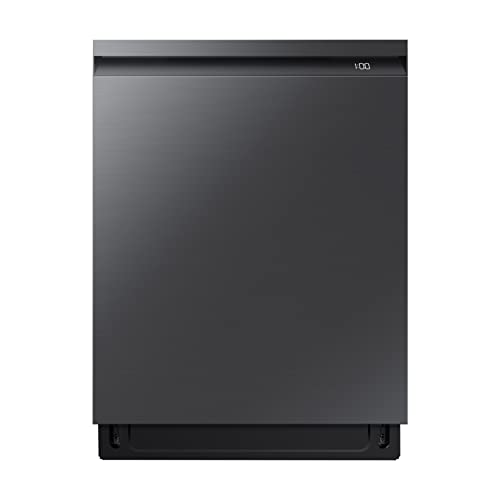 Samsung DW80B6060UG/AA — current StormWash+ smart model | Check price on Amazon | |
 Fisher & Paykel DD24DV2T9 — current Series 9 double DishDrawer | Check price on Amazon |
Key takeaways
- The best current dishwashers from the latest LG, Samsung, Bosch and Fisher & Paykel lines, compared on wash systems, noise, drying, racks and smart controls.
A dishwasher is a ten-year purchase, so buying the current generation matters more than chasing a discontinued model at a clearance counter. Current models get the maker’s newest wash systems, the quietest insulation packages, app platforms that are still being updated, and the longest runway of parts and service support. This guide covers the current flagship and mid-range lines from four makers — LG, Samsung, Bosch and Fisher & Paykel — in the formats those lines actually sell in today: three 24-inch built-ins with drop-down doors and one double-drawer model. Every pick below is a model its maker still lists in its current range, and every specification comes from the maker’s published data or the Amazon US listing for that exact model. The picks are based on manufacturer specifications and listing details, not on laboratory testing, so the comparisons focus on the figures and features you can verify before you order.
Disclosure: As an Amazon Associate, we earn from qualifying purchases. Product details and availability can change; check the Amazon listing before you buy.
Quick picks at a glance
| Product | ASIN | Best for |
|---|---|---|
| LG LDTH7972S | B0BX7FHNYM | The most complete current wash-and-dry system |
| Samsung DW80B6060UG/AA | B0B9GHTQ1F | Smart controls and door-open drying |
| Bosch 300 Series SHE53B75UC | B0BT5SJB1F | Hard-water homes that want a built-in softener |
| Fisher & Paykel DD24DV2T9 Series 9 | B07GSDDXJV | Two independent drawers for flexible half loads |
What matters most when buying the current generation
Still in the maker’s current line. The single best check is whether the manufacturer still lists the model on its own site as a current product. A model that has been dropped from the maker’s range may still wash well, but its app support, replacement racks and control boards age out sooner. Every model in this guide passes that check.
The wash system generation. Each maker has moved to a named wash platform in its current lines: LG’s QuadWash Pro adds high-pressure jets and steam, Samsung’s StormWash+ pairs dual arms with a rotating jet, and Bosch’s PrecisionWash uses sensors to direct spray where the load is dirtiest. These systems, not cycle counts, are what separate a current model from the one it replaced.
Drying method. Current models dry in three different ways: heated dynamic dry (LG), a door that opens itself at the end of the cycle to release steam (Samsung), and condensation drying against a hot stainless tub (Bosch). Plastics are the test case — door-open and heated systems handle them best, while condensation drying is gentler and uses no extra element.
Noise figure. Current flagships cluster between 42 and 46 dBA. At those levels the machine is quieter than normal conversation, which matters in open-plan kitchens where the dishwasher runs while people are in the room. Compare the published dBA figure, since it is measured the same way across brands.
Connected platform. ThinQ, SmartThings and Home Connect are the current platforms, and they do more than remote start: cycle downloads, maintenance reminders and detergent reordering all depend on the platform still being supported. If you will never open the app, a front-control model you run entirely from the panel is the simpler buy.
Rack layout. Third racks are now standard in current lines, but they differ: LG’s adjusts in height, Samsung’s is a full-width tray, Bosch’s is a fixed standard tray, and the Fisher & Paykel drawers split capacity into two independent tubs. Match the layout to what you actually load — long utensils, tall glasses or lots of small bowls.
LG LDTH7972S — the current LG flagship
Why it fits the current-generation brief. This is the top of LG’s current dishwasher line, and it shows in the wash hardware: QuadWash Pro uses multi-motion arms and high-pressure jets, TrueSteam adds a steam phase that loosens baked-on soil and reduces water spots on glass, and the 1-Hour Wash & Dry cycle pairs the wash system with Dynamic Heat Dry so a full load comes out dry in a single short program. At 42 dBA it is also the joint-quietest door model in this guide. The ThinQ platform adds downloaded cycles, remote monitoring and proactive maintenance alerts, and the height-adjustable third rack takes long utensils without stealing height from the rack below.
Trade-offs. It is the heaviest machine here, and the feature set assumes you will use the app at least for setup; steam and downloaded cycles are wasted on a household that only ever runs one program. The PrintProof finish resists fingerprints but the black stainless variant is a separate listing, so check the finish on the listing before ordering.
Best for / Skip if. Best for households that run mixed, heavily soiled loads daily and want the strongest current wash-and-dry combination. Skip it if you want front controls you can read at a glance, or if a drawer format suits your kitchen better.
Samsung DW80B6060UG/AA — current StormWash+ smart model
Why it fits the current-generation brief. The DW80B6060UG is Samsung’s current StormWash+ design: dual wash arms plus a rotating high-pressure jet cover the tub from more angles, and the Pre Blast option starts a cycle with a targeted soak for dried-on food. Its drying answer is the AutoRelease Door, which opens on its own at the end of the cycle so air circulates and plastics dry without a heating element. SmartThings connectivity covers remote start, cycle monitoring and Smart Reorder, which tracks pod use and reorders through Amazon Dash Replenishment. Samsung’s published materials and the listing’s own fields give different capacity figures for this model family, so the honest comparison is the layout: three racks with a height-adjustable middle rack that reconfigures for cookware.
Trade-offs. The top-control touch panel is invisible when the door is closed, so you read progress on the display or in the app. Door-open drying needs clearance in front of the machine and works best when the room air is dry. Several of the smart features only earn their keep if your household actually uses SmartThings for other devices.
Best for / Skip if. Best for connected-home households that hate unloading wet plastics and run the dishwasher overnight. Skip it if you prefer physical front controls or will never connect the machine to Wi-Fi.
Bosch 300 Series SHE53B75UC — current Bosch with a built-in softener
| Spec | Detail |
|---|---|
| Type | 24-inch built-in, front controls, pocket handle |
| Series | Bosch 300 Series |
| Capacity | 15 place settings |
| Noise | 46 dBA |
| Wash system | PrecisionWash, Speed60 |
| Drying | PureDry condensation |
| Wash cycles | 6 |
| Racks | 3, standard third rack |
| Connectivity | Wi-Fi, Home Connect |
| Water softener | Built in |
| Leak protection | AquaStop Plus |
| Weight | 90 lb |
Why it fits the current-generation brief. The SHE53B75UC is the current 300 Series model Bosch sells with Home Connect, and it carries two features the other door models here do not: a built-in water softener, which is the single most effective answer to hard-water filming on glassware, and AquaStop Plus leak protection. PrecisionWash uses intelligent sensors to adjust the wash to the soil level it detects, Speed60 handles a lightly soiled load in about an hour, and PureDry condensation drying avoids a exposed heating element, which is kinder to plastics on the lower rack and to energy use. The front control panel with a pocket handle is also the most traditional interface in this guide — every cycle is selected and read on the door face, app optional.
Trade-offs. At 46 dBA it is the loudest pick here, though still well below conversation level. Condensation drying leaves some water on concave plastic lids compared with heated or door-open systems. The softener needs dishwasher salt kept topped up, which is one more consumable to store.
Best for / Skip if. Best for hard-water homes, and for buyers who want a current connected model they can still run entirely from front controls. Skip it if absolute quiet is your first priority or you do not want to maintain a softener.
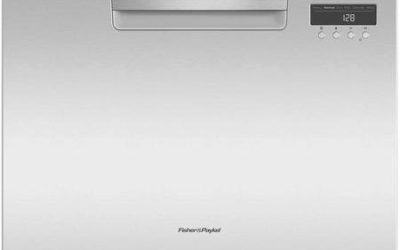
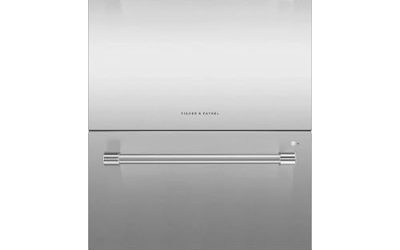
Fisher & Paykel DD24DV2T9 — current Series 9 double DishDrawer
Why it fits the current-generation brief. The DD24DV2T9 is the current Series 9 Professional tall double drawer, and the format is the point: two fully independent drawers, each with its own wash, so a small load runs alone in one drawer while the other waits, or both run different programs at once. Loading happens at bench height with minimal bending, which is why drawer models keep a loyal following. The tall top drawer takes larger plates than standard drawers, the Sanitize modifier raises the final rinse temperature, and Extra Dry helps with plastics. Running one drawer at a time also suits households whose loads are small and frequent rather than large and daily.
Trade-offs. Each drawer holds half the total capacity, so oversized platters and stockpots that fit a full tub may not fit either drawer. Energy use per year is the highest figure in this guide, and the adjustable installed height range means your cabinetry opening needs checking against the maker’s installation guide rather than assuming a standard cutout.
Best for / Skip if. Best for small households, keen cooks who wash in batches, and anyone who finds bending to a low rack difficult. Skip it if you regularly wash oversized trays and pots, or want the lowest running figures.
How to choose between these picks
Start with format. If your loads are big and mixed, a door model wins; if they are small and frequent, the double drawer earns its place. Next, look at your water: hard water pushes you to the Bosch and its built-in softener, or to whichever model you pair with a good rinse aid routine. Then decide how much connectivity you will genuinely use — all three door models are current connected platforms, but the Bosch is the one designed to be run happily from its front panel alone. Drying priorities split the field cleanly: plastics-heavy households should take the Samsung’s door-open dry or the LG’s heated dynamic dry, while glassware-heavy households benefit from LG’s steam or Bosch’s gentle condensation. Finally, measure your cutout and check the listing dimensions for the exact model, because the Fisher & Paykel’s height range and the Samsung’s extra depth are the two places a standard opening can catch you out.
Setup, workflow and care for a current model
Installation on all four picks is the standard built-in pattern: a 120-volt supply, hot water feed and drain within reach of the sink bay, and the machine leveled before the racks are loaded. Connect the app during setup rather than later — ThinQ, SmartThings and Home Connect all deliver firmware and cycle updates, and registering at install is when the maintenance reminders start working for you. In daily use, current wash systems reward light preparation: scrape, do not pre-rinse, because soil sensors calibrate the cycle to the dirt they detect, and a pre-rinsed load can under-trigger them. Run the maker’s cleaning cycle or a hot empty cycle monthly, pull and rinse the filter on the schedule in the manual, and keep the Bosch’s softener salt and every machine’s rinse aid topped up — those two habits do more for glassware results than any cycle choice. For the drawers, alternate which drawer you use for small loads so seals and spray arms age evenly.
FAQ
How can I tell a dishwasher is a current model rather than a discontinued one?
Check the manufacturer’s own site: if the model still appears in its current dishwasher range with full documentation, it is a live product. Then match the model number on the Amazon listing character for character, since one letter often separates a current model from the version it replaced.
Do current dishwashers need Wi-Fi to work properly?
No. Every pick here runs its full cycle range from its own controls. Wi-Fi adds remote start, cycle downloads, usage tracking and maintenance alerts, and it keeps the control platform updated, but none of the wash or dry performance depends on it.
Are current models quieter than the ones they replaced?
Generally yes. The current flagships in this guide publish figures between 42 and 46 dBA, a range that used to be reserved for premium lines. Compare the published figure rather than marketing terms, since dBA is measured consistently across brands.
Will a current 24-inch model fit my existing dishwasher cutout?
Usually. The three door models fit the standard 24-inch opening, but check the listed depth and height for the exact model, and treat the Fisher & Paykel differently: its installed height adjusts across a range, so confirm your opening against the maker’s installation guide first.
Which current format is better for a two-person household?
The double DishDrawer suits small, frequent loads because one drawer washes a half load on its own program. A door model with a half-load or zone option is the better pick if your small loads still include big pans and trays.
Conclusion
For most households replacing a dishwasher today, the LG LDTH7972S is the most complete current package: the strongest wash system, steam, heated drying and a 42 dBA figure in one machine. Choose the Samsung DW80B6060UG if your kitchen runs on SmartThings and dry plastics are the daily frustration. Take the Bosch SHE53B75UC if your water is hard or you want current features behind honest front controls. And if your loads are small, frequent and easier at bench height, the Fisher & Paykel DD24DV2T9 Series 9 is the current drawer model to buy. Whichever you pick, confirm the model number and finish on the Amazon listing before ordering — that one check is what keeps a current-generation purchase current.