Our Short List of 3

All 3 Picks at a Glance
| Product | Specs | Action |
|---|---|---|
| LG LDFN4542S — third rack and soil sensor in a front-control machine | Check price on Amazon | |
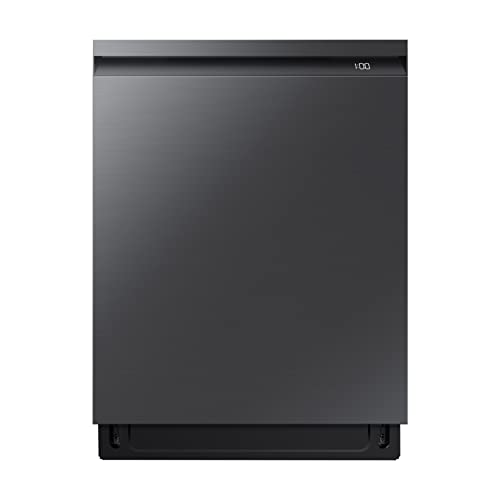 Samsung DW80B6060UG/AA — the deepest wash and dry package here | Check price on Amazon | |
 Kenmore 22-14675 — fan-assisted drying and a flexible third rack | Check price on Amazon |
Key takeaways
- The best bang for your buck dishwashers ranked by feature depth per tier: third racks, soil sensors, door-open drying, quiet figures and wash systems.
“Bang for your buck” in a dishwasher does not mean the longest feature list on the box. It means feature depth per tier: a model positioned in the middle of its maker’s range that already includes hardware you normally have to step up a tier to get — a third rack instead of a cutlery basket taking up lower-rack space, a soil sensor that adjusts the cycle instead of a fixed timer, a real drying system instead of residual heat alone, a stainless tub instead of plastic, and a noise figure low enough for an open-plan kitchen. This guide is for replacement buyers and first-time built-in shoppers who want that step-up hardware without moving into flagship territory, and who would rather compare spec sheets than marketing tiers.
Every pick below is a 24-inch built-in dishwasher currently listed on Amazon US, chosen from manufacturer specifications and Amazon listing details for each exact model — cycle lists, rack layouts, drying systems, noise figures and energy data as published by the maker — not from any in-person trial. Four models made the cut, each a different way: one through rack hardware, one through its wash and drying systems, one through a fan-assisted dry at a mid position in its line, and one through sensor-driven washing in a lower series.
Disclosure: As an Amazon Associate, we earn from qualifying purchases. Product details and availability can change; check the Amazon listing before you buy.
Quick picks at a glance
| Product | ASIN | Best for |
|---|---|---|
| LG LDFN4542S | B0BDMR9745 | A third rack, soil sensor and stainless tub in a front-control model |
| Samsung DW80B6060UG/AA | B0B9GHTQ1F | The deepest wash and dry system here: StormWash+ plus a door that opens itself to finish drying |
| Kenmore 22-14675 | B0CFPNG5TW | Fan-assisted TurboDry and a flexible third rack without flagship positioning |
| Bosch SHE53B75UC (300 Series) | B0BT5SJB1F | Sensor washing, a built-in water softener and app control from Bosch’s entry series |
What matters most when you shop by feature depth
Third racks. A dedicated third rack is the clearest tier marker in dishwashers. Entry models still ship with a cutlery basket in the lower rack; the step up adds a slim top rack for flatware and utensils, freeing the lower rack for plates and cookware. All four picks include one, though fixed, flexible and height-adjustable designs are not equal — the product sections spell out which is which.
Soil sensing and auto cycles. A turbidity or soil sensor measures how dirty the water is and adjusts cycle length, temperature and water use to match, instead of running one fixed program regardless of load. Sensor washing used to sit near the top of most ranges; each pick here includes it in some form.
The drying system. This is where tiers separate quietly. Basic models rely on residual heat and rinse aid. A step up adds a fan-assisted dry; further up, doors open automatically at the end of the cycle to release steam. Plastics hold water on any system, but the gap between condensation drying and a fan or door-open system is real on everything else.
Tub material. A stainless tub resists stains and odors, holds heat so loads dry faster, and usually carries a much longer maker warranty than a plastic tub. All four picks use stainless tubs — itself a step-up trait at these positions in their ranges.
Noise figure. Around 48 dBA is typical of mid-range machines; the low-to-mid 40s is step-up territory and matters if the kitchen opens into a living area or you run loads overnight. The picks here span 44 to 48 dBA.
Wash system hardware. Multi-arm spray systems, targeted jets for baked-on cookware and multi-stage filtration all started as flagship features. When a mid-position model includes a four-arm wash or a dedicated high-pressure jet, that is feature depth you can verify on the spec sheet.
LG LDFN4542S — third rack and soil sensor in a front-control machine
Why it fits the feature-depth brief. Front-control LG models sit below the brand’s top-control steam range, yet this one carries the hardware that usually sells the step up: a fixed third rack, the QuadWash four-arm spray system, a SenseClean soil sensor driving the Auto cycle, a height-adjustable EasyRack Plus upper rack and a stainless tub with a lifetime maker warranty on the tub itself. Nine cycles and eight options is a deep program list for the position — Dual Zone (different intensities per rack) and Night Dry are options many mid-range rivals omit.
Trade-offs. At 48 dBA it is the loudest pick in this guide, though still in the normal mid-range band. The third rack is fixed rather than height-adjustable, and there is no steam cycle or Wi-Fi — those remain step-up LG features. Dynamic Dry is a condensation-based system, so plastics will still hold droplets.
Best for / Skip if. Best for buyers who load a lot of flatware and utensils and want sensor washing and a third rack in a straightforward front-control layout. Skip it if a sub-45 dBA figure or app control is on your must-have list.
Samsung DW80B6060UG/AA — the deepest wash and dry package here
A note on capacity: Samsung’s own materials and the federal registry record different place-setting figures for the DW80B6060 family, so this guide describes the machine by its three-rack layout rather than printing a contested number.
Why it fits the feature-depth brief. This is a 6 Series Samsung, not the flagship line, but the spec sheet reads a tier higher: StormWash+ pairs dual wash arms with a rotating high-pressure jet for baked-on cookware, the AutoRelease door opens itself at the end of the cycle to vent steam and speed drying, and Wi-Fi control with detergent-pod tracking through SmartThings is included rather than reserved for the top series. A 44 dBA figure at this position is also step-up territory, and the Pre Blast cycle handles dried-on loads most mid-range machines make you scrape first.
Trade-offs. The maker warranty is a flat one year on parts and labor, shorter on paper than the LG’s tiered coverage. Top controls are hidden when the door is closed, which some households dislike, and the contested capacity figure means you should judge loading by the rack layout, not a number.
Best for / Skip if. Best for households whose loads lean toward cookware and casserole dishes, and for anyone who hates unloading wet plastics and lids. Skip it if you want a front-control display you can read mid-cycle.
Kenmore 22-14675 — fan-assisted drying and a flexible third rack
Why it fits the feature-depth brief. The 22-14675 sits in the middle of Kenmore’s built-in line, and its two headline traits are exactly the ones that usually cost a tier: TurboDry uses a fan to pull moisture off the load instead of relying on residual heat alone, and the EasyFlex third rack is a flexible design rather than a flat tray, so it handles more than flatware. Add the SmartWash soil-sensing cycle, a stainless tub and a 45 dBA figure, and the spec sheet covers nearly every feature-depth marker in this guide at once.
Trade-offs. Kenmore publishes a thinner spec sheet than LG, Samsung or Bosch for this model, so some secondary figures (full cycle list, energy consumption per year) are harder to verify from maker documents than the headline ones above. There is no app connectivity, and the brand’s retail footprint is narrower than the other three makers here, which matters if you like to see a model in a showroom first.
Best for / Skip if. Best for buyers who prioritise dry dishes at unload time and want a flexible third rack for utensils and small bowls. Skip it if connected features or a long published options list matter to you.
Bosch SHE53B75UC (300 Series) — sensor washing and a water softener from the entry series
| Spec | Detail |
|---|---|
| Type | 24-inch recessed-handle built-in, 300 Series |
| Place settings | 15 |
| Noise | 46 dBA |
| Wash system | PrecisionWash sensor-driven spray system |
| Cycles | 6 wash cycles, 6 options |
| Third rack | Yes, standard third rack |
| Water softener | Built-in |
| Connectivity | Home Connect Wi-Fi, including detergent tab reordering |
| Drying | PureDry condensation drying with AquaStop Plus leak protection |
| Electrical | 1440 W, 120 V |
| Energy | 269 kWh per year (maker figure) |
Why it fits the feature-depth brief. The 300 Series is where the Bosch range starts, yet this model includes two features that many makers reserve for their upper lines. PrecisionWash uses sensors to judge load size and soil level and adjust the wash continuously, and the built-in water softener is genuinely rare at this level — if your water is hard, it protects both the machine and the glassware without an external system. Home Connect adds remote start, cycle alerts and automatic detergent tab reordering, and the standard third rack completes a spec sheet that reads like a series above its badge.
Trade-offs. PureDry is a condensation system, so it trails the Samsung’s door-open drying and the Kenmore’s fan on plastics. Six cycles is the shortest program list here, and at 269 kWh per year it is the highest energy figure of the four picks, though still within certified norms for its class. The recessed pocket handle is a clean look but offers less grip than a bar handle.
Best for / Skip if. Best for hard-water households and for buyers who want Bosch’s sensor washing and build without climbing to the 500 or 800 Series. Skip it if heated or fan drying is your top priority.
How to choose between these picks
Start with the feature you refuse to compromise on, because each pick leads on a different one. If drying tops the list, the Samsung’s self-opening door is the strongest system here, with the Kenmore’s fan-assisted TurboDry second. If your water is hard, the Bosch is the only pick with a built-in softener, and that single feature can outweigh everything else. If flatware volume drives your loads, compare the third racks: the Kenmore’s EasyFlex is the most adaptable, the LG’s fixed rack the simplest.
Then check the secondary markers. Noise: the Samsung (44 dBA) and Kenmore (45 dBA) suit open-plan spaces and overnight runs; the LG (48 dBA) is fine behind a closed kitchen door. Controls: the LG’s front panel is readable at a glance, the Samsung’s top controls disappear when closed. Warranty posture differs too — LG publishes the longest tiered coverage, Samsung the shortest.
Finally, confirm the fit. All four are 24-inch built-ins, but depths vary by more than an inch between the Kenmore and the Samsung, and the Samsung is notably heavier. Measure your cutout height, depth and door swing before ordering.
Setup, workflow and care for feature-rich models
Sensor-driven machines reward a few habits. Load so the spray can reach every surface — the multi-arm systems on the LG and Samsung only pay off if large pans are not shielding the rack above them. Scrape, do not pre-rinse: a sensor that reads clean water on a pre-rinsed load will shorten the cycle and can under-wash the items that actually needed heat.
Third racks work best sorted: flatware in the moulded slots, long utensils across the middle, and small lids where they cannot flip and pool water. On the Kenmore’s flexible rack, use the deeper section for small bowls rather than stacking them below.
Drying systems need rinse aid to do their part — condensation and door-open drying both depend on water sheeting off surfaces, so keep the dispenser filled. If you pick the Bosch, fill the softener salt container with dishwasher salt only and check it monthly; running it empty defeats the feature you bought it for.
For care: clean the filter assembly monthly (all four trap food at the sump), wipe the door seal, run the machine-clean cycle where one is offered, and descale periodically in hard-water areas even with a softener. Connected models are worth pairing with their apps — cycle-end alerts and detergent tracking only work once registered.
FAQ
Does a third rack actually replace the cutlery basket?
On all four picks, yes for everyday loads — the third rack holds a full place-setting count of flatware plus utensils, and removing the basket frees lower-rack space for pots. Very bulky serving pieces may still be easier in a basket, which is why the flexible Kenmore design is useful.
Is a soil sensor worth prioritising?
If your loads vary — a couple of plates some nights, a full roast cleanup on Sundays — yes. The sensor adjusts water, heat and time to the actual load instead of running one fixed program, which shows up as better results on heavy loads and shorter, gentler cycles on light ones.
Which drying system handles plastics best?
None dries plastics perfectly, because plastic does not hold heat. The Samsung’s door-opening AutoRelease system gives plastics the most help here by venting steam, followed by the Kenmore’s fan. Loading plastics on the top rack and using rinse aid makes the biggest practical difference on any model.
How much does the noise figure matter day to day?
Each step of a few decibels is noticeable in an open-plan room. At 44–45 dBA the Samsung and Kenmore are background-level in most homes; at 48 dBA the LG is clearly audible in the same room but unremarkable behind a door. If you run the machine overnight near bedrooms, weight the figure heavily.
Do I need the built-in water softener if I already use rinse aid?
They do different jobs. Rinse aid helps water sheet off dishes during the final rinse; a softener treats the water for the whole wash, reducing scale on the heating element and spotting on glass. In genuinely hard-water areas the Bosch’s softener addresses the root cause rather than the symptom.
Conclusion
Feature depth per tier is a spec-sheet exercise, and each model here clears it in its own way. Choose the Samsung DW80B6060UG/AA if you want the most complete wash-and-dry package — StormWash+, a self-opening door and 44 dBA in a mid-line model. Choose the LG LDFN4542S if you want the deepest cycle and options list with a third rack and the strongest published warranty ladder. Choose the Kenmore 22-14675 if dry-at-unload performance and a flexible third rack matter more than connectivity. And choose the Bosch SHE53B75UC if hard water or sensor-driven efficiency is your deciding factor — it brings flagship-grade water treatment to the start of the Bosch range.