Our Short List of 3

All 3 Picks at a Glance
| Product | Specs | Action |
|---|---|---|
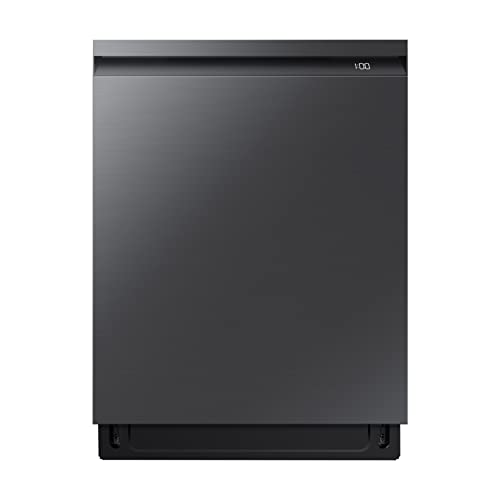 Samsung DW80B6060UG/AA Smart Dishwasher with StormWash+ | Check price on Amazon | |
| LG LDTH7972S Top Control Dishwasher with QuadWash Pro and TrueSteam | Check price on Amazon | |
 LG LDFN4542S Front Control Dishwasher with QuadWash | Check price on Amazon |
Key takeaways
- Compare the best dishwashers for pots and pans: tall tubs, adjustable racks, fold-down tines and targeted wash zones built for baked-on cookware loads.
Cookware is the load most dishwashers handle worst. A stockpot eats half the lower rack, a sheet pan blocks the spray arm above it, and the baked-on residue on a roasting pan needs sustained hot water and direct jet pressure, not the gentle circulation that suits glasses and plates. If your sink regularly fills with Dutch ovens, skillets, saucepans and rimmed baking sheets, the machine you want is built around three things: a tall tub with genuine clearance for oversized pieces, racks that reconfigure around cookware instead of fighting it, and a wash system that concentrates water on the dirtiest zone of the tub. This guide compares three full-size built-in dishwashers that meet those criteria in different ways, so you can match one to the way you actually cook. Every pick is a standard 24-inch built-in dishwasher sold on Amazon US, and every specification below comes from the manufacturer’s published specifications or the Amazon listing for that exact model. The picks were chosen from specification sheets and listing details alone.
Disclosure: As an Amazon Associate, we earn from qualifying purchases. Product details and availability can change; check the Amazon listing before you buy.
Quick picks at a glance
| Product | ASIN | Best for |
|---|---|---|
| Samsung DW80B6060UG/AA Smart Dishwasher with StormWash+ | B0B9GHTQ1F | A dedicated high-pressure zone for the dirtiest cookware |
| LG LDTH7972S Top Control Dishwasher with QuadWash Pro and TrueSteam | B0BX7FHNYM | Steam loosening for baked-on residue plus the tallest lower-rack clearance |
| LG LDFN4542S Front Control Dishwasher with QuadWash | B0BDMR9745 | Straightforward front controls and flexible racks for daily cookware loads |
What matters most for pots and pans
Lower-rack clearance. The single most useful figure for cookware shoppers is the lower rack dish height limit: how tall an item can stand in the bottom rack before it hits the middle rack or the spray arm above. Deep stockpots, tall pasta pots and upright sheet pans all live or die by this number. A height-adjustable middle rack lets you trade space between the two levels depending on the load.
Fold-down tines and rack flexibility. Fixed tines are spaced for plates. Rows that fold flat let a wide sauté pan, a mixing bowl or a casserole dish sit securely instead of perching at an angle, and an adjustable upper rack creates room for tall lids and serving utensils above. A third rack helps indirectly: moving cutlery and long utensils up top frees the lower rack’s silverware basket space for cookware.
A targeted wash zone or heavy cycle. Baked-on cheese, browned roasting residue and scorched sauces respond to concentrated pressure and heat. Look for a named intensive feature: a rear spray jet that blasts the back of the lower rack, a pots-and-pans or heavy cycle with higher water temperature, or a steam stage that loosens residue before the main wash begins.
Spray coverage from multiple angles. Cookware presents concave surfaces that shadow each other. Multi-arm systems that spray from several directions at once reach inside deep pots better than a single rotating arm, and a soil sensor that extends the cycle when the water runs dirty matters more for cookware loads than for everyday dishes.
Tub material and drying. Stainless steel tubs tolerate the sustained high temperatures of heavy cycles and resist the staining that tomato-based sauces leave on plastic. For drying, an auto-opening door or a heated dry system helps thick cookware shed water; heavy pots trap pools of water in their bases, so drying design is a real factor, not a luxury.
Filtration style. Machines with a hard food disposer grind up residue, while filter-based machines trap it for periodic manual cleaning. Neither approach is automatically better for cookware, but heavy cookware loads produce more debris, so a filter you can reach and rinse easily is worth checking before you buy.
Samsung DW80B6060UG/AA Smart Dishwasher with StormWash+
Why it fits pots and pans. StormWash+ is the headline feature here, and it is aimed squarely at cookware: a spray jet at the back of the tub blasts water at high pressure into the rear of the lower rack, the natural parking spot for your dirtiest roasting pan or lasagna dish. Samsung pairs it with a Pre Blast option that starts any cycle with a pre-rinse blast, which is exactly the stage baked-on residue needs before the main wash. The FlexLoad rack system and fold-down lower-rack tines let wide skillets and stockpots sit flat, the middle rack adjusts in height for tall items, and the half-load option can be set to wash the lower rack only, so a cookware-only load does not run the full tub. The third rack takes the cutlery and long utensils that would otherwise compete with pots for lower-rack space.
Trade-offs. The StormWash+ jet covers the back zone of the lower rack, so placement matters: a pan loaded at the front gets the standard wash arms, not the blast. Top controls disappear behind the counter edge when the door is closed, which some cooks dislike mid-cycle. The AutoRelease door pops open at the end of the cycle to vent steam, which improves drying but is worth knowing about if toddlers or pets roam the kitchen.
Best for / Skip if. Best for cooks who regularly produce one or two truly filthy pans per meal and want a machine that attacks them deliberately. Skip it if you prefer visible front controls or if your cookware loads are mostly light saucepans that any standard cycle handles.
LG LDTH7972S Top Control Dishwasher with QuadWash Pro and TrueSteam
Why it fits pots and pans. Two specification-sheet numbers sell this machine to cookware-heavy households. The first is the 12.5-inch lower rack dish height limit, the clearest statement any maker publishes about what actually fits in the bottom rack: tall stockpots and upright sheet pans have documented room rather than hopeful room. The second is TrueSteam, which uses steam at the start of the wash to soften baked-on and dried-on residue, so the QuadWash Pro arms — three spray arms working from multiple angles — are washing loosened soil instead of chiselling at it. The height-adjustable third rack takes serving spoons, spatulas and lids, and the one-hour wash and dry cycle is useful for the mid-recipe turnaround when the good saucepan is dirty and dinner is not done.
Trade-offs. At 97 lb it is the heaviest machine in this guide, which matters for installation day. The steam and smart features add complexity that a cook who only ever runs one cycle will not use. Its top-control layout shares the Samsung’s hidden-panel character, and the 7.1-inch upper rack height limit means genuinely tall items belong downstairs by design.
Best for / Skip if. Best for households whose cookware includes tall stockpots and who fight baked-on residue daily — the steam stage plus documented clearance is the strongest combination here. Skip it if you want the simplest possible control scheme or your pots are all low-profile skillets.
LG LDFN4542S Front Control Dishwasher with QuadWash
Why it fits pots and pans. The LDFN4542S covers the cookware fundamentals without the flagship extras. QuadWash spray arms move in multiple directions to reach inside deep pots from several angles, the EasyRack Plus upper rack adjusts in height so a tall pot below or tall lids above both get their room, and fold-down tines in the racks let wide pans and casserole dishes lie flat and stable. The fixed third rack still does the key job for this scenario: it moves the cutlery basket’s contents upstairs, leaving the full lower rack floor for cookware. Front controls with a visible display suit cooks who check cycle progress while they work, and at 75 lb it is noticeably easier to manoeuvre into the cabinet opening than the heavier machines above.
Trade-offs. There is no steam stage and no targeted blast zone, so the very worst baked-on loads lean entirely on the Heavy cycle and detergent choice. The 48 dBA noise figure is the highest in this guide — audible in an open-plan kitchen, though hardly loud. Dynamic Dry is a condensation-based approach without the heated element of its bigger sibling, so thick cookware bases may hold a little water.
Best for / Skip if. Best for everyday family cooking — nightly saucepans, skillets and baking dishes — where rack flexibility and simple controls matter more than specialty wash technology. Skip it if scorched, baked-on residue is your normal load rather than your occasional one.
How to choose between these picks
Start with your tallest pot. Measure its height with the lid off and compare it with the lower rack clearance: if you own a genuinely tall stockpot, the LG LDTH7972S publishes a 12.5-inch lower rack limit and adjusts at three levels up top, which removes the guesswork. Next, think about your dirtiest typical item rather than your worst-ever one. If a crusted roasting pan or cheese-baked casserole dish shows up most weeks, the Samsung’s StormWash+ jet and Pre Blast option are designed for exactly that load, and its lower-rack-only half-load setting suits a pans-only run. If your cookware is mostly everyday skillets and saucepans in family-meal quantities, the LG LDFN4542S gives you the same three-rack layout and adjustable racks with simpler controls and an easier installation. Finally, weigh the noise figure against your floor plan: at 42 dBA the LDTH7972S all but disappears into background sound, the Samsung sits close behind at 44 dBA, and the LDFN4542S at 48 dBA is the pick for kitchens separated from living space.
Loading, setup and care for cookware loads
How you load matters as much as which machine you buy. Angle pots and pans so their open faces point toward the spray arms and slightly downward; a stockpot placed flat over the lower arm blocks water to everything above it. Keep one finger’s width between items — nested saucepans wash as one dirty unit, not two clean ones. Put the dirtiest cookware where your machine concentrates its wash: the back of the lower rack in the Samsung, the lower rack generally in the LG models. Sheet pans and cutting boards belong along the sides of the lower rack, never across the front where they can block the detergent dispenser door.
Scrape, do not pre-rinse. Modern soil sensors read the water and shorten or extend the cycle accordingly; a load that arrives pre-rinsed can fool the sensor into a lighter wash than the remaining residue needs. Do remove bones, lemon pips and other hard debris. For filter-based machines like the LG models, rinse the filter under the tap regularly — cookware loads shed more food soil than dish loads, and a clogged filter quietly undermines every cycle. Check that nothing tall in the lower rack stops the middle spray arm from spinning before you close the door; one blocked arm is the most common cause of a disappointing cookware wash. Finally, respect material limits: cast iron, carbon steel and wooden-handled items do not belong in any of these machines, whatever the cycle promises.
Frequently asked questions
Can these dishwashers fit a large stockpot or Dutch oven?
The LG LDTH7972S publishes a 12.5-inch lower rack dish height limit, which covers most stockpots with the upper rack raised. The Samsung and the LDFN4542S both use height-adjustable middle racks and fold-down tines to create comparable room, but neither publishes a single clearance figure, so measure your tallest pot and compare it with the rack range in the listing before ordering.
Do I need a special cycle for baked-on pans?
A dedicated feature helps. The Samsung DW80B6060UG/AA combines a Heavy cycle with a Pre Blast option and a high-pressure StormWash+ jet aimed at the lower rack’s rear zone. The LG LDTH7972S uses a TrueSteam stage to loosen residue before the main wash. The LDFN4542S relies on its Heavy cycle and QuadWash coverage, which suits everyday soil better than scorched residue.
Will a third rack actually help with cookware?
Indirectly, yes. All three machines here have a third rack for cutlery, spatulas, ladles and lids. Moving those items out of the lower rack’s basket frees floor space and tine rows for pots and pans, which is where the benefit shows up in a cookware load.
Are stainless steel tubs better for washing pots and pans?
All three picks use stainless steel tubs. Stainless tolerates the sustained high wash temperatures of heavy cycles, resists staining from tomato-based sauces, and supports condensation drying. For households running frequent heavy cookware cycles, those are practical advantages rather than cosmetic ones.
How much water and energy do these machines use on heavy loads?
Published figures are 239 kWh per year and 3.2 gallons per cycle for the Samsung, 238 kWh per year with a 2.9-gallon water factor for the LG LDTH7972S, and 258 kWh per year for the LG LDFN4542S. Heavy and steam cycles use more than the standard test cycle behind those figures, but the relative order between models stays a useful guide.
Conclusion
For the household that produces a genuinely dirty roasting pan or casserole dish most days, the Samsung DW80B6060UG/AA is the most deliberate cookware machine here: a high-pressure jet, a pre-blast stage and racks that fold out of the way. For tall stockpots and baked-on residue, the LG LDTH7972S pairs the clearest published clearance figure with a steam stage that does the loosening before the wash begins. And for family kitchens that need flexible racks, visible controls and an easier install for nightly pans and baking dishes, the LG LDFN4542S covers the fundamentals well. Whichever you choose, measure your tallest pot first — in this category, one honest measurement is worth more than any feature list.