Our Short List of 3
All 4 Picks at a Glance
| Product | Specs | Action |
|---|---|---|
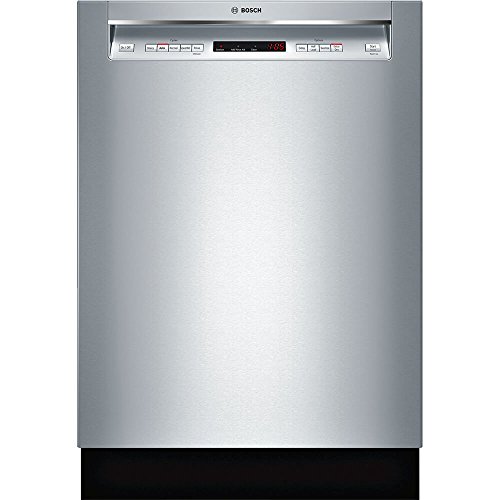 Bosch SHEM63W55N (300 Series) | Check price on Amazon | |
 LG LDTH7972S | Check price on Amazon | |
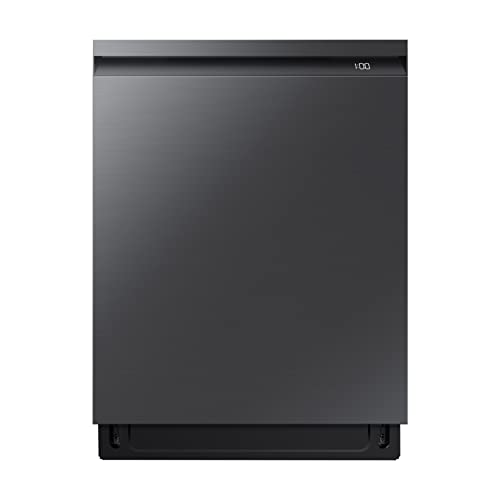 Samsung DW80B6060UG/AA | Check price on Amazon | |
 EdgeStar BIDW1802SS | Check price on Amazon |
Key takeaways
- Our best dishwashers australia shortlist checks five Amazon US models by cavity size, water use and noise against the specs that suit Australian homes.
Shopping for a dishwasher from Australia usually starts with three local realities. First, the cavity: most Australian kitchens are built around a standard 600 millimetre under-bench opening, with a 450 millimetre slimline opening in units and townhouses. Second, water: households on tank water, and anyone living under the water restrictions that come and go across the states, has a practical reason to care about how much each cycle drinks. Third, the way Australian homes are used — open-plan living areas, big weekend cook-ups, roasting trays and barbecue platters that need genuine rack height. The best dishwashers for Australia are the ones whose published specifications answer those realities: verified fit, low water use per cycle, racks that take entertaining-sized loads, and noise suited to open-plan rooms. This guide shortlists five built-in models sold on Amazon US whose spec sheets line up with those needs, including one slimline machine for the smaller cavity.
Disclosure: As an Amazon Associate, we earn from qualifying purchases. Product details and availability can change; check the Amazon listing before you buy.
One point of method, stated plainly. Every pick below is a US-market model listed on Amazon US, and every figure quoted comes from the Amazon listing or the maker’s own specification sheet for that exact model. The efficiency figures are United States test figures, not Australian WELS figures, and the machines are built for a 120 volt supply while Australian mains power is 230 to 240 volts. Treat this guide as a spec-checked shortlist for comparing these models — or the same model families sold locally — against an Australian kitchen.
Quick picks at a glance
| Product | ASIN | Best for |
|---|---|---|
| Bosch SHEM63W55N (300 Series) | B06Y25S9CT | The largest loads, with 16 place settings and a third rack |
| LG LDTH7972S | B0BX7FHNYM | Quiet open-plan living, steam, and a one-hour wash and dry cycle |
| Samsung DW80B6060UG/AA | B0B9GHTQ1F | Low water use per cycle and a targeted jet zone for bakeware |
| Bosch SHE53B75UC (300 Series) | B0BT5SJB1F | Hard-water regions, thanks to a built-in water softener |
| EdgeStar BIDW1802SS | B07RP2S2R9 | Slimline 450 millimetre cavities |
What matters most for Australian homes
Measure the cavity in millimetres, then check the maker’s cutout figure. These listings are dimensioned in inches, so convert before comparing (one inch is 25.4 millimetres). The governing number is the cutout size in the maker’s installation data, not the rounded class name: standard models here are roughly 598 to 605 millimetres wide, so some need a touch more than a nominal 600 millimetre opening.
Water use per cycle. The listings state water use in US gallons per cycle; multiply by about 3.8 for litres. The picks below run from roughly 11 to 13 litres per cycle on their standard programmes — the range that suits households watching tank levels or local restrictions.
Hard water readiness. Several Australian regions — Adelaide and Perth are the well-known examples, along with many regional towns — have hard supplies that leave scale on glassware and inside the machine. A built-in water softener treats the wash water itself; where a model has none, rinse aid and regular descaling carry the load instead.
Noise for open-plan living. With the kitchen opening onto the lounge, a figure of 44 dBA or lower lets a cycle run through a conversation or the evening news without comment. Figures in the high forties are still reasonable behind a closed door; a slimline at 52 dB suits a closed kitchen better.
Rack height for entertaining loads. Roasting trays, barbecue plates and large platters need vertical clearance, not just place settings. A stated lower-rack dish height limit, a height-adjustable upper rack and a third rack for long utensils are the specs that decide whether the big Sunday load goes in one cycle.
Electrical compatibility. These are 120 volt, 60 hertz machines; Australian supply is 230 to 240 volts at 50 hertz, so a US-spec dishwasher cannot simply be plugged into an Australian power point — take a licensed electrician’s advice before importing.
Bosch SHEM63W55N (300 Series)
Why it fits Australian homes. Sixteen place settings is the largest capacity in this guide — a full dinner service plus serving bowls and platters in one cycle. At about 598 millimetres wide it is also the closest of the standard models to a true 600 millimetre cavity. RackMatic’s nine upper-rack positions let tall glasses trade against lower-rack height for trays.
Trade-offs. Five cycles is a shorter menu than the LG or Samsung offer, and there is no steam function. Condensation drying can leave plastics holding droplets, and there is no built-in water softener, so hard-water households should look at the other Bosch below.
Best for / Skip if. Best for larger households whose loads are big and mixed, and who value capacity and rack adjustability over cycle variety. Skip if your cavity measures a fraction under the maker’s cutout figure, or if a softener is a must-have.
LG LDTH7972S
Why it fits Australian homes. At 42 dBA this is the quietest pick here — the natural choice where the dishwasher shares air with the lounge room. Its water factor figure is also the lowest in the guide, at roughly 11 litres per cycle, which suits tank-water households. TrueSteam loosens baked-on residue from roasting trays, the 1-Hour cycle washes and dries a light load inside the hour, and the stated 12.5 inch lower-rack dish height takes tall platters.
Trade-offs. At about 603 millimetres wide it needs a cavity with a little room beyond the nominal 600, so measuring is essential. The feature set leans on the app for downloaded cycles, and steam cycles run longer than standard programmes.
Best for / Skip if. Best for open-plan homes that run the machine daily and want quiet, steam and low water use in one package. Skip if your cavity is exactly at the standard width with no clearance, or if you prefer a machine with no connected features at all.
Samsung DW80B6060UG/AA
Why it fits Australian homes. The StormWash+ zone concentrates spray pressure on a marked area of the lower rack — the spot for the roasting tray or the barbecue plate — while the rest of the load washes normally. Water use of 3.2 gallons, about 12 litres per cycle, keeps it near the frugal end of this guide, and the AutoRelease door pops open at cycle end to speed drying, which helps in humid coastal climates.
Trade-offs. The jet zone only benefits items loaded inside it, so loading discipline matters. The finish is black stainless, which will not match a plain stainless suite. At about 605 millimetres wide and 25 inches deep it is the widest and deepest standard pick here — both figures need checking against the cavity.
Best for / Skip if. Best for households whose hardest loads are one or two baked-on trays per meal, and for humid-climate homes that benefit from door-open drying. Skip if your cavity is a strict 600 millimetres with no tolerance, or if you need a white or panel-ready finish.
Bosch SHE53B75UC (300 Series)
| Spec | Figure |
|---|---|
| Type | 24-inch built-in, front control, pocket handle |
| Capacity | 15 place settings |
| Noise | 46 dBA |
| Wash system | PrecisionWash, five-level wash |
| Water softener | Built in |
| Sanitize | Sanitize option, certified to NSF/ANSI 184 |
| Wash cycles | 6 (Heavy, Auto, Normal, Speed60, Favorite, Rinse) |
| Options | 6, including Sanitize, Extra Dry, Remote Start and MachineCare |
| Racks | Standard third rack; RackMatic adjustability |
| Tub | Stainless steel |
| Drying | PureDry condensation drying |
| Water use | 3.5 gallons per cycle (maker spec sheet) |
| Energy use | 269 kWh per year |
| Power | 1440 W, 120 V |
| Dimensions (H x W x D) | 34.06 x 23.56 x 22.56 inches |
| Weight | 90 lb |
Why it fits Australian homes. The built-in water softener is the differentiator, aimed squarely at hard-water regions: softened wash water leaves less scale on glasses and slows the mineral build-up that shortens a machine’s life. The MachineCare option runs a self-cleaning programme that helps clear grease and scale together.
Trade-offs. At 46 dBA it is the loudest of the standard-width picks, though still in the quiet band for a built-in. It uses filtration rather than a food disposer, so scraping plates matters more, condensation drying can leave plastics damp, and the softener needs dishwasher salt kept topped up.
Best for / Skip if. Best for hard-water households that are tired of scale on glassware and want the machine to treat the water itself. Skip if your supply is already soft, or if the kitchen opens directly onto where people sleep.
EdgeStar BIDW1802SS
Why it fits Australian homes. This is the pick for the 450 millimetre slimline cavity found in units, granny flats and townhouses where a standard machine does not fit. At about 448 millimetres wide it is dimensioned for that opening, and eight place settings cover a couple or a small household. The leakage sensor is a useful safeguard in strata units, where a slow leak becomes a neighbour’s ceiling problem.
Trade-offs. Eight place settings means entertaining loads go through in two or three cycles, and there is no third rack. At 52 dB it is noticeably louder than the standard-width picks — fine behind a closed kitchen door, less so beside a studio bed.
Best for / Skip if. Best for slimline cavities and small households that want a built-in rather than a benchtop machine. Skip if you regularly wash for more than four people, or if the machine will sit in an open studio space.
How to choose between these picks
Start with the tape measure, because it eliminates picks faster than any feature list. A slimline opening of about 450 millimetres leaves one choice here, the EdgeStar. A standard opening needs its true width and height checked against each maker’s cutout figure: the two Bosch models sit closest to 600 millimetres, the LG needs a little more, and the Samsung needs the most width and depth.
Next, water. If your household watches every litre — tank supply, restrictions, or simply habit — the LG’s cycle figure is the lowest, with the Samsung close behind. If your problem is water quality instead, the Bosch SHE53B75UC is the only pick that softens water inside the machine.
Then noise and load shape. Open-plan rooms point to the LG at 42 dBA or either 44 dBA model. Households that entertain should weigh the Bosch SHEM63W55N’s capacity and rack positions; loads centred on baked-on trays point to the Samsung’s jet zone and the LG’s steam.
Installation and care in Australian conditions
Have the machine installed by a licensed plumber and, where electrical work is involved, a licensed electrician. Before ordering, confirm the water inlet and drain positions relative to the cavity, leave clearance for the door to open fully, and re-check the cavity height with the finished floor in place — flooring laid after the cabinetry is the classic reason a machine will not slide home.
On the electrical question, do not improvise: these listings describe 120 volt machines and Australian supply is 230 to 240 volts, so resolve the supply with an electrician before an imported machine ships.
Day to day, three habits matter most. Keep the filter rinsed — greasy entertaining loads load it quickly. In hard-water areas, keep rinse aid topped up, keep dishwasher salt in the Bosch softener, and run the machine-clean programme on schedule. In humid climates, crack the door open after unloading when the machine will sit for days.
FAQ
Will a US 24-inch dishwasher fit an Australian 600 millimetre cavity?
Sometimes, and the tape measure decides. The standard-width picks here run from about 598 to 605 millimetres wide, and the maker’s cutout figure — not the class name — is the number to compare against your actual opening. Height and depth need the same check.
Can I plug one of these machines into an Australian power point?
No. The listings specify a 120 volt, 60 hertz supply, and Australian mains power is 230 to 240 volts at 50 hertz. Importing one means resolving the supply with a licensed electrician first; many buyers instead use this shortlist to compare the same model families sold locally.
How do the water figures compare with Australian WELS figures?
They are not directly comparable. The figures quoted here are United States test results in gallons per cycle; multiplying by about 3.8 gives litres — roughly 11 to 13 litres per cycle across these picks — a fair rough guide, but not a WELS figure.
Which pick suits hard water best?
The Bosch SHE53B75UC, because its built-in softener treats the wash water itself and its MachineCare programme helps clear scale. Whichever model you choose in a hard-water area, rinse aid and regular descaling remain part of the routine.
Which pick suits a unit or a small townhouse?
The EdgeStar BIDW1802SS, if the cavity is the slimline 450 millimetre size; its leakage sensor is an added safeguard in strata buildings. If the small kitchen has a standard cavity, the quieter LG is the better neighbour.
Conclusion
For most Australian households with a standard cavity, the Bosch SHEM63W55N is the balanced starting point: the biggest capacity here, a close fit to 600 millimetres, and quiet running. Choose the LG LDTH7972S if low water use and the lowest noise figure matter most. Choose the Samsung DW80B6060UG/AA if baked-on trays are your everyday problem, the Bosch SHE53B75UC if your water is hard, and the EdgeStar BIDW1802SS if the cavity is slimline. Whichever you choose, measure the cavity in millimetres, compare it with the maker’s cutout figure, and check the current listing before you buy.