Our Short List of 3

- Best for: EGO 56V owners with deeply overgrown edges who want gas-free power.
- 8-inch edger blade with guide wheel
- Cutting depth up to 3 inches
- Brushless motor
- Carbon fiber shaft

- Best for: Long, badly overgrown sidewalks and large properties where a stick edger is too slow.
- 79cc 4-cycle Viper engine, no gas and oil mixing
- Tri-tip steel blade at 3400 RPM
- Maximum cutting depth 2.5 inches
- 10 depth positions
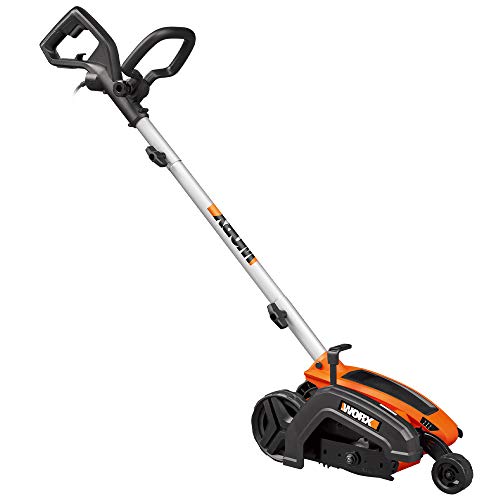
- Best for: Homeowners with a front walk near an outlet who want steady corded power and trenching ability.
- 12 Amp motor
- 7.5-inch double-ended steel blade
- 3-position depth adjustment: 1 inch, 1-1/4 inches, 1-1/2 inches
- Cutting line indicator
All 5 Picks at a Glance
| Product | Specs | Action |
|---|---|---|
| EGO Power+ ME0820 Edger and Power Head Kit |
| Check price on Amazon |
| Earthquake 41273 Walk-Behind Edger |
| Check price on Amazon |
| WORX WG896 Electric Edger and Trencher |
| Check price on Amazon |
 BLACK+DECKER LE750 Edger and Trencher |
| Check price on Amazon |
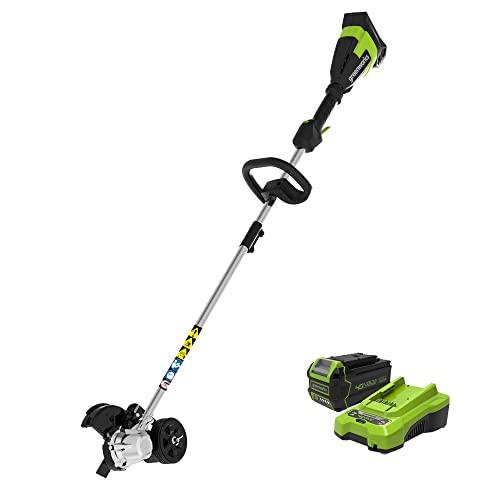 Greenworks 40V 8-Inch Edger Kit |
| Check price on Amazon |
Key takeaways
- The 5 best lawn edgers for overgrown sidewalks, from a deep-cutting gas walk-behind to cordless and corded blade edgers that reopen buried concrete edges.
When grass creeps over a sidewalk for a season or two, the concrete edge disappears under a mat of roots and soil, and a string trimmer only shaves the top off. Restoring that edge means cutting a fresh trench through compacted turf, which calls for a real blade edger with enough depth to reach clean soil. The wrong tool stalls, skips across the surface, or leaves a ragged line that fills back in within weeks.
This guide is for homeowners whose sidewalk and driveway edges have grown over, for buyers choosing between corded, battery, and gas power, and for anyone who already owns batteries on one platform. Every pick below was chosen from names and specifications on its Amazon product page, with cut depth and power matched to genuinely overgrown edges rather than light weekly touch-ups.
Quick Picks
As an Amazon Associate we earn from qualifying purchases
| Product | Best for | Key spec from title |
|---|---|---|
| EGO Power+ ME0820 Edger and Power Head Kit | Deepest battery cut for EGO owners | 8-inch blade, up to 3-inch depth |
| Earthquake 41273 Walk-Behind Edger | Long, badly overgrown sidewalks | 79cc 4-cycle engine, 2.5-inch depth |
| WORX WG896 Electric Edger and Trencher | Corded power near an outlet | 12 Amp motor, 7.5-inch blade |
| BLACK+DECKER LE750 Edger and Trencher | Edging plus trenching on a budget | 12 Amp motor, 7.5-inch blade |
| Greenworks 40V 8-Inch Edger Kit | Cordless edging with battery included | 40V 4.0Ah battery, 8-inch blade |
How to Choose
Cut depth matters more than anything else
An overgrown edge is a thickness problem. Grass and roots can build a lip two inches thick over the concrete, so a shallow edger only polishes the surface while the buried edge stays hidden. Look for a maximum cut depth of at least two inches, and treat two and a half to three inches as the range that actually reopens a neglected sidewalk. The EGO ME0820 reaches three inches, and the Earthquake walk-behind reaches two and a half. Corded models here top out at one and a half inches, which works for edges that are only mildly overgrown. Measure the lip at the worst spot before buying.
Match the power source to the length of the job
Corded edgers give steady full power for as long as the cord reaches, which suits a single front walk near an outlet. Battery edgers free you from the cord and suit long driveways, corner lots, and yards where the sidewalk runs far from the house, but runtime ends when the battery does, so check the stated runtime against your footage. Gas walk-behind edgers run all day and cut the deepest, which suits large properties and edges that have not been cut in years. They are heavier, louder, and need fuel and engine care. Pick the power source that fits the longest edge you own, not the shortest.
Blade size and the guide wheel decide the line
A steel blade between seven and a half and eight inches suits most residential edges, and a larger blade bites deeper into compacted soil without riding up over roots. The guide wheel matters just as much: it rides along the concrete and holds the blade at a steady angle, so the trench stays straight instead of wandering into the lawn. Curb wheels on the battery models and the cutting line indicator on the WORX serve the same purpose. Before buying, check that the blade is a replaceable steel edger blade rather than a trimmer line head, because line heads cannot cut a trench through a thick root mat.
Weight, handling, and where the tool lives
Stick edgers in this guide weigh roughly ten to fourteen pounds, which most adults can carry and steer for an hour without strain. A walk-behind gas edger weighs closer to sixty pounds, but its four wheels carry that weight, so the work is pushing rather than lifting. Tall users should check shaft length and handle adjustment, since a short shaft forces a stooped posture along a long sidewalk. Storage matters too: a stick edger hangs on a wall hook, while a walk-behind needs floor space in a garage or shed. Buy the tool you can move, store, and reach for without dreading the setup.
The 5 Best Options
EGO Power+ ME0820 Edger and Power Head Kit
- Best for: EGO 56V owners with deeply overgrown edges who want gas-free power.
- 8-inch edger blade with guide wheel
- Cutting depth up to 3 inches
- Brushless motor
- Carbon fiber shaft
EGO 56V owners with deeply overgrown edges who want gas-free power.
Battery and charger are not included, so budget for them if you do not already own EGO 56V batteries.
The EGO ME0820 is the deepest-cutting battery edger in this guide, and it suits a homeowner whose edges are badly overgrown but who wants to avoid gas. Its eight-inch blade cuts up to three inches deep, which is enough to reopen a sidewalk that grass has covered for a season or more. The kit pairs the edger attachment with the multi-head power head, so the same power head can run other EGO attachments later. A brushless motor drives the blade, and a guide wheel holds the line along the concrete.
Earthquake 41273 Walk-Behind Edger
- Best for: Long, badly overgrown sidewalks and large properties where a stick edger is too slow.
- 79cc 4-cycle Viper engine, no gas and oil mixing
- Tri-tip steel blade at 3400 RPM
- Maximum cutting depth 2.5 inches
- 10 depth positions
Long, badly overgrown sidewalks and large properties where a stick edger is too slow.
At 57 pounds it needs garage floor space, and it runs on gasoline with regular engine care.
The Earthquake 41273 is a four-wheel walk-behind machine, and it is the pick for sidewalks that have been ignored for years. Its 79cc four-cycle Viper engine spins a tri-tip steel blade, and the frame rolls on four wheels, so the weight works for you instead of against you. Ten depth positions and five cutting angles let you start shallow on a first pass and then cut deeper once the edge is open. This is the tool for long concrete runs, root-heavy edges, and properties where a stick edger would take all afternoon.
WORX WG896 Electric Edger and Trencher
- Best for: Homeowners with a front walk near an outlet who want steady corded power and trenching ability.
- 12 Amp motor
- 7.5-inch double-ended steel blade
- 3-position depth adjustment: 1 inch, 1-1/4 inches, 1-1/2 inches
- Cutting line indicator
Homeowners with a front walk near an outlet who want steady corded power and trenching ability.
Maximum depth is 1-1/2 inches, so it cannot reopen an edge buried under a thick root mat in one pass.
The WORX WG896 is a corded stick edger that suits a homeowner with a sidewalk near an outlet and edges that are overgrown but not buried under years of growth. Its 12 Amp motor drives a seven and a half inch blade, and three depth positions let you cut at one inch, one and a quarter inches, or one and a half inches. A cutting line indicator helps hold a straight path along the concrete, and the tool converts to a trencher for shallow landscape lines. The adjustable shaft fits different heights without stooping.
BLACK+DECKER LE750 Edger and Trencher
- Best for: Budget buyers who want edging plus trenching in one corded tool.
- 12 Amp high-torque motor, 4700 RPM
- 7.5-inch hardened steel blade
- 3 depth positions: 1 inch, 1-1/4 inches, 1-1/2 inches
- 150 inch-pounds of torque
Budget buyers who want edging plus trenching in one corded tool.
Maximum depth is 1-1/2 inches, and the cord limits how far from the house you can work.
The BLACK+DECKER LE750 is the budget corded pick, and it suits a homeowner who wants one tool for both edging and trenching around beds and borders. Its 12 Amp high-torque motor drives a seven and a half inch hardened steel blade, and three depth positions cover one inch, one and a quarter inches, and one and a half inches. A pull-up edge guide converts the tool from edger to landscape trencher, and the three-wheel design keeps it balanced while you walk the line. Cord retention and an instant stop add safety while working near the house.
Greenworks 40V 8-Inch Edger Kit
- Best for: Homeowners who want a complete cordless kit with battery and charger in the box.
- 40V brushless motor
- 8-inch steel blade with curb wheel
- 4.0Ah 40V battery and charger included
- Tool-free depth adjustment, up to 2.25 inches
Homeowners who want a complete cordless kit with battery and charger in the box.
The battery only fits Greenworks 40V tools, and a long sidewalk may need a second battery.
The Greenworks 40V kit is the cordless pick for a homeowner who wants to start edging right away with no extra purchases. The box includes a 4.0Ah battery and charger, and the brushless motor drives an eight-inch steel blade with a curb wheel that holds the line along pavement. Tool-free depth adjustment reaches up to two and a quarter inches, which is deep enough for most overgrown residential edges. Runtime runs up to sixty minutes on the included battery, and the tool weighs under twelve pounds.
Which One Fits Your Situation
Your sidewalk has been buried for years
Pick the Earthquake 41273. Its gas engine and four-wheel frame cut through thick root mats and long concrete runs that would stall a stick edger, and ten depth positions let you open the edge in stages. Plan on garage storage and fuel care, and expect a louder, heavier tool. For a single badly buried sidewalk, the extra power is the difference between one afternoon of work and a weekend of stalled passes.
You already own EGO 56V batteries
Pick the EGO ME0820 kit. The power head and edger attachment give you the deepest battery cut in this guide at three inches, and your existing batteries keep the cost down. The guide wheel holds a straight line, and the multi-head system means the power head can run other attachments later. Confirm you have a charged 56V battery before starting, since the kit ships without one.
Your walk is short and near an outlet
Pick the WORX WG896. Corded power never runs down mid-job, the cutting line indicator keeps the trench straight, and the trencher mode handles shallow landscape lines too. Its one and a half inch maximum depth suits edges that are overgrown but not buried, and the adjustable shaft fits most heights. Keep an outdoor-rated extension cord handy and mind the cord path while you work.
You want cordless freedom with nothing extra to buy
Pick the Greenworks 40V kit. Battery and charger come in the box, the brushless motor runs quietly, and the two and a quarter inch depth handles most overgrown residential edges. It is light enough to carry around a corner lot, and the curb wheel keeps the blade on the concrete line. Buy a spare 40V battery if your sidewalk runs long enough to outlast one charge.
Common Mistakes
- Buying a shallow edger for a deeply buried edge, then making pass after pass without ever reaching clean soil.
- Choosing a string trimmer head instead of a steel blade edger, which cannot cut a trench through a thick root mat.
- Starting at full depth on the first pass, which stalls the blade; open the edge shallow first, then cut deeper.
- Ignoring the guide wheel or cutting line indicator and letting the blade wander into the lawn.
- Forgetting to check whether battery and charger are included, and discovering a tool-only listing only after delivery.
Frequently Asked Questions
How deep should an edger cut to restore an overgrown sidewalk?
Two inches or more is the practical minimum for a genuinely overgrown edge, because the grass and root mat can be that thick over the concrete. The EGO ME0820 cuts up to three inches and the Earthquake walk-behind up to two and a half, which covers most neglected sidewalks. Corded models in this guide reach one and a half inches, which suits edges that are only mildly overgrown.
Can a battery edger handle overgrown edges, or do I need gas?
A strong battery edger can handle most overgrown residential edges, especially the EGO ME0820 with its three-inch depth and the Greenworks 40V kit at two and a quarter inches. Gas earns its keep on very long sidewalks, root-heavy edges, and properties where the work takes hours. For a single front walk, a good battery or corded edger is usually enough.
What is the difference between an edger and a trencher?
An edger cuts a vertical trench along the border between lawn and pavement to define the edge. A trencher digs a narrow channel in soil for landscape borders, irrigation lines, or cables. The WORX WG896 and the BLACK+DECKER LE750 convert between the two jobs, which is handy if you also shape beds or bury low-voltage lines.
Do I need to replace the blade, and how often?
Steel edger blades wear down from contact with concrete and soil, and a dull blade tears grass instead of cutting a clean line. Check the blade edge each season and replace it when the cutting edge is rounded or chipped. Keep a spare blade on hand during a big restoration job, since a worn blade is the most common reason an edger starts skipping across the surface.