Key takeaways
- Compare the best hand cultivator and garden claw picks for weeding, loosening soil, and bed prep. Five manual tools, judged on tines, grip, and soil fit.
A hand cultivator and a garden claw do the same honest job: they break the surface crust, lift small weeds by the root, and open the soil so air and water can reach the roots below. The two names describe one family of tools. A hand cultivator usually has three fixed curved tines that you drag toward you, while a garden claw has hooked or spiral tines that you push in and twist. Both are manual, both work in beds, borders, raised beds, and containers, and neither needs fuel, a cord, or a battery.

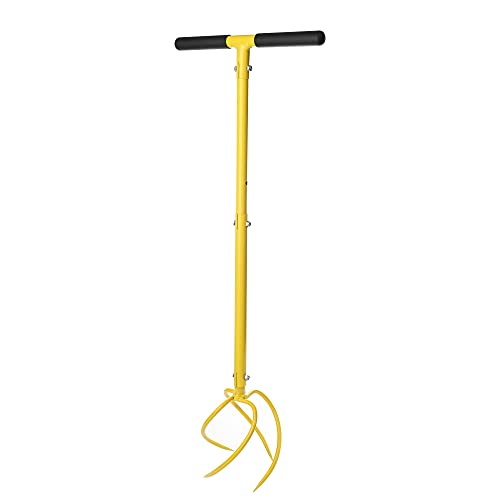
The five tools below cover that whole family. Two are long-handled twist claws that let you work standing up. Two are compact twist tillers with arc or T-handles for tight beds and plant boxes. One is a short stainless hand rake for close work around delicate plants. Every pick is a manual tool for cultivating and weeding soil, and every one was checked against a live Amazon US listing.
Disclosure: As an Amazon Associate, we earn from qualifying purchases.
Quick Picks
Our Short List of 3
- Specs: 4 adjustable carbon steel tines with 3 width settings; 38 in long; under 3 lb; T-handle with rubber grip; footplate; lifetime warranty offered by the maker
- Best for: All-round bed prep, loosening compacted soil, and weeding without bending or kneeling
- Watch out for: The tines can catch on roots in very hard clay, and the tool is slower than a drag cultivator across a large bed. The long handle needs storage space.
- https://www.amazon.com/dp/B08C2C9GQ9
- Specs: Height-adjustable twist claw; curved steel tines; 2-step height adjustment, 39 in and 35.4 in; 15.75 x 6.89 x 38.98 in; 4.44 lb; model JDUS1091
- Best for: Shared households, tall gardeners, and anyone who wants a standing twist tiller that fits their height
- Watch out for: At over 4 lb it is the heaviest tool here, so it suits short, firm sessions rather than all-day use. Check the height settings against your own reach before you buy.
- https://www.amazon.com/dp/B096PJG4WK

- Specs: Rust-resistant stainless steel prongs; ergonomic handle with thumb rest and finger grooves; hang hole; 0.19 kg; manual operation; carbon neutral product
- Best for: Raised beds, containers, mulching, and precise weeding around delicate plants
- Watch out for: This is a surface tool. It will not break deep clay or open a planting hole in packed ground the way a twist claw can. The short handle means kneeling for ground-level beds.
- https://www.amazon.com/dp/B08972G7N8
All 4 Picks at a Glance
| Product | Specs | Action |
|---|---|---|
| 1. Garden Weasel Claw Pro |
| Check price on Amazon |
| 3. BARAYSTUS Height-Adjustable Twist Tiller |
| Check price on Amazon |
| 4. Garden Guru Stainless Steel Hand Rake |
| Check price on Amazon |
 5. Altdorff Manual Twist Tiller |
| Check price on Amazon |
If you only buy one tool, buy the Garden Weasel Claw Pro. Its adjustable tine width covers open beds and tight corners with the same tool, and the footplate lets your body weight do the hard part. If your beds are mostly loose raised-bed mix, the Garden Guru hand rake is the lighter and cheaper companion. For hard, crusted ground in a narrow bed, the Altdorff is the pick with the sharpest bite.
How to Choose
Tine count and material
Tine count decides how the tool moves soil. Three fixed tines act like a small rake: they drag through the top layer, level seed rows, and pull shallow weeds. Four curved claw tines act like a corkscrew: they bite, turn a plug of soil, and open a planting hole. Five or more short tines spread the work wider and suit raking mulch and smoothing beds. For most gardens, three or four tines are enough. More tines help with surface work, but they also catch on roots and stones more often.
Material decides whether the tines bend. Forged or heavy carbon steel resists bending best and is the right call for clay and ground that has never been amended. Cast aluminum is light and will not rust, but it can chip against rocks and crack under prying. Stainless steel sits in the middle: it resists rust, holds an edge, and handles ordinary loam well. Stamped sheet metal bends first and belongs only in loose potting mix. Check the listing for the tine material before you buy, and treat any tool that does not state it as a light-duty tool.
Twist or drag action
Drag cultivators suit wide, open beds. You pull the tines toward you in long strokes, which covers ground fast and mixes compost into the top layer. Twist claws suit spot work. You push the tines in, turn the handle, and lift a plug of soil. That motion opens hard ground better than dragging, and it pulls a deep-rooted weed out whole instead of snapping the top off. The trade-off is speed: a twist claw is slower across a large bed, and the twisting motion can bother sensitive wrists if the handle is thin. If your main job is weeding between rows, a drag cultivator is faster. If your main job is breaking crust and opening planting holes, a twist claw is better.
Handle grip and length
Grip comfort matters more than most buyers expect, because a cultivator is a tool you squeeze and twist for twenty minutes at a time. Look for a grip that fills your palm without forcing your fingers to overlap your thumb. Padded or rubber grips reduce hot spots. A thumb rest and finger grooves help on short hand tools. An arc handle, like the one on the Altdorff, lets you drive the tool down with body weight instead of wrist torque, which helps in hard soil.
Length decides your posture. Short handles, around 9 to 13 inches, give the most control close to the plant and suit containers and raised beds, but they mean kneeling or bending. Long handles, around 35 to 40 inches, let you work standing up and suit open beds and gardeners with sore knees or backs. Adjustable handles, like the one on the BARAYSTUS, let two people of different heights share one tool. Pick the length for the bed you work most, not the bed you wish you had.
Soil type
Match the tool to the soil, not the other way round. Loose raised-bed mix accepts any tine material, so prioritize weight and grip comfort. Average garden loam needs cast aluminum with a thick tine root, carbon steel, or stainless steel, and hollow or stamped heads should be avoided. Compacted or clay-heavy soil needs forged or heavy carbon steel with a one-piece head. A light aluminum tool will bend or twist in a clay path bed, and a heavy forged tool is tiring to use for an afternoon of light weeding around lettuce. If your soil is full of stones, avoid cast aluminum, which chips, and choose steel.
Weight and size
Under about one pound, a tool is light enough for all-day use but meant for loosened soil. Between one and two pounds is the middle ground most gardeners find balanced. Above two pounds, a tool carries momentum through hard soil but tires the arm in long sessions. Small tools, under 10 inches long, fit pots, planters, and seed trays. Mid-size tools, around 12 to 18 inches, suit raised beds. Long tools, around 35 to 40 inches, suit open ground. Buy the smallest tool that can handle your hardest soil, and keep a second short tool for pots if you grow in containers.
5 Best Options
1. Garden Weasel Claw Pro
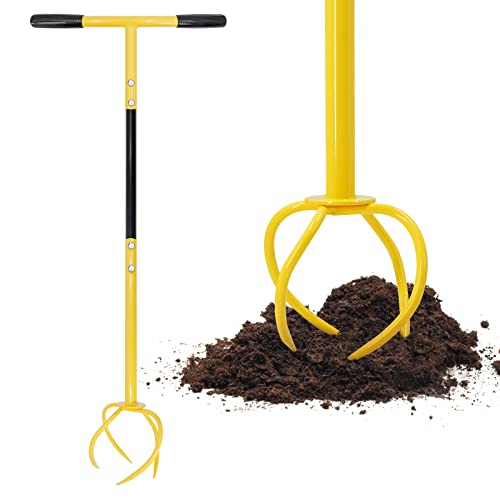
- Specs: 4 adjustable carbon steel tines with 3 width settings; 38 in long; under 3 lb; T-handle with rubber grip; footplate; lifetime warranty offered by the maker
- Best for: All-round bed prep, loosening compacted soil, and weeding without bending or kneeling
- Watch out for: The tines can catch on roots in very hard clay, and the tool is slower than a drag cultivator across a large bed. The long handle needs storage space.
- https://www.amazon.com/dp/B08C2C9GQ9
The Claw Pro is the most complete tool in this roundup, and the one that covers the widest range of jobs. Its four carbon steel tines adjust to three widths, so the same tool tills a wide open bed, cultivates between rows, and weeds in a tight corner. A footplate lets you press the tines in with body weight, and the T-handle keeps your back upright while you twist.
2. Walensee Upgrade Twist Tiller
The Walensee is a straightforward twist tiller that does the core claw job without extra parts. Four curved steel tines press into the soil and turn as you twist the handle, which breaks the crust and lifts weeds with their roots. The big claw head detaches, which makes the tool easier to store and lets you work in narrow spaces with a smaller head.
- Specs: 4 curved steel tines; removable big claw head; long handle; model GT-CT002; manual operation
- Best for: Gardeners who want a simple twist claw for beds and plant boxes at a modest size
- Watch out for: The long handle gives less fine control close to delicate seedlings than a short hand tool, and the twist motion takes practice if you are used to dragging a cultivator.
- https://www.amazon.com/dp/B09YCYSBS4
3. BARAYSTUS Height-Adjustable Twist Tiller
- Specs: Height-adjustable twist claw; curved steel tines; 2-step height adjustment, 39 in and 35.4 in; 15.75 x 6.89 x 38.98 in; 4.44 lb; model JDUS1091
- Best for: Shared households, tall gardeners, and anyone who wants a standing twist tiller that fits their height
- Watch out for: At over 4 lb it is the heaviest tool here, so it suits short, firm sessions rather than all-day use. Check the height settings against your own reach before you buy.
- https://www.amazon.com/dp/B096PJG4WK
The BARAYSTUS is the adjustable pick. Its handle sets to two heights, so a tall gardener and a shorter gardener can share the same tool without stooping or overreaching. The curved steel tines dig deep and wide, and the twist action loosens, turns, and mixes soil in raised beds, flower beds, and plant boxes.
4. Garden Guru Stainless Steel Hand Rake
- Specs: Rust-resistant stainless steel prongs; ergonomic handle with thumb rest and finger grooves; hang hole; 0.19 kg; manual operation; carbon neutral product
- Best for: Raised beds, containers, mulching, and precise weeding around delicate plants
- Watch out for: This is a surface tool. It will not break deep clay or open a planting hole in packed ground the way a twist claw can. The short handle means kneeling for ground-level beds.
- https://www.amazon.com/dp/B08972G7N8
The Garden Guru is the short tool in this roundup, and the best one for close work. Its rust-resistant stainless steel prongs cultivate, turn, and loosen soil around small stems and delicate plants, and the same head spreads mulch and rakes flower beds. The ergonomic handle has a thumb rest on top and finger grooves underneath, which spreads pressure across the palm and eases hand fatigue. A large hang hole makes storage simple. Note that the listing page showed mixed availability signals at its last crawl, so confirm the listing is live before you buy.
5. Altdorff Manual Twist Tiller
- Specs: 4 arrow-tipped steel tines; 17.7 in arc handle; 3.46 lb; detachable claw head; model 1944; steel build
- Best for: Compacted and clay-heavy soil, tight beds, plant boxes, and breaking a hard surface crust
- Watch out for: The sharp tines demand care near shallow roots and drip lines, and the arc handle feels different from a straight T-handle, so it takes a session to get used to.
- https://www.amazon.com/dp/B09VP9LVZS
The Altdorff is the sharpest tool here. Four arrow-tipped steel tines angle aggressively into crusted and compacted soil, and the curved 17.7 inch arc handle lets you drive the tool down with upper body weight rather than wrist torque. The claw head detaches for compact storage. It is the pick for gardeners whose beds have baked hard over summer and need a tool that bites on the first twist.
Which One Fits
Match the tool to the job you do most. For general bed prep and weeding across a whole garden, the Garden Weasel Claw Pro fits best: the adjustable tine width and footplate cover open beds and tight corners, and the long handle saves your back. For a simple twist claw that you grab for quick jobs in beds and plant boxes, the Walensee fits best: it has no adjustments to fiddle with and the detachable claw stores easily.
For a household where two people of different heights share tools, the BARAYSTUS fits best: the two height settings let each gardener work upright. For containers, raised beds, and careful work around seedlings, the Garden Guru hand rake fits best: it is light, precise, and doubles as a mulch rake. For hard, crusted, or clay-heavy ground in a narrow bed, the Altdorff fits best: its arrow-tipped tines and arc handle bite where lighter tools skate across the surface.
If you keep two tools, pair one long twist claw with the short Garden Guru hand rake. The long tool handles bed prep and weeding from a standing position, and the short tool handles pots, planters, and close work. That pair covers nearly every bed in a home garden.
Common Mistakes
Buying for the wrong soil. The most common error is choosing a light aluminum cultivator for clay or ground that has never been amended. The tines bend on the first session. Match the tine material to your hardest soil, not your easiest bed.
Twisting a drag cultivator. Fixed three-tine cultivators are made to drag, not twist. Forcing a twist bends the neck where the shaft meets the head, which is the weak point of the design. Use a claw tool when you need a twisting motion.
Working bone-dry ground. Even a good steel claw struggles in baked-dry clay. Water the bed the evening before you cultivate, and let the moisture soften the top layer overnight. The same tool will do twice the work with half the effort.
Ignoring the grip. A thin, hard handle concentrates pressure in the palm and tires the hand fast. If your sessions run longer than twenty minutes, a padded, ergonomic, or arc handle matters more than a few ounces of weight.
Leaving steel tools wet. Carbon steel tines rust if they are put away damp. Wipe the head dry after use, and rub a drop of oil on the tines before winter storage. Stainless and aluminum heads forgive neglect, but steel heads do not.
Cultivating too deep around plants. Hand cultivators work the top two or three inches. Digging deeper near established plants cuts feeder roots and does more harm than good. Keep the tines shallow near stems, and save deep work for empty beds before planting.
FAQ
What is the difference between a hand cultivator and a garden claw?
A hand cultivator usually has three fixed curved tines that you drag toward you to loosen the surface, mix compost, and pull shallow weeds. A garden claw has hooked or spiral tines that you push into the soil and twist, which turns a plug of soil and opens planting holes in harder ground. Many tools combine both ideas, and the two terms describe one family of manual soil tools.
Can a hand cultivator break up clay soil?
Yes, but only the right kind. Clay needs forged or heavy carbon steel tines with a one-piece head, such as the twist claws in this roundup, and the soil should be damp rather than bone dry. Light aluminum cultivators bend in clay and are better kept for loose raised-bed mix. For ground that has never been amended, work in short sessions and let the tool bite a little at a time.
How deep should a hand cultivator work?
Most hand cultivators work the top two or three inches of soil, which is enough to break the crust, lift small weeds, and mix in compost. Twist claws can open a planting hole a little deeper in a single spot. Going deeper across a whole bed is not the job of a hand tool, and digging deep near established plants risks cutting feeder roots.
Do I need a long handle or a short handle?
Choose by posture and bed type. A long handle, around 35 to 40 inches, lets you work standing up in open beds and suits sore knees and backs. A short handle, around 9 to 13 inches, gives the most control close to plants and suits containers, pots, and raised beds, but it means kneeling or bending. If you work both kinds of beds, an adjustable handle or one tool of each length is the practical answer.