Our Short List of 3
All 3 Picks at a Glance
| Product | Specs | Action |
|---|---|---|
 GE GDT670SYVFS | Check price on Amazon | |
 GE GDT630PYRFS | Check price on Amazon | |
 GE GDF535PSRSS | Check price on Amazon |
Key takeaways
- Compare the best hard food disposer dishwashers: built-in grinders that pulverize daily scraps, cut pre-rinsing, and keep spray arms clear load after load.
Most dishwashers sold today rely on a mesh filter that traps food scraps until you pull it out and rinse it by hand. A hard food disposer dishwasher takes the opposite approach: a built-in grinder with a stainless steel blade sits in the sump, pulverizes soft food scraps as the wash water circulates, and sends the fine particles out with the drain water. If you cook from scratch most nights, load plates straight from the table, and are tired of fishing soggy debris out of a filter cup, this is the design that matches how you actually use the machine. This guide compares the disposer-equipped models that can be verified on Amazon US right now, explains what the grinder does and does not do, and helps you decide which configuration fits your kitchen. The picks below are based on manufacturer specifications and Amazon listing details for each exact model, not on in-person testing.
Disclosure: As an Amazon Associate, we earn from qualifying purchases. Product details and availability can change; check the Amazon listing before you buy.
Quick picks at a glance
| Product | ASIN | Best for |
|---|---|---|
| GE GDT670SYVFS | B0F7GMK9VR | Quiet family loads with a stainless tub and third rack |
| GE GDT630PYRFS | B09QLJR3GP | Third-rack capacity with bottle jets on a plastic tub |
| GE GDF535PSRSS | B09BNXGZ5R | Simple front controls and the easiest upkeep routine |
One pattern is worth knowing before you read further: nearly every current dishwasher with a true built-in hard food disposer comes from GE, whose Piranha disposer line spans several series, or from Frigidaire. Most other major brands have moved entirely to filter-only designs. The three picks below are the GE models whose Amazon US listings could be verified for this guide; they cover a quiet stainless-steel option, a mid-step third-rack model, and a straightforward front-control machine.
What matters most when buying a hard food disposer dishwasher
How the disposer works. In GE’s Piranha system, a stainless steel blade in the sump spins at 3,600 RPM and shreds food particles small enough to pass through the wash system without clogging the spray arms. The point is not raw power; it is that large particles never get the chance to lodge in an arm jet or settle back onto clean dishes. When you compare disposer models, the blade assembly and whether it is paired with a removable filter matter more than marketing names.
Disposer plus filter, not disposer instead of filter. GE pairs its disposer with a removable filter, and that filter still needs a periodic rinse. The disposer dramatically reduces how much debris the filter collects and how often it needs attention, but it does not eliminate filter care altogether. If a listing promises a maintenance-free machine, read it skeptically: the honest claim is less frequent, easier upkeep.
What the grinder cannot handle. A hard food disposer is built for soft and medium food scraps: sauces, cereal, vegetable trimmings, small bits of pasta. It is not a sink garbage disposal. Bones, fruit pits, corn cobs, and thick grease still belong in the trash or compost. Loading those items anyway is the fastest route to a jammed pump or a service call, on any brand.
Noise. A grinder adds short bursts of mechanical noise on top of the wash sound, so the published sound figure matters. The picks here span 45 dBA to 55 dBA, a wide spread: the quietest model suits open-plan living, while the loudest is better behind a closed kitchen door or run on a delay timer overnight in a separate room.
Cycles that exploit the disposer. Soil-sensing cycles such as AutoSense adjust water and time to the load, which pairs well with a disposer because the machine can push dirtier water through the grinder without you pre-rinsing. Steam and sanitize options loosen baked-on soil before the main wash, so the disposer receives softened scraps instead of cemented ones.
Tub material and racks. A stainless steel tub resists staining from tomato-heavy cooking and helps with drying; a plastic tub keeps the machine simpler and is common on front-control models. A third rack changes how a disposer household loads, because utensils and small items move up top and leave the lower rack open for the pots and serving bowls that produce the most scraps.
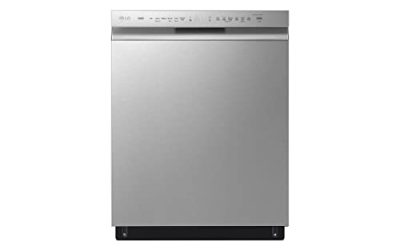
GE GDT670SYVFS
Why it fits a disposer-first kitchen. This is the pick for households that generate serious food scraps and also live in open-plan spaces. The Piranha disposer handles the grinding, the stainless steel tub shrugs off the staining that comes with saucy cooking, and at 45 dBA it is the quietest model in this guide by a clear margin, so the disposer bursts blend into a wash cycle you can run while people are in the next room. The third rack absorbs the utensils, lids, and small prep bowls that pile up on cooking nights, and Dry Boost targets the plastics that usually come out wet.
Trade-offs. Top controls are hidden when the door is closed, which looks clean but means checking cycle status through the display window rather than glancing at a front panel. It is also the most feature-dense machine here, so households that only ever run one cycle are paying attention to options they will not use. The removable filter still needs its periodic rinse.
Best for / Skip if. Best for families who cook daily, skip pre-rinsing on principle, and need quiet running. Skip it if you prefer visible front controls or know you will never use a third rack.
GE GDT630PYRFS
Why it fits a disposer-first kitchen. The GDT630PYRFS keeps the same Piranha grinding hardware and the same 16-place-setting capacity as the step-up model, and adds bottle jets aimed into tall bottles and travel mugs, the items that otherwise get hand-washed and add to the scrap load around the sink. Five cycles including AutoSense give the disposer the right wash profile for everything from a quick rinse to a heavy casserole load, and the fingerprint-resistant stainless finish suits kitchens where the machine is on show.
Trade-offs. The plastic tub is the main step down: it is durable and easy to wipe, but it does not shed water or resist stains the way stainless steel does, and drying leans more on Dry Boost. At 50 dBA it sits in the middle of this guide for noise, noticeable in a quiet open-plan room though far from intrusive. As with the other picks, the filter paired with the disposer still wants an occasional rinse.
Best for / Skip if. Best for households that want third-rack loading and bottle jets with a full-size disposer, and are comfortable with a plastic tub. Skip it if a stainless interior is a firm requirement or your kitchen opens directly onto a living area where you want the lowest possible sound figure.
GE GDF535PSRSS
Why it fits a disposer-first kitchen. This is the straightforward version of the disposer idea: front controls you can read at a glance, four essential cycles, and the same Piranha blade assembly doing the grinding. The Steam + Sani option is certified to NSF Standard 184 and is described by GE as reducing 99.999 percent of bacteria on dishes, which is genuinely useful for households washing baby bottles, cutting boards, and canning jars alongside normal loads. Active Flood Protect adds a sensor that guards against overflow, a sensible pairing with a machine you plan to run on a delay while you are out.
Trade-offs. At 55 dBA it is the loudest pick here, and the two-rack layout with a 14-place-setting capacity fills up faster after big family meals. There is no soil-sensing cycle, so heavily soiled loads rely on you choosing Heavy rather than the machine judging for itself. The plastic tub and front-control styling are practical rather than premium.
Best for / Skip if. Best for buyers who want a disposer, a sanitize option, and controls that anyone in the house can understand without a manual. Skip it if your kitchen is open to your living space or you regularly wash for more than six people at once.
How to choose between these picks
Start with where the dishwasher sits. If the kitchen flows into the room where people watch television or work, the 45 dBA figure of the GDT670SYVFS is worth prioritizing, because disposer bursts are brief but noticeable on louder machines. If the dishwasher is in a closed kitchen or runs overnight, the 50 and 55 dBA models stop being a compromise.
Next, count your typical load. Sixteen place settings and a third rack, on either the GDT670SYVFS or the GDT630PYRFS, absorb the extra utensils and small bowls that scrap-heavy cooking produces, and keep the lower rack free for the roasting pans and stockpots that make the biggest mess. Smaller households that run a load every day or two will find the 14-place-setting GDF535PSRSS easier to fill, and a full machine is an efficient machine.
Then decide how you interact with the controls. Top controls give a cleaner door front and keep settings away from curious toddlers; front controls show cycle progress at a glance and suit households where several people share loading duties. Finally, be honest about pre-rinsing: if nobody in the house will ever rinse a plate, all three disposers forgive that equally, because the grinding hardware is the shared constant across this lineup. The differences that matter are noise, tub, racks, and controls.
Setup and care for a disposer dishwasher
Scrape, do not rinse. The habit that makes a disposer dishwasher work is also the easiest: scrape plates into the trash or compost, skip the sink rinse, and load. Detergent needs some soil to work against, and the disposer is designed to receive what is left. Keep bones, pits, eggshells in quantity, and coffee grounds out of the machine; they are the items most often named in manuals as poor candidates for the grinder.
Respect the filter anyway. Pull the removable filter roughly once a month, rinse it under the tap, and check the sump area for glass shards or labels that slipped through. This two-minute job is the entire maintenance bargain of a disposer model, and skipping it for a year is how a low-maintenance machine becomes a smelly one.
Keep the spray arms clear. The disposer exists partly to protect the spray arm jets, but a quick spin of each arm every few weeks confirms they rotate freely and that no jet is blocked by a stray seed or piece of label. Run the hot water tap at the sink until it runs hot before starting a cycle, so the first fill is at temperature and the steam and sanitize options work from the right baseline.
Mind the drain connection. A disposer dishwasher still drains through the standard dishwasher drain hose, either to a sink garbage disposal or a standpipe with an air gap where local code requires one. If your sink disposal is ever replaced, confirm the dishwasher inlet plug on the new unit is knocked out; it is the most common cause of a brand-new installation that will not drain.
Frequently asked questions
Does a hard food disposer mean I never clean a filter again?
No. GE pairs its Piranha disposer with a removable filter, and that filter still collects fine residue over time. The difference versus a filter-only dishwasher is frequency and effort: expect a quick monthly rinse rather than scrubbing a cup full of trapped scraps after heavy loads.
Can the disposer handle bones, pits, and corn cobs?
It is not designed to. The blade pulverizes soft and medium food scraps; hard items like bones and fruit pits, and fibrous items like corn husks, belong in the trash or compost. Putting them in anyway risks a jam and a repair bill.
Is a disposer dishwasher louder than a filter-only model?
The grinding adds short bursts of noise when scraps are processed, but the published sound figure for the whole machine is what you live with. In this guide that figure runs from 45 dBA on the GDT670SYVFS to 55 dBA on the GDF535PSRSS, so choosing by the figure matters more than choosing by the waste system.
What if my home has a septic system?
A disposer dishwasher sends finely ground food solids out with the drain water, which adds to what a septic tank must process. Guidance varies by tank size and local rules; households on septic systems commonly scrape plates thoroughly and use the disposer as a backstop rather than a bin. Check your septic service provider’s advice before relying on any grinder, in the sink or in the dishwasher.
Why do almost all disposer models come from one or two brands?
Most manufacturers moved to filter-only designs because filters are quieter to engineer and simpler to certify across markets. GE kept its Piranha disposer across several series, and Frigidaire fits hard food disposers to many of its built-in models, so shoppers who specifically want a grinder are mostly choosing within those two families and comparing noise, tub, and rack layouts rather than the disposer itself.
Conclusion
A hard food disposer is the right call if your household loads dishes straight from the table and wants the machine, not a filter cup, to handle what is left on them. Choose the GE GDT670SYVFS if you want the quietest run and a stainless tub with a third rack for daily family cooking. Choose the GE GDT630PYRFS if bottle jets and third-rack loading matter more than tub material. Choose the GE GDF535PSRSS if you want the disposer and a certified sanitize option behind the simplest front controls in the group. Whichever you pick, keep the monthly filter rinse and the scrape-don’t-rinse habit, and the disposer will do the rest.