Our Short List of 3
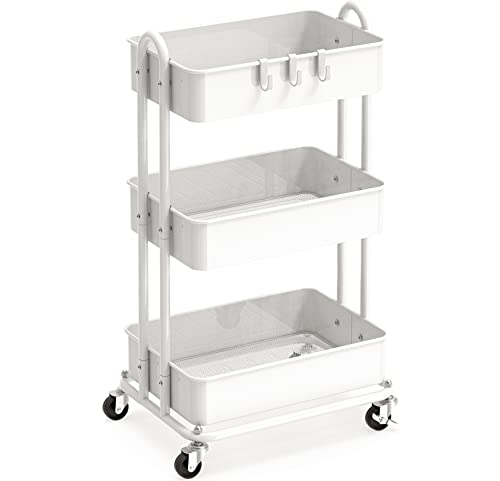
- Best for: Apartment and house organizing in kitchens, bathrooms, and home offices.
- 3 tiers
- Weight limit: 220 pounds
- Dimensions: 12.5″D x 17″W x 31.5″H
- Material: alloy steel

- Best for: Garage and workshop hauling, plus heavy kitchen or stockroom storage.
- 3 tiers, height adjustable at 1-inch intervals
- Weight capacity: 500 pounds, evenly distributed
- Dimensions: 34″W x 18″D x 33.5″H
- Material: alloy steel with chrome finish

- Best for: Nursery, craft room, and bathroom organizing with light items.
- 3 tiers with open baskets
- Weight capacity: 13 pounds total
- Dimensions: 10.43″D x 13.39″W x 31.89″H
- Material: plastic
All 4 Picks at a Glance
| Product | Specs | Action |
|---|---|---|
| Simple Houseware 3-Tier Heavy Duty Metal Utility Rolling Cart |
| Check price on Amazon |
| Seville Classics UltraDurable NSF Utility Cart |
| Check price on Amazon |
| Pipishell 3 Tier Rolling Cart Organizer |
| Check price on Amazon |
 Rubbermaid Commercial Xtra 3-Shelf Utility Cart |
| Check price on Amazon |
Key takeaways
- Four utility carts compared for home and garage use, from a compact 220 lb steel three-tier to a 500 lb adjustable steel cart, using listing specs only.
A utility cart looks simple until the first load shifts, a caster folds under a full shelf, or the frame turns out to be two inches too wide for the laundry room door. The real decision is matching the cart to the heaviest load you will actually roll, the floor it crosses every day, and the gap it has to park in when the job is done.
This guide is for homeowners sorting a garage, renters adding storage to a small kitchen or bathroom, and hobbyists who need supplies to move with them. Each cart below was picked from its Amazon listing name and stated specifications, with shelf counts, dimensions, and weight limits taken from the listing itself rather than from brand marketing pages.
Quick Picks
As an Amazon Associate we earn from qualifying purchases
| Product | Best for | Key spec from title |
|---|---|---|
| Simple Houseware 3-Tier Metal Utility Cart | Everyday kitchen, bath, and office organizing | 3 steel tiers, 220 lb weight limit |
| Seville Classics UltraDurable NSF Utility Cart | Garage loads and workshop gear | 500 lb capacity, height-adjustable tiers |
| Pipishell 3 Tier Rolling Cart Organizer | Light nursery, craft, and bathroom duty | Plastic baskets, 13 lb total capacity |
| Rubbermaid Commercial Xtra 3-Shelf Cart | Hauling equipment from room to room | 3 open shelves, 300 lb capacity |
How to Choose
Start With the Load, Not the Shelf Count
Three tiers mean little if the frame flexes under your heaviest box. Check the weight limit in the listing and think about how that load is spread: a cart stated at 500 pounds evenly distributed behaves very differently from a light plastic cart stated at 13 pounds total. Paint cans, toolboxes, and cases of drinks concentrate weight on one shelf, so leave headroom between your typical load and the stated limit. If your loads are mostly linens, craft supplies, and toiletries, a modest limit is fine and buys you a lighter, easier cart.
Measure the Parking Spot and the Route
A cart earns its keep only if it fits where it lives. Measure the closet, the gap beside the washer, or the garage bay where it will park, then compare against the assembled dimensions in the listing. Height matters too: a cart around 31 to 34 inches tall slides under many counters and workbenches, while taller service carts need open floor space. Walk the route from storage to sink or workbench and note door widths and thresholds, because a wide cart that cannot make the turn will end up parked and forgotten.
Match Caster Size and Locking to Your Floors
Small swivel casters glide well on tile and hardwood but stumble on garage concrete seams, cords, and door thresholds. Larger wheels roll over rough patches with less pushing, which matters once the shelves are loaded. Locking casters are worth insisting on if the cart will stand on a slope, hold a machine you operate, or sit beside a crib or workbench where a nudge sends it drifting. Listings state the caster type and whether any lock, so confirm those details before assuming a cart will stay put on your floor.
Pick the Frame Material for the Room
Powder-coated or chrome-finished steel suits garages, workshops, and kitchens where loads are heavier and bumps are frequent. Plastic carts weigh far less and shrug off bathroom humidity, but their stated capacities are much lower and they suit toiletries, diapers, and yarn rather than tools. Shelf style matters as well: wire tiers let dust and spills fall through and air circulate, while smooth solid shelves are easier to wipe down after a messy job and keep small items from tipping into the gaps or sliding off.
The 4 Best Options
Simple Houseware 3-Tier Heavy Duty Metal Utility Rolling Cart
- Best for: Apartment and house organizing in kitchens, bathrooms, and home offices.
- 3 tiers
- Weight limit: 220 pounds
- Dimensions: 12.5″D x 17″W x 31.5″H
- Material: alloy steel
Apartment and house organizing in kitchens, bathrooms, and home offices.
Assembly is required, and the 220 pound figure is a maximum for the whole cart, so heavy items belong on the lowest tier.
This is the cart for the everyday middle ground: heavier than a plastic organizer, smaller than a service cart. The alloy steel frame carries a stated 220 pound weight limit across three tiers, which covers pantry overflow, cleaning supplies, or a printer and paper stack without drama. Its footprint is compact enough for a bathroom or beside a desk, and the locking caster keeps it parked on hard floors. Choose it if you want one general-purpose cart that moves between rooms and loads moderately, rather than a specialist for the garage or the nursery.
Seville Classics UltraDurable NSF Utility Cart
- Best for: Garage and workshop hauling, plus heavy kitchen or stockroom storage.
- 3 tiers, height adjustable at 1-inch intervals
- Weight capacity: 500 pounds, evenly distributed
- Dimensions: 34″W x 18″D x 33.5″H
- Material: alloy steel with chrome finish
Garage and workshop hauling, plus heavy kitchen or stockroom storage.
The chrome finish is intended for dry environments per the listing, so it is not the pick for a damp shed or outdoor storage.
When the load is the point, this steel cart is the strongest pick here. The listing states a 500 pound capacity spread across three tiers, and each tier adjusts in 1-inch increments, so a tall toolbox or a stack of storage bins can set the spacing instead of fighting fixed shelves. Four swivel wheels with two locking carry the weight, and the frame is NSF certified for dry environments. It suits garages, workshops, and serious pantry storage where a light organizer cart would bow. The trade-off is heft: at 42 pounds empty, it is a cart you park deliberately, not one you carry upstairs.
Pipishell 3 Tier Rolling Cart Organizer
- Best for: Nursery, craft room, and bathroom organizing with light items.
- 3 tiers with open baskets
- Weight capacity: 13 pounds total
- Dimensions: 10.43″D x 13.39″W x 31.89″H
- Material: plastic
Nursery, craft room, and bathroom organizing with light items.
The listing warns against placing heavy items on the top tier because the light frame can tip; keep the load low and balanced.
This plastic cart plays a different role from the steel frames above. Three open baskets on swivel casters make a light station for diapers and wipes, craft supplies, or bathroom bottles, and the whole cart weighs only a few pounds, so it is easy to lift over a threshold or carry between floors. Two of the wheels lock to keep it in place beside a crib or desk. The honest limit is capacity: the listing states 13 pounds total, which is enough for the light goods it is designed around and nowhere near enough for tools, books, or paint.
Rubbermaid Commercial Xtra 3-Shelf Utility Cart
- Best for: Moving tools, cleaning gear, and equipment around a house, garage, or workshop.
- 3 shelves
- Weight capacity: up to 300 pounds
- 4 swivel casters
- Item weight: 39.5 pounds
Moving tools, cleaning gear, and equipment around a house, garage, or workshop.
The listing’s dimension fields conflict with each other, so confirm the assembled footprint against your doorway before ordering.
This is the big open-deck option, built for moving equipment rather than organizing small goods. Three smooth shelves carry up to 300 pounds in total, the surfaces wipe clean after a messy job, and easy-grip handles at both ends help steer a full load through a workshop or from the garage into the house. It suits homeowners who host, clean, or maintain a property and need one cart that can haul a vacuum, a toolbox, and supplies in a single trip. Measure first, though: this is a wide, long cart that needs real floor space and a doorway it can clear.
Which One Fits Your Situation
A Small Kitchen or Bathroom With No Spare Cabinets
The Simple Houseware cart fits this job. Its narrow footprint slips beside a counter or tub, the steel tiers hold cleaning bottles and pantry overflow without sagging, and the locking caster keeps it still while you grab things with wet hands. The Seville would waste its strength here, and the Pipishell baskets are too light for canned goods and detergent bottles.
A Garage That Doubles as a Workshop
Pick the Seville Classics cart. The 500 pound stated capacity and adjustable tiers handle toolboxes, paint, and parts bins, and the locking wheels keep it planted beside the bench while you work. If your loads are long equipment rather than boxed gear, the Rubbermaid’s open shelves are the alternative, since nothing has to fit between uprights or under a handle bar.
A Nursery or Craft Corner That Rearranges Often
The Pipishell is the natural fit. It weighs only a few pounds, rolls quietly between rooms, and its open baskets keep diapers, wipes, or yarn visible and reachable. Lock two wheels when it stands beside the crib or desk. Just respect the 13 pound total capacity in the listing and keep heavier supplies on a shelf instead.
One Cart for Whole-House Cleaning and Projects
Choose the Rubbermaid Xtra. Its three open shelves swallow a vacuum, a bucket, and a toolbox in one load, the smooth surfaces rinse clean after a dirty job, and the handles at both ends make a full cart easier to steer. It is bigger than the others, so confirm it fits your hallway and storage spot before committing.
Common Mistakes
- Comparing shelf counts instead of stated weight limits, then loading a light plastic cart with tools or paint it was never built to carry.
- Skipping the tape measure: ordering a wide service cart that cannot turn into the laundry room or park in the only free gap.
- Ignoring caster details in the listing, then fighting small wheels over garage seams or watching an unlocked cart drift on a sloped floor.
- Putting the heaviest items on the top tier, which raises the center of gravity and makes any cart easier to tip while turning.
- Assuming chrome or coated steel belongs outdoors; finishes stated for dry indoor environments can corrode in a damp shed.
Frequently Asked Questions
How much weight can a utility cart really hold?
Go by the weight limit stated in the listing, and treat it as a total for the whole cart unless the listing breaks it down by shelf. In this guide the stated limits run from 13 pounds for the light plastic Pipishell to 500 pounds for the Seville Classics steel cart, so match the figure to your heaviest typical load.
Are wire shelves or solid shelves better?
Wire tiers suit garages, pantries, and workshops because dust and spills fall through and air circulates around stored items. Smooth solid shelves, like the Rubbermaid’s, wipe clean quickly and stop small parts from dropping through gaps. The better choice depends on what you store: powders, bottles, and tools behave differently on each surface.
Do I need locking casters on a rolling cart?
Locking casters matter whenever the cart parks on a slope, holds equipment you push against while working, or stands where children and pets can bump it. Two of the carts here include locking wheels, and the Simple Houseware lists a locking caster as well. On flat floors with light loads, plain swivel casters are usually enough.
Can a utility cart replace fixed shelving?
A cart works best as mobile, flexible storage rather than a full shelving replacement. It holds less than a fixed unit of the same footprint and needs floor space to roll. Where it wins is movement: supplies travel to the job, then park out of the way. Many homes pair one cart with fixed shelves and use each for what it does well.