Our Short List of 3

- Best for: A bedroom or hallway ceiling where a slim, unobtrusive alarm matters.
- Brand: First Alert
- Model: SM210
- Sensor type: Photoelectric
- Power source: Battery powered

- Best for: A bedroom or living area where a simple smoke-only alarm with voice alerts and a hush button is enough.
- Brand: Kidde
- Model: P3010B
- Sensor type: Photoelectric
- Power source: Battery powered
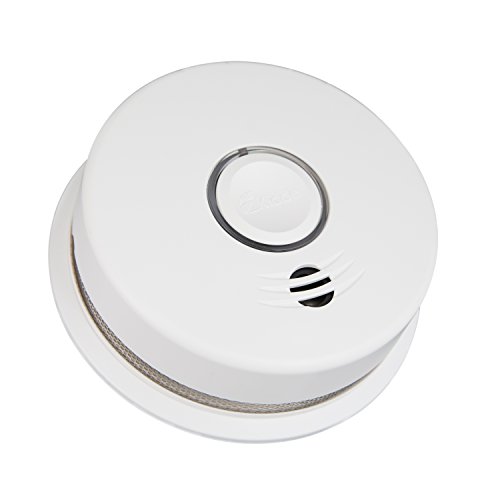
- Best for: A family home that wants smoke and carbon monoxide detection in one alarm, with every linked alarm sounding together.
- Brand: Kidde
- Model: P4010DCSCO-W
- Power: 10-year, sealed, lithium battery
- Smoke sensing: Photoelectric sensing technology
All 5 Picks at a Glance
| Product | Specs | Action |
|---|---|---|
| First Alert SM210 10-Year Sealed Battery Smoke Alarm, Slim Profile |
| Check price on Amazon |
| Kidde P3010B 10-Year Battery Photoelectric Smoke Alarm |
| Check price on Amazon |
| Kidde P4010DCSCO-W Smoke and Carbon Monoxide Detector, 10-Year Battery, Interconnect Combination Smoke and CO Alarm, Voice Alert |
| Check price on Amazon |
 X-Sense SD2J0AX Smoke Detector, 10-Year Battery, UL 217 Certified |
| Check price on Amazon |
 SITERWELL GS525A Smoke Detector Fire Alarm, 10 Year Battery, 10 Packs |
| Check price on Amazon |
Key takeaways
- The 5 best sealed lithium smoke detectors for November 2026, with 10-year sealed batteries, photoelectric sensors, and picks for bedrooms, whole-home coverage, and multi-room setups.
A sealed lithium smoke detector solves the most common reason alarms fail: a dead or missing battery. The battery is built in and rated for ten years, so there are no annual swaps and no late-night low-battery chirps. But a sealed battery alone does not make a good alarm. The sensor type, the placement, the end-of-life signal, and whether the alarm links to others in the home all decide whether the household actually gets warned in time.
This guide is for homeowners, renters, and landlords who want a decade of protection without battery chores. It covers smoke-only alarms for bedrooms, a combination smoke and carbon monoxide alarm for whole-home coverage, and a multi-pack for outfitting several rooms at once. Every pick below is a sealed lithium model taken from its Amazon product listing, with the sensor type, battery, and certification stated on that listing.
Quick Picks
As an Amazon Associate we earn from qualifying purchases.
| Product | Best for | Key spec from title |
|---|---|---|
| First Alert SM210 10-Year Sealed Battery Smoke Alarm, Slim Profile | A slim, low-profile alarm for a bedroom ceiling | 10-year sealed lithium battery; photoelectric sensor |
| Kidde P3010B 10-Year Battery Photoelectric Smoke Alarm | A straightforward smoke-only alarm with voice alerts for a bedroom | 10-year sealed lithium battery; photoelectric sensor |
| Kidde P4010DCSCO-W Smoke and Carbon Monoxide Detector, 10-Year Battery, Interconnect | Whole-home coverage with smoke and carbon monoxide detection in one unit | 10-year sealed lithium battery; wire-free interconnect |
| X-Sense SD2J0AX Smoke Detector, 10-Year Battery, UL 217 Certified | A hallway alarm with a hush button for cooking steam | 10-year sealed lithium battery; photoelectric sensor |
| SITERWELL GS525A Smoke Detector Fire Alarm, 10 Year Battery, 10 Packs | Covering several rooms at once | 10-year sealed lithium battery; photoelectric sensor |
How to Choose
Match the sensor to the fire you need to catch
Photoelectric sensors respond to the visible particles produced by slow, smoldering fires, the kind that start in upholstery, bedding, or wiring inside a wall and fill a room with smoke before flames appear. Ionization sensors respond faster to fast-flaming fires that produce little visible smoke. Most sealed lithium alarms in this guide use photoelectric sensing, which suits bedrooms and living areas where smoldering fires are the main concern. Check the sensor type on the listing before buying, and do not assume two alarms with similar cases sense fire the same way. If a room holds both kinds of risk, placement and a second alarm matter more than any single sensor claim.
Treat the sealed battery as a ten-year clock
A sealed lithium battery is built into the alarm and cannot be removed or replaced, which removes dead-battery chirps and the temptation to pull a battery out after a false alarm. The trade is that the whole alarm is replaced when the battery reaches the end of its life, usually after ten years, and the alarm sounds an end-of-life signal when that point arrives. Note the installation date when you mount the alarm, and plan the replacement date at the same time. A sealed battery also means a failing battery cannot be fixed with a fresh cell, so the warranty length and the end-of-life warning stated on the listing deserve a close look before you buy.
Plan placement and interconnection before you buy
One alarm cannot protect a whole home. Place alarms inside each bedroom, outside sleeping areas, and on every level, following the instructions that come with the alarm and local requirements. Wireless interconnection lets every linked alarm sound when one of them detects smoke, so a fire in a distant room still wakes the household, but only alarms designed to work together will do this, and listings state a maximum number of linked devices. Check that limit before mixing models or brands. A single standalone alarm suits a small apartment, while a larger home needs a planned set of linked alarms rather than a handful of unrelated units bought one at a time.
Check certification, hush, and voice features
Look for UL 217 listing on the product page, ideally the 10th edition, which covers current requirements for nuisance-alarm resistance and sensor performance. A test and silence button matters more than it sounds: monthly testing confirms the alarm still sounds, and a hush feature quiets a nuisance alarm from cooking steam without disabling protection. Voice alerts that name the danger, such as fire or carbon monoxide, help in the dark when a plain tone leaves the household guessing what set the alarm off. None of these features replaces correct placement, so treat them as tie-breakers between alarms that already meet the sensor, battery, and certification basics.
The 5 Best Options
First Alert SM210 10-Year Sealed Battery Smoke Alarm, Slim Profile
- Best for: A bedroom or hallway ceiling where a slim, unobtrusive alarm matters.
- Brand: First Alert
- Model: SM210
- Sensor type: Photoelectric
- Power source: Battery powered
A bedroom or hallway ceiling where a slim, unobtrusive alarm matters.
This is a smoke-only alarm with no carbon monoxide detection, so a home with fuel-burning appliances still needs separate CO coverage.
The SM210 is the low-profile pick in this guide. At one inch deep it sits close to the ceiling, which suits bedrooms and hallways where a bulky alarm would look out of place. Its photoelectric sensor is aimed at smoldering fires, and the Precision Detection design conforms to UL 217 10th edition, the current standard for nuisance-alarm resistance. The sealed lithium battery runs for ten years with no battery changes and no low-battery chirps, and the alarm gives an end-of-life warning when the whole unit is due for replacement.
Watch out for: This is a smoke-only alarm with no carbon monoxide detection, so a home with fuel-burning appliances still needs separate CO coverage.
Kidde P3010B 10-Year Battery Photoelectric Smoke Alarm
- Best for: A bedroom or living area where a simple smoke-only alarm with voice alerts and a hush button is enough.
- Brand: Kidde
- Model: P3010B
- Sensor type: Photoelectric
- Power source: Battery powered
A bedroom or living area where a simple smoke-only alarm with voice alerts and a hush button is enough.
The sealed battery means the whole unit is replaced at the end of its ten-year life, and this model does not interconnect with other alarms, so each room needs its own unit.
The P3010B is a straightforward smoke-only alarm built around a sealed lithium battery and a photoelectric sensor tuned for smoldering fires. It speaks voice alerts and includes a Smart Hush feature for quieting nuisance alarms, which helps in bedrooms near kitchens or bathrooms. The unit activates automatically when it is twisted onto its mounting bracket, and its compact round case fits bedrooms and living areas without drawing attention. The ten-year limited warranty matches the battery life, so the alarm and its power source age out together.
Watch out for: The sealed battery means the whole unit is replaced at the end of its ten-year life, and this model does not interconnect with other alarms, so each room needs its own unit.
Kidde P4010DCSCO-W Smoke and Carbon Monoxide Detector, 10-Year Battery, Interconnect Combination Smoke and CO Alarm, Voice Alert
- Best for: A family home that wants smoke and carbon monoxide detection in one alarm, with every linked alarm sounding together.
- Brand: Kidde
- Model: P4010DCSCO-W
- Power: 10-year, sealed, lithium battery
- Smoke sensing: Photoelectric sensing technology
A family home that wants smoke and carbon monoxide detection in one alarm, with every linked alarm sounding together.
Interconnection works with compatible Kidde devices up to the stated limit, so check the limit and compatibility before mixing it with alarms from other brands.
The P4010DCSCO-W covers two hazards in one unit. A photoelectric sensor watches for smoke while an electrochemical sensor watches for carbon monoxide, and voice alerts announce the danger, saying fire for smoke and warning of carbon monoxide for CO. The sealed lithium battery powers the alarm for ten years, including during a power failure. Up to 24 Kidde devices can interconnect wirelessly, so one alarm sounding sets off the linked alarms through the home, and the Smart Hush feature silences a fire alarm for about eight minutes after a nuisance trigger.
Watch out for: Interconnection works with compatible Kidde devices up to the stated limit, so check the limit and compatibility before mixing it with alarms from other brands.
X-Sense SD2J0AX Smoke Detector, 10-Year Battery, UL 217 Certified
- Best for: A hallway or living area near the kitchen, where a hush button for cooking steam matters.
- Brand: X-Sense
- Model: SD2J0AX
- Sensor type: Photoelectric
- Battery: 10-year sealed lithium battery
A hallway or living area near the kitchen, where a hush button for cooking steam matters.
This is a single standalone unit with no carbon monoxide detection and no interconnection stated on the listing, so it suits one room rather than a linked whole-home set.
The SD2J0AX is a compact smoke-only alarm for hallways and living areas. Its photoelectric sensor targets smoldering fires, and the built-in sealed lithium battery provides ten years of power with no replacements and no low-battery chirps. The listing states UL 217 certification with ETL listing, and the unit runs on battery power alone, so installation needs no wiring. A one-button hush and self-test control plus an LED indicator keep the routine simple: press to test, press to hush a steam-triggered alarm, and replace the unit when it reaches the end of its life.
Watch out for: This is a single standalone unit with no carbon monoxide detection and no interconnection stated on the listing, so it suits one room rather than a linked whole-home set.
SITERWELL GS525A Smoke Detector Fire Alarm, 10 Year Battery, 10 Packs
- Best for: Covering many rooms at once, such as a larger home or a rental property, with identical smoke-only alarms.
- Brand: SITERWELL
- Model: GS525A
- Sensor type: Photoelectric
- Battery: 10-year sealed lithium battery, 3V
Covering many rooms at once, such as a larger home or a rental property, with identical smoke-only alarms.
The listing does not state interconnection or a hush feature, so confirm both on the product page if you need linked alarms or steam-prone placement before buying the full pack.
The GS525A comes as a ten-pack, which makes it the practical pick for outfitting several rooms at once or for a landlord bringing a rental property up to a full set of alarms. Each unit uses a photoelectric sensor and a built-in sealed lithium battery rated for ten years, so no unit in the set needs a battery change during its service life. The listing states UL217 10th Edition listing and a low-battery alert, so the set covers the certification and warning basics while keeping the per-room setup identical across the home.
Watch out for: The listing does not state interconnection or a hush feature, so confirm both on the product page if you need linked alarms or steam-prone placement before buying the full pack.
Which One Fits Your Situation
One bedroom, and you want the simplest set-and-forget alarm
Choose the Kidde P3010B. It is a smoke-only alarm with a sealed ten-year battery, a photoelectric sensor, voice alerts, and a hush button, which covers the bedroom basics without extra features to configure. Mount it inside the bedroom, test it monthly, and note the installation date so the ten-year replacement is not a surprise. Add separate carbon monoxide coverage if the home has fuel-burning appliances.
A low ceiling or a hallway where a bulky alarm would stand out
Choose the First Alert SM210. Its one-inch slim profile sits close to the ceiling, and the sealed lithium battery and photoelectric sensor give the same ten-year, low-maintenance protection as larger units. The single test and silence button keeps the routine simple, and the end-of-life warning tells you when the whole unit is due for replacement rather than leaving the decision to guesswork.
A family home where every alarm should sound together
Choose the Kidde P4010DCSCO-W. Its wireless interconnection links up to 24 compatible Kidde devices, so a smoke or carbon monoxide event in one part of the home sounds the alarms everywhere else. The combination design also removes the need for a separate CO alarm in the same spot. Plan the set before buying so the count stays inside the stated device limit.
Several rooms at once, including one near the kitchen
Choose the SITERWELL GS525A ten-pack for the bedrooms and living areas, and put the X-Sense SD2J0AX in the hallway nearest the kitchen. The ten-pack keeps every room on the same model with the same ten-year sealed battery, while the X-Sense unit adds a one-button hush for cooking steam where nuisance alarms are most likely. Test each unit after installation and keep the same replacement date for the whole set.
Common Mistakes
- Installing a single alarm for a whole home instead of placing one inside each bedroom, outside sleeping areas, and on every level.
- Mounting an alarm right next to the kitchen stove or a bathroom door, where cooking smoke and shower steam cause repeated nuisance alarms.
- Treating a sealed battery as maintenance-free and never pressing the test button, so a failed alarm goes unnoticed for years.
- Ignoring the end-of-life signal and keeping an expired alarm on the ceiling after its ten-year service life has ended.
- Buying a carbon monoxide-only alarm, or a replaceable-battery model, when the goal is sealed lithium smoke detection, and then finding the coverage does not match the plan.
Frequently Asked Questions
How long does a sealed lithium smoke detector last?
A sealed lithium smoke detector is rated for ten years. The battery is built into the unit and cannot be replaced, so when the battery reaches the end of its life the whole alarm is replaced. The alarm sounds an end-of-life signal when that point arrives. Note the installation date when you mount it, and plan the replacement for ten years later rather than waiting for the warning to start.
Can I replace the battery in a sealed lithium smoke detector?
No. The lithium battery is sealed inside the alarm to prevent removal or tampering, which is what stops the alarm from sitting dead after someone takes the battery out. If the battery fails or the alarm reaches its end-of-life signal, the entire unit is replaced. This is the trade for ten years without battery changes, and it is why the warranty length matters.
Do I still need to test a sealed lithium smoke detector?
Yes. A sealed battery removes battery chores, not testing. Press the test button at least once a month, following the instructions that come with the alarm, to confirm the alarm still sounds. Also check that the alarm is free of dust and that nothing blocks its vents. Monthly testing is the only way to catch a failed unit before a real fire.
Should I buy a smoke-only alarm or a smoke and carbon monoxide combination?
A combination alarm covers both hazards in one unit, which suits homes with fuel-burning appliances such as gas furnaces, water heaters, or fireplaces, and it means one mounting spot instead of two. A smoke-only alarm suits a room where carbon monoxide is not a concern or where CO coverage already exists elsewhere. Check local requirements, since some areas require CO detection near sleeping areas regardless of the smoke alarm choice.