Our Short List of 3
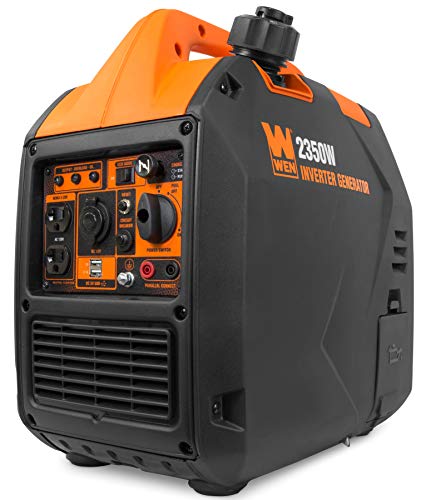
- Best for: Short outages covering a refrigerator, lights, router, and phone charging where low weight matters most.
- 2350 surge watts and 1900 rated watts on gasoline
- 79cc engine, 1 gallon tank, over 5.7 hours at half load as listed
- Two 120V household receptacles, one 12V DC receptacle, two USB ports
- Fuel shutoff, eco-mode switch, parallel capable with a separate kit

- Best for: Homeowners who want gasoline or propane choice in a portable unit for essential loads during extended outages.
- 3600 surge watts and 2900 rated watts on gasoline; 3500 surge watts and 2600 rated watts on propane
- 149cc engine, 1.5 gallon tank, up to 5 hours at half load on gasoline and 14 hours at half load on a 20-pound propane tank as listed
- Two 120V household receptacles, one TT-30R RV receptacle, one 12V DC receptacle, two USB ports
- Watchdog carbon monoxide shutdown sensor, fuel shutoff, eco-mode switch

- Best for: Families who want electric starting and long runtime for essential circuits through overnight outages.
- 4500 starting watts and 3500 running watts on gasoline; 4500 starting watts and 3150 running watts on propane
- 212cc engine, 2.25 gallon tank, up to 14 hours on gasoline and 21 hours on a 20-pound propane tank at quarter load as listed
- One 120V 30A RV outlet, one 120V household duplex outlet, one 12V automotive outlet
- Electric start, CO Shield carbon monoxide auto shutoff, parallel ready with a separate kit
All 4 Picks at a Glance
| Product | Specs | Action |
|---|---|---|
| WEN 56235i Super Quiet 2350-Watt Inverter Generator |
| Check price on Amazon |
| WEN DF360iX 3600-Watt Dual Fuel Inverter Generator |
| Check price on Amazon |
| Champion 4500-Watt Electric Start Dual Fuel Inverter Generator |
| Check price on Amazon |
 Westinghouse iGen11000DFc Dual Fuel Inverter Generator |
| Check price on Amazon |
Key takeaways
- Compare four value home generators for outages, from lightweight inverters to whole-home dual fuel backup, with sizing, fuel and safety guidance included.
Choosing a home generator comes down to one practical decision: which loads must keep running when the grid fails, and for how long, without buying far more machine than the house needs. A refrigerator and a furnace blower ask for very different output than a well pump or a window air conditioner, and motor starting surge can matter more than steady draw. Fuel choice, noise, weight, and connection method then narrow the field further.
This guide is for homeowners who want outage cover for essentials, families who need longer runtimes on stored fuel, and households planning a transfer switch connection for larger loads. Each product below was chosen from the name and specifications shown on its Amazon page, with running watts, fuel type, outlets, and listed runtime compared side by side.
Quick Picks
As an Amazon Associate we earn from qualifying purchases.
| Product | Best for | Key spec from title |
|---|---|---|
| WEN 56235i Super Quiet 2350-Watt Inverter Generator | Keeping a refrigerator, lights, and phones running during short outages | 2350-Watt portable inverter generator with fuel shut off |
| WEN DF360iX 3600-Watt Dual Fuel Inverter Generator | Households that want gasoline or propane flexibility in a light unit | 3600-Watt dual fuel inverter generator with CO Watchdog |
| Champion 4500-Watt Electric Start Dual Fuel Inverter Generator | Longer outages where push-button starting and extended runtime matter | 4500-Watt electric start dual fuel inverter generator with CO Shield |
| Westinghouse iGen11000DFc Dual Fuel Inverter Generator | Larger homes using a transfer switch for major appliances | 11000 peak watt dual fuel inverter generator, transfer switch ready |
How to Choose
Size by running watts and starting surge, not peak alone
Start with a list of what must run at the same time, then add the running watts from each appliance nameplate and allow extra headroom for motors that surge at startup. A refrigerator, lights, router, and phone chargers fit comfortably in the smallest class here, while a furnace blower plus a freezer pushes toward the middle models. Larger loads such as a well pump, sump pump, or window air conditioner need the bigger units, and running two motor loads at once can exceed a small inverter even when each load seems modest alone. When in doubt, size for the combination you will actually use overnight, not for every appliance in the house.
Decide between gasoline only and dual fuel
Gasoline is widely available and gives the highest listed output on every dual fuel model in this guide, but it ages in storage and needs rotation and careful handling. Propane stores well in sealed tanks, keeps the fuel system cleaner during long idle periods, and suits households that already keep tanks for a grill or heater. The trade is lower running watts on propane, so a load plan that fits on gasoline may need trimming on propane. Households expecting brief outages often accept gasoline only for lower weight and simplicity, while storm-prone homes that may run for days usually value having a second fuel ready.
Check outlets, voltage, and how power reaches the house
Small inverters in this guide supply household outlets for cords run to individual appliances, which suits a refrigerator, lights, and electronics. Models with an RV style outlet add a convenient single connection point, but they still feed one cord at a time. Only the largest model here lists both 30-amp and 50-amp locking outlets with 120 and 240 volt output for a transfer switch inlet, which is what allows selected house circuits to run without a web of extension cords. Match the outlet panel to the plan before buying, and confirm cord length and inlet location so the generator can sit outdoors where it belongs.
Safety first: carbon monoxide, placement, wiring, and fuel
Portable generators produce carbon monoxide, an odorless gas that can build up quickly, so every model here must run outdoors only, far from doors, windows, and vents, with exhaust pointed away from living spaces and never inside a garage or shed. A built-in carbon monoxide shutoff sensor adds a backup layer, but it never replaces outdoor placement and working indoor alarms. Never connect a generator to house wiring without a properly installed transfer switch or interlock, because backfeeding can energize lines and endanger line workers and household members. Store gasoline only in approved containers away from heat and living areas, keep propane tanks upright and outdoors, and let the engine cool before refueling.
The 4 Best Options
WEN 56235i Super Quiet 2350-Watt Inverter Generator
- Best for: Short outages covering a refrigerator, lights, router, and phone charging where low weight matters most.
- 2350 surge watts and 1900 rated watts on gasoline
- 79cc engine, 1 gallon tank, over 5.7 hours at half load as listed
- Two 120V household receptacles, one 12V DC receptacle, two USB ports
- Fuel shutoff, eco-mode switch, parallel capable with a separate kit
Short outages covering a refrigerator, lights, router, and phone charging where low weight matters most.
The listing for this version does not name a carbon monoxide shutoff sensor, so confirm the exact version before buying and plan outdoor placement regardless.
This is the lightest and simplest option in the guide, suited to apartments, small homes, and anyone who needs to move the unit alone. The listing rates it for a refrigerator, television, lights, and device charging rather than whole-house loads, and the compact body stores in a small corner. Inverter output is presented as clean power for phones, laptops, and other sensitive electronics. Households with a furnace blower or multiple motor loads running together will outgrow it quickly and should look at the larger models below.
Watch out for: The listing for this version does not name a carbon monoxide shutoff sensor, so confirm the exact version before buying and plan outdoor placement regardless.
WEN DF360iX 3600-Watt Dual Fuel Inverter Generator
- Best for: Homeowners who want gasoline or propane choice in a portable unit for essential loads during extended outages.
- 3600 surge watts and 2900 rated watts on gasoline; 3500 surge watts and 2600 rated watts on propane
- 149cc engine, 1.5 gallon tank, up to 5 hours at half load on gasoline and 14 hours at half load on a 20-pound propane tank as listed
- Two 120V household receptacles, one TT-30R RV receptacle, one 12V DC receptacle, two USB ports
- Watchdog carbon monoxide shutdown sensor, fuel shutoff, eco-mode switch
Homeowners who want gasoline or propane choice in a portable unit for essential loads during extended outages.
Running watts drop on propane, so size the overnight load plan to the propane figures if propane will be the main fuel.
This model adds propane flexibility and a carbon monoxide shutdown sensor while staying light enough for one person to carry. It fits households that keep a propane tank on hand and want longer half-load runtime without moving to a heavy frame unit. The RV style outlet helps when a single cord must carry the main load, and the panel still covers household plugs and USB charging. Output sits in the essentials range, so it suits a refrigerator plus lights and a furnace blower with care, rather than several large appliances at once.
Watch out for: Running watts drop on propane, so size the overnight load plan to the propane figures if propane will be the main fuel.
Champion 4500-Watt Electric Start Dual Fuel Inverter Generator
- Best for: Families who want electric starting and long runtime for essential circuits through overnight outages.
- 4500 starting watts and 3500 running watts on gasoline; 4500 starting watts and 3150 running watts on propane
- 212cc engine, 2.25 gallon tank, up to 14 hours on gasoline and 21 hours on a 20-pound propane tank at quarter load as listed
- One 120V 30A RV outlet, one 120V household duplex outlet, one 12V automotive outlet
- Electric start, CO Shield carbon monoxide auto shutoff, parallel ready with a separate kit
Families who want electric starting and long runtime for essential circuits through overnight outages.
Confirm battery care and starting routine in the manual, since electric start depends on a maintained battery during storage.
This mid-size model suits households that want push-button starting instead of a recoil pull, along with the longest listed runtimes in the smaller classes. It covers a refrigerator, freezer, furnace blower, lights, and electronics with more headroom than the two WEN units, and propane runtime stretches through a long night at light load. The wheeled design helps with positioning, though the weight calls for rolling rather than carrying. It remains a cord-fed unit for individual appliances, so homes planning a transfer switch connection should compare the larger model below.
Watch out for: Confirm battery care and starting routine in the manual, since electric start depends on a maintained battery during storage.
Westinghouse iGen11000DFc Dual Fuel Inverter Generator
- Best for: Larger homes with a transfer switch that need major appliances and selected circuits powered together.
- 11000 peak watts and 9000 running watts as listed
- Dual fuel operation on gasoline and propane
- 457cc engine, up to 17 hours runtime as listed
- L14-30R 30A outlet and 14-50R 50A outlet, GFCI outlets, 240 volt output
Larger homes with a transfer switch that need major appliances and selected circuits powered together.
Confirm inlet size, cord rating, and circuit selection with an electrician before buying, since full output needs matching house wiring.
This is the whole-home class option in the guide, built for households with a transfer switch inlet who need 240 volt output for larger appliances. It fits homes that must run a well pump or sump pump alongside refrigeration and heating equipment, where the smaller inverters lack both output and the right outlets. Remote electric starting adds convenience when the unit sits outdoors at a distance, and the large tank supports extended running. The size and weight mean it lives on wheels in a garage or shed and rolls into position, rather than being carried.
Watch out for: Confirm inlet size, cord rating, and circuit selection with an electrician before buying, since full output needs matching house wiring.
Which One Fits Your Situation
Short outages in a small home or apartment
Choose the WEN 56235i when the goal is keeping food cold, lights on, and phones charged for several hours at a time. Its light weight suits stairs, balconies with outdoor running space, and tight storage. Keep expectations to essentials, run one motor load at a time, and stagger refrigerator and freezer starts to stay within rated output.
Storm season with propane already stored
Choose the WEN DF360iX when propane tanks are already on hand and outages may stretch overnight. Propane avoids stale gasoline worries during long storage, and the listed half-load runtime on a standard tank covers a long night at modest draw. Size the plan to propane running watts and keep a second tank ready for multi-day events.
Overnight cover without pull starting
Choose the Champion 4500-Watt model when easy starting matters for whoever is home during an outage. Electric start, a fuel gauge, and long listed runtimes suit a refrigerator, furnace blower, and lights running together with headroom to spare. Plan a flat rolling path to the outdoor running spot, since the unit is best moved on its wheels.
Larger home with a transfer switch inlet
Choose the Westinghouse iGen11000DFc when selected house circuits, a pump, and refrigeration must run together through one inlet connection. The 30-amp and 50-amp outlets and 240 volt output match transfer switch setups that smaller cord-fed inverters cannot serve. Have the inlet and circuit choices confirmed first so the generator output and house wiring align.
Common Mistakes
- Sizing by peak watts alone and then overloading the unit when a refrigerator and furnace blower start at the same moment.
- Planning loads on gasoline figures while intending to run mainly on propane, where every dual fuel model here lists lower running watts.
- Buying a cord-fed inverter for a transfer switch plan, or buying a large transfer switch model without confirming inlet size and cord rating first.
- Running any generator in a garage, porch enclosure, or near open windows instead of outdoors with exhaust directed away from the house.
- Storing gasoline for long periods without rotation, then expecting easy starting during the first outage of the season.
Frequently Asked Questions
How many watts does a typical home need during an outage?
Essentials such as a refrigerator, lights, router, and phone charging fit within the smallest model here, while adding a furnace blower and freezer moves most homes into the middle models. Pumps and air conditioning push needs toward the largest unit. Add nameplate running watts for loads that run together, allow headroom for motor surge, and size to the fuel you will actually burn.
Is dual fuel worth choosing over gasoline only?
Dual fuel helps when propane is already stored, when gasoline availability is uncertain, or when the generator may sit unused for long stretches between outages. Propane stores well and keeps fuel handling simpler, but listed running watts are lower than on gasoline. Households with brief, rare outages and no propane on hand may prefer the lighter gasoline only unit for simplicity.
Can a portable generator power a whole house?
Only within limits. The largest model here can feed selected circuits through a transfer switch inlet, including 240 volt loads, but it cannot run every appliance in a large home at once. Smaller inverters power individual appliances by cord. A realistic circuit plan, load staggering, and professional wiring for any house connection matter more than headline peak watts.
Where should a generator run, and how should fuel be stored?
Run every portable generator outdoors only, well away from doors, windows, and vents, with exhaust pointed away from living spaces. Never run one in a garage or enclosed porch. Store gasoline in approved containers away from heat and living areas, keep propane tanks upright and outdoors, and refuel only after the engine has cooled, following the manual for the exact model.
Matching running watts to a written load list, choosing fuel around storage habits, and respecting outdoor placement will matter more than any single headline number. Compare the four listings above against your overnight essentials, confirm outlet and inlet details before ordering, and keep the manual with the unit so starting, fueling, and shutdown steps stay clear when the power goes out.