Our Short List of 3
All 4 Picks at a Glance
| Product | Specs | Action |
|---|---|---|
 LEVOIT Vital 100 Air Purifier | Check price on Amazon | |
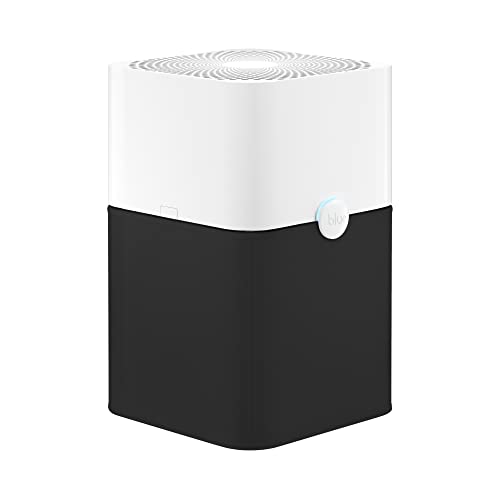 Blueair Blue Pure 211+ Air Purifier | Check price on Amazon | |
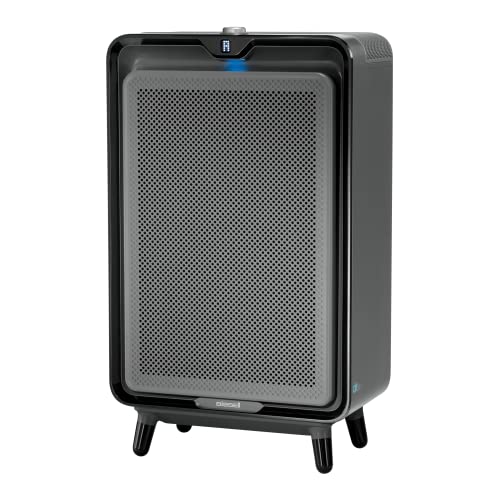 BISSELL air220 Smart Air Purifier | Check price on Amazon | |
 Windmill Air Purifier | Check price on Amazon |
Key takeaways
- Compare air purifiers for indoor grow rooms by carbon filtration, CADR and room size, using only page-stated specs to match purification to your space.
As an Amazon Associate we earn from qualifying purchases.
An indoor grow room is, from an air purifier’s point of view, a small enclosed space with a strong and persistent odour load, airborne particles from soil, substrate, and plant matter, and air that needs to be exchanged and cleaned continuously rather than occasionally. Choosing a purifier for that space is therefore a specification exercise, not a lifestyle one. The questions that decide the purchase are narrow and measurable: does the unit have an activated carbon stage for odour, what clean air delivery rate does its page state, and what room size is that rate calculated for?
This guide answers only those purification questions, using only specifications stated on each product’s own page. It covers four air purifiers whose pages state an activated carbon filter stage, a CADR figure, and a room coverage figure. Between them they span a wide range, from a compact unit stating a CADR of 105 CFM and hourly cleaning of 788 square feet, to a large-room unit stating a CADR of 350 CFM across smoke, pollen, and dust, and a model stating coverage of up to 1,950 square feet with a CADR of up to 309. That spread is the point: a small enclosed grow space and a large basement grow room are different purification jobs, and the stated figures are how a buyer tells them apart.
A note on odour expectations is worth making at the start. Activated carbon is the stage in each of these machines that addresses odour and volatile organic compounds, because carbon adsorbs gases rather than trapping particles. Particle filters, however fine, do not do that job. One unit below states plainly that its carbon layer removes light odours, while others describe their carbon stages as powerfully adsorbing odours and smoke or as helping to neutralise odours and VOCs. Those are different stated strengths, and this guide reports them as stated rather than levelling them into a single claim. Match the stated carbon claim to the odour load of your space.
Disclosure: This article contains affiliate links. If you buy through these links, we may earn a commission at no additional cost to you.
How to Choose an Air Purifier for an Indoor Grow Room
Begin with the carbon stage, because odour control is the defining requirement of a grow space. Look for an activated carbon filter named in the filtration description, and read how the page describes its work. Pages in this guide describe carbon stages adsorbing pet odours, cooking smells, smoke, and VOCs, neutralising odours, smoke, and volatile organic compounds, and trapping light household odours. A purifier whose page describes its carbon stage in strong, specific terms is stating more about odour handling than one whose carbon is a minor layer in a combined filter. Where a page gives a filter class, note it: one unit here lists a preliminary, efficient, and activated carbon combination, while another lists its included filter as a particle filter with carbon.
Next, use CADR, the clean air delivery rate, as the comparison number. CADR is stated in cubic feet per minute and describes how much cleaned air the machine delivers. Higher CADR suits larger spaces or spaces where air needs to turn over quickly. The figures stated in this guide run from 105 CFM for the compact LEVOIT Vital 100, through 167 to 178 CFM across the BISSELL air220’s stated smoke, pollen, and dust rates, up to 309 for the Windmill and 350 for the Blueair Blue Pure 211+. Two of these figures carry independent weight: the Blueair and BISSELL pages both describe AHAM Verifide evaluation, which means the stated CADR was tested under the Association of Home Appliance Manufacturers programme for room air cleaners rather than simply asserted by the maker.
Room size is the third figure, and it must be read together with CADR rather than alone. A coverage figure always assumes a rate of air changes. The BISSELL page makes this explicit, stating one room size at 4.8 air changes per hour and larger sizes at three, two, and one air change per hour. The Blueair page similarly states that its unit filters the air about 4.8 times an hour in a 540 square foot room, and cleans up to 2,592 square feet in 60 minutes on high. For an enclosed grow space, where continuous cleaning matters more than a single fast pass, the smaller room figure at the higher air-change rate is the honest one to plan around. A purifier matched to a space using the one-air-change figure will clean that space slowly.
Finally, consider running practicalities that the pages state. Noise matters if the space adjoins living areas: the Vital 100 page states noise levels as low as 24 decibels, and the Blueair design is built around HEPASilent technology, which its page describes as delivering filtration with minimum noise by combining mechanical filtration with electrostatic charging. Filter format matters for upkeep: the Vital 100 uses a washable pre-filter ahead of its 3-in-1 filter, the Blue Pure 211+ uses a washable fabric pre-filter, and the BISSELL air220 gives front-panel filter access so the unit can sit against a wall. In a crowded grow room, front access and washable pre-filters reduce how often the machine has to be moved or opened fully.
LEVOIT Vital 100 Air Purifier
The Vital 100 is the compact option in this guide, and its stated figures suit a small enclosed space. Its page states a CADR of 105 CFM and states that it cleanses 788 square feet of space hourly, with a stated floor area of 788 square feet. Its filtration is described as 3-stage: a fine preliminary filter, an efficient filter, and an activated carbon filter, combined in a 3-in-1 filter with a washable pre-filter. The filter class is listed as preliminary fine plus efficient plus activated carbon, and the model is named as the Vital 100 with ASIN evidence given in the product information on its page.
The carbon description is the strongest worded of the four for its size class. The page states that the activated carbon filter powerfully adsorbs pet odours, cooking smells, smoke, and VOCs. For a small grow space, that stated odour and VOC role is the relevant line, because it is the carbon stage, not the particle stage, that addresses the gaseous load in the room. The page also states noise levels as low as 24 decibels, which suits a space near bedrooms or living areas, and notes that the purifier should be used with the maker’s original filters, since it is not compatible with off-brand replacement filters.
Choose the Vital 100 if your grow space is small and enclosed and you want a compact machine whose page states both a carbon stage with an explicit odour and VOC claim and a low stated noise figure. Its stated CADR of 105 CFM is the lowest in this guide, so it is not the stated match for a large room; the Blueair and Windmill figures below are several times higher. Within a small space, though, its stated combination of carbon filtration, washable pre-filtering, and quiet operation is complete and clearly specified.
Blueair Blue Pure 211+ Air Purifier
The Blue Pure 211+ states the highest CADR in this guide. Its page states that the unit was independently evaluated under the AHAM Verifide programme with a clean air delivery rate of 350 CFM for smoke, 350 CFM for pollen, and 350 CFM for dust in 540 square foot rooms, and that it filters the air at a rate of about 4.8 times an hour in a 540 square foot room. It also states that the unit quickly cleans a 540 square foot room in about 12.5 minutes, or up to 2,592 square feet in 60 minutes on high. The stated floor area is 540 square feet, the model is the Blue Pure 211+, and the included components are stated as the purifier, two pre-filters, one particle with carbon filter, and product documentation.
Its filtration uses HEPASilent technology, described on the page as combining mechanical filtration with electrostatic charging of particles to deliver clean air faster and more quietly than traditional HEPA filtration alone, with the particle filter capturing airborne particles, germs, and allergens such as pollen, dust, and pet dander. The odour side is handled by an activated carbon layer, and here the page’s own wording is measured: it states that the activated carbon layer removes light odours and that the carbon filter traps light household odours from smoking, pets, and cooking. That is a lighter stated odour claim than the Vital 100’s, despite this machine’s much higher stated CADR.
Choose the Blue Pure 211+ if particle removal and air turnover in a larger grow room are your priorities, and if independently evaluated CADR figures matter to you. Its stated strengths are throughput and verified particle performance. Weigh its stated carbon claim honestly: a page that describes its own carbon layer as removing light odours is telling you that odour is not this machine’s headline job. In a space with a heavy odour load, that stated limitation should be part of the decision, not an afterthought.
BISSELL air220 Smart Air Purifier
The air220, model 2609A, sits in the middle of this guide on stated CADR and is the most explicit of the four about how room size changes with air-change rate. Its page states AHAM Verified clean air delivery rates of 167 CFM for smoke, 178 CFM for pollen, and 177 CFM for dust. It states that the unit is certified to filter rooms of 258 square feet at 4.8 air changes per hour, or one turn every 12 minutes, and that it filters 417 square feet at three air changes per hour, 626 square feet at two, and 1,252 square feet at one. A stated floor area of 800 square feet also appears in its specifications. That layered statement is genuinely useful for a grow space, because it lets a buyer pick the air-change rate they want and read off the room size that rate supports.
Filtration is stated as three layers, including an activated carbon filter and a HEPA plus pre-filter, addressing hair, dust, pollen, dander, home and pet odours, and volatile organic compounds. The machine is described as having an industrial grade large fan with five speeds pulling air through the three filters, a soft-touch dial controlling fan speed and power, a discrete cord wrap on the back panel, and filters accessed from the front panel so the unit can be kept against a wall. The page also states that the air220 cleans the air in a 266 square foot room, describing it as suited to bedrooms, living areas, basements, and dining rooms.
Choose the air220 if your grow space is a small to mid-size enclosed room, particularly a basement room, and if you value a page that states its coverage at several air-change rates instead of one headline number. Its stated carbon and HEPA combination addresses both odour and particles, and its front-panel filter access suits a room where floor space around the unit is limited. Its stated CADR sits below the Blueair and Windmill figures, so for a large space those pages state the stronger throughput.
Windmill Air Purifier
The Windmill purifier states the largest coverage figure in this guide. Its page states that it cleans up to 1,950 square feet, with a stated floor area of 1,950 square feet, a CADR of up to 309, and CARB certification stated in its specifications. Its filtration is described as 3-in-1, combining a pre-filter, a True HEPA filter, and an activated carbon filter, with the model number stated as WAP1M1. The page describes the unit as app compatible and ultra-quiet, in a white finish.
The carbon stage is described in odour terms that suit a grow space. The page states that the activated carbon filter layer in the 3-in-1 filter helps neutralise odours, smoke, and volatile organic compounds, ensuring the air smells fresh and free from pollutants, and it describes the HEPA stage as capturing airborne particles including pollen, dust, animal dander, and smoke particulates. Read together with the stated CADR of up to 309, that makes this the large-space option in this guide whose page states both a high delivery rate and an explicit odour and VOC role for its carbon layer. Note the wording of the CADR figure itself: it is stated as up to 309, which describes a maximum rather than a rate at every fan speed.
Choose the Windmill if your grow room is large or open in plan and you want one unit whose page states coverage approaching two thousand square feet together with carbon filtration described for odours and VOCs. Its stated figures are maker-stated rather than described as AHAM evaluated, unlike the Blueair and BISSELL pages, so a buyer who weights independent verification most heavily should factor that difference in. On stated coverage and stated carbon purpose combined, it is the broadest single-unit answer in this comparison.
Comparison Table
| Purifier | CADR stated on page | Room coverage stated on page | Carbon stage stated on page | Verification stated on page |
|---|---|---|---|---|
| LEVOIT Vital 100 | 105 CFM | Cleanses 788 sq ft hourly | Activated carbon filter; stated to adsorb odours, smoke and VOCs | AHAM Verifide named in product title |
| Blueair Blue Pure 211+ | 350 CFM smoke, pollen and dust | 540 sq ft at about 4.8 air changes per hour; up to 2,592 sq ft in 60 minutes on high | Activated carbon layer; stated to remove light odours | Independently evaluated, AHAM Verifide programme |
| BISSELL air220 | 167 CFM smoke, 178 CFM pollen, 177 CFM dust | 258 sq ft at 4.8 air changes per hour; larger sizes at lower rates | Activated carbon filter with HEPA and pre-filter; odours and VOCs | AHAM Verified CADR |
| Windmill Air Purifier | Up to 309 | Up to 1,950 sq ft | Activated carbon layer in 3-in-1 filter; stated to neutralise odours, smoke and VOCs | CARB Certified stated |
Frequently Asked Questions
Which part of an air purifier handles odour in a grow room?
The activated carbon stage. Every page in this guide separates the jobs: particle filters capture dust, pollen, dander, and smoke particles, while the carbon filter or carbon layer is the stage described as adsorbing or neutralising odours and volatile organic compounds. When comparing purifiers for a grow space, read the carbon description first and the particle description second.
How should the room coverage figure be used?
Together with the air-change rate behind it. The BISSELL page states 258 square feet at 4.8 air changes per hour and progressively larger areas at three, two, and one air change per hour, and the Blueair page states its 540 square foot figure at about 4.8 changes per hour. For a space that needs continuous cleaning, plan around the size stated at the higher air-change rate rather than the largest headline area.
Is a higher CADR always the better choice?
A higher stated CADR means more cleaned air delivered per minute, which suits larger spaces. It does not by itself describe odour strength. The Blue Pure 211+ states the highest CADR here, 350 CFM, while its page describes its carbon layer as removing light odours. The Vital 100 states a much lower CADR of 105 CFM and a stronger worded carbon claim. The right choice depends on whether your space’s main problem is particle load and turnover, odour, or both.
Do these pages state that the purifiers are made for grow rooms?
No. These are general home air purifiers whose pages state carbon filtration, CADR, and room coverage figures. This guide applies those stated purification specifications to the requirements of an indoor grow space, odour handling, particle removal, and continuous cleaning of an enclosed room, without adding any grow-specific claim that the makers themselves do not state.
Conclusion
Choosing an air purifier for an indoor grow room comes down to three stated numbers and one stated material. The material is activated carbon, the only stage in these machines described as handling odours and VOCs. The numbers are CADR, room coverage, and the air-change rate behind that coverage. The LEVOIT Vital 100 suits a small enclosed space with a clearly stated carbon role and low stated noise. The BISSELL air220 suits a small to mid-size room and states its coverage at several air-change rates. The Blueair Blue Pure 211+ states the highest independently evaluated CADR for larger spaces, with a lighter stated odour claim. The Windmill states the largest coverage and a carbon layer described for odours and VOCs. Read the carbon wording as carefully as the CADR figure, and the stated specifications will point to the right machine for your space.