Our Short List of 3

All 4 Picks at a Glance
| Product | Specs | Action |
|---|---|---|
| 1. Yuasa YTX20L-BS — For Large Motorcycles and Heavy Powersport Use | Check price on Amazon | |
 2. Yuasa YTX14-BS — The Mainstream Middleweight and ATV Size | Check price on Amazon | |
 4. Yuasa YTX9-BS — For Middleweight Sport and Street Bikes | Check price on Amazon | |
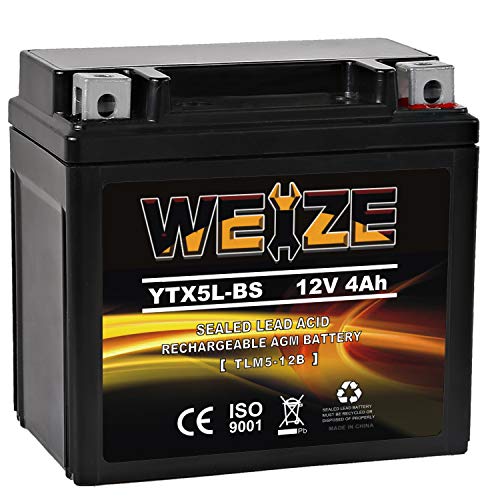 5. WEIZE YTX5L-BS — The Small-Bike and Scooter Size | Check price on Amazon |
Key takeaways
- How to choose the best motorcycle battery: sealed AGM powersport batteries compared by YTX size code, amp-hours, cold cranking amps, terminal layout, and fitment checks.
As an Amazon Associate we earn from qualifying purchases.
Affiliate Disclosure: This article contains affiliate links. If you buy through a link on this page, we may earn a commission at no extra cost to you. The specifications below come from the manufacturers’ and sellers’ published product information, and we have not personally tested the products discussed.
A Necessary Note on What This Keyword Means
The keyword behind this guide, “best moto od battery,” is a garbled string, and honesty about that matters more than pretending otherwise. “Moto od” does not correspond to a known motorcycle brand, model, battery size code, or battery product line that we could identify. The most defensible reading, and the one this guide uses, is that the intended subject is a motorcycle battery in general: “moto” as the motorcycle reference, with the remaining characters treated as noise rather than as a hidden model name.
That choice has a practical consequence for you as a reader. This guide does not claim to name the single correct battery for a specific unnamed bike, because no specific bike was actually identified. Instead, it compares well-known sealed AGM motorcycle batteries across the standard YTX size range, from a small-bike battery up to a large-displacement battery, and explains exactly how to match one of them to your machine. If you arrived here looking for a battery for one particular model, the fitment section below is the part that protects you: check your owner’s manual or the battery currently in the bike, read its size code, and buy that code. Do not buy a battery from this or any list purely because it is popular.
Why Motorcycle Batteries Are Sold by Size Code
Unlike car batteries, which are often shopped by vehicle lookup, motorcycle batteries are organised around standardised size codes such as YTX9-BS, YTX12-BS, YTX14-BS, and YTX20L-BS. The code captures the case dimensions, capacity class, and usually the terminal layout. Two batteries with the same code from different brands are designed to fit the same battery box and connect the same way, which is why cross-brand shopping works in this category at all.
Three details hide inside those codes. First, the number roughly tracks capacity: a YTX5L-BS is a small battery of about 4 amp-hours, while a YTX20L-BS is a large battery of about 18 amp-hours. Second, the letter L, where present, indicates the terminal polarity is reversed compared with the version without it: positive and negative swap sides. Fitting a non-L battery where an L battery belongs can leave your cables too short or, worse, connected the wrong way round. Third, the BS suffix on most of these batteries means the battery is supplied with an acid pack to be filled and sealed at installation, while factory-activated versions arrive filled and charged. Both end up as sealed AGM batteries in service, but the preparation steps differ, and the guide below notes which is which for each pick.
Every pick in this guide is a sealed AGM lead acid motorcycle battery. AGM construction suits motorcycles well: the electrolyte is absorbed in glass mat separators, so the battery is spill-proof, tolerates vibration and lean angles better than a conventional flooded battery, and needs no water top-ups. Lithium powersport batteries exist and are lighter, but they are a different chemistry with different charging and cold-weather behaviour, so they are excluded here to keep the comparison clean.
Quick Comparison
| Product | Size code | Capacity | Cranking | Supplied as |
|---|---|---|---|---|
| Yuasa YTX20L-BS | YTX20L-BS | 18 Ah | 270 CCA | Dry with acid pack |
| Yuasa YTX14-BS | YTX14-BS | 12.6 Ah | 200 CCA | Dry with acid pack |
| WEIZE YTX12-BS | YTX12-BS | 10 Ah | Mid-range for its class; check the live listing for the current figure | Sealed AGM, nut and bolt terminals |
| Yuasa YTX9-BS | YTX9-BS | 8 Ah | 135 CCA | Dry with acid pack |
| WEIZE YTX5L-BS | YTX5L-BS | 4 Ah | Small-bike class; check the live listing for the current figure | Sealed AGM |
1. Yuasa YTX20L-BS — For Large Motorcycles and Heavy Powersport Use
The Yuasa YTX20L-BS is the large battery in this guide: a 12 volt AGM battery rated at 18 amp-hours with 270 cold cranking amps in Yuasa’s published specification for the model. It is supplied dry with an acid pack, under Yuasa part number YUAM320BS, so it must be filled, rested, sealed, and given an initial charge following the instructions in the box before it goes on the bike.
The L in the code is not decoration. This battery’s polarity layout is the reversed arrangement, which is common on many large cruisers and touring machines. Confirm that your bike’s cables expect that layout before ordering, because the non-L equivalent will not connect correctly on a bike wired for the L version.
Choose the YTX20L-BS if your manual or your old battery carries that exact code and your bike is a large-displacement machine that needs real cranking reserve, especially in cold weather. Do not choose it as an upgrade for a smaller bike: a bigger battery that does not fit the box, or whose terminals sit in the wrong place, is not an upgrade at all.
2. Yuasa YTX14-BS — The Mainstream Middleweight and ATV Size
The YTX14-BS is one of the most widely used motorcycle battery sizes, fitted across a long list of middleweight and large motorcycles, ATVs, and other powersport machines. Yuasa’s listing describes its version as a 12 volt, 12.6 amp-hour battery with 200 cold cranking amps, using lead-calcium AGM technology, sealed and spill-proof once prepared, and supplied dry with the acid bottle included.
That balance of capacity and cranking is why this size is the default replacement for so many machines: enough reserve for fuel injection, lighting, and accessories at idle-heavy riding, without the size and weight of the 20-class battery. As with the larger Yuasa above, the preparation steps matter. Filling an acid-pack battery and then installing it immediately without the rest period and initial charge is a common way to shorten its life before the first ride.
Choose the YTX14-BS when it is the code your bike specifies. If your bike specifies the taller YTX14AH-BS or the reversed-polarity YTX14L-BS instead, those are different batteries despite the similar names, and this one is not a substitute.
3. WEIZE YTX12-BS — Sealed AGM for Mid-Size Motorcycles
ASIN: B07R3VX722
The WEIZE YTX12-BS covers the mid-size class: a 12 volt sealed AGM battery rated at 10 amp-hours, with published dimensions of 5.91 by 3.43 by 5.12 inches and nut and bolt terminals. The listing describes the chemistry as sealed lead acid with absorbed glass mat technology and gives the terminal arrangement as positive on the left and negative on the right, which is exactly the sort of detail to compare against your old battery before ordering.
A 10 amp-hour battery of this size typically serves middleweight street bikes and a wide range of ATVs and scooters that specify the YTX12-BS code. WEIZE publishes a comparison table across its YTX range on its listings, which is genuinely useful in this category because it shows how capacity and cranking change as you move between codes, and it underlines the rule that the code, not the brand, decides fitment.
Choose this battery if YTX12-BS is your specified code and you prefer a sealed battery that arrives ready to install rather than an acid-pack battery you prepare yourself. Verify the current cranking figure and terminal layout on the live listing before buying, because marketplace listings in this category are revised from time to time.
4. Yuasa YTX9-BS — For Middleweight Sport and Street Bikes
The Yuasa YTX9-BS, part number YUAM329BS, is an 8 amp-hour AGM battery with a published rating of 135 cold cranking amps for the Yuasa model. It is supplied as a maintenance-free AGM battery with an acid pack, in line with the other Yuasa picks in this guide.
This size is common on middleweight sport, naked, and dual-sport motorcycles, where the battery box is smaller and the engine’s cranking demand is lower than a big twin’s. The step down from the YTX12-BS class is mainly height and capacity: the YTX9-BS case is shorter, which is why the two are not interchangeable even though their footprints look similar in a photograph.
Choose the YTX9-BS when it matches your specified code. If your bike cranks slowly in cold weather on an ageing battery of this size, the correct response is a fresh battery of the same code in good health, not a physically larger battery forced into the box.
5. WEIZE YTX5L-BS — The Small-Bike and Scooter Size
At the bottom of the range, the WEIZE YTX5L-BS is a small sealed AGM battery of about 4 amp-hours, in the size class used by small-displacement motorcycles, scooters, and small ATVs. WEIZE positions it in its YTX comparison table as the smallest of the common codes, and that small capacity is appropriate to the machines it serves: small engines with modest electrical loads and, often, a kick starter as backup.
Small batteries are the least forgiving of neglect. A 4 amp-hour battery left connected to a bike with a parasitic draw, or stored discharged over winter, can be ruined in a single season, simply because there is so little capacity in reserve. If your machine uses this size, a maintainer during storage is not an optional extra; it is the difference between a battery that lasts and one that does not.
Note the L in this code as well: it signals the terminal layout for this size. Check the polarity against your old battery, and choose this pick only when YTX5L-BS is the code your machine specifies.
How to Match a Battery to Your Bike
Work through these checks in order, and stop at the first one that rules a battery out.
First, get the exact size code. It is printed on the battery in your bike, listed in the owner’s manual, and available from the bike manufacturer’s parts information. This single step decides most of the purchase.
Second, compare dimensions and terminal layout. Measure the battery box if the bike is new to you, and confirm which side the positive terminal sits on. The L designation, terminal type, and cable reach all matter, and a battery connected in reverse polarity can damage the bike’s electronics instantly.
Third, compare capacity and cranking amps within the same code. Brands differ modestly: one maker’s YTX14-BS may publish slightly different figures from another’s. Stay at or above the specification of the battery the bike came with, and be sceptical of unknown brands publishing cranking figures far above the established makers for the same case size.
Fourth, decide between acid-pack and factory-activated or pre-sealed supply. Acid-pack batteries have an excellent shelf life before filling and are a good choice when you can follow the preparation steps carefully. Pre-sealed batteries are the better choice if you want to install and ride without preparation equipment, including a suitable charger for the initial charge.
Charging, Storage, and the Habits That Kill Motorcycle Batteries
Motorcycle batteries live a difficult life: short trips that never fully recharge them, long storage periods, and small capacities that leave little margin. The fixes are simple. Use a charger or maintainer designed for small AGM powersport batteries, not a high-output car charger, and follow the battery maker’s charging limits. Keep the battery on a maintainer during any storage longer than a few weeks, or disconnect it and recharge it periodically. Never let a lead acid battery sit discharged: sulfation begins quickly at low states of charge and permanently removes capacity, which a small battery cannot afford to lose.
If a battery needs repeated jump starts, test it and the bike’s charging system rather than repeatedly reviving it. A failing regulator or a parasitic draw will destroy each new battery you fit until the underlying fault is fixed. When you do replace the battery, recycle the old one through the retailer or a local collection point.
Safety Notes for Acid-Pack Batteries
Several picks in this guide are supplied with an acid pack containing sulfuric acid. Fill the battery on a level surface away from the bike, wear eye and hand protection, follow the maker’s instructions exactly, and never add anything other than the supplied acid. Keep acid away from children, painted surfaces, and skin, and clean any spill immediately according to the instructions provided. Once sealed, do not reopen the battery. Charge in a ventilated space, keep sparks away from the battery while charging, and always connect and disconnect leads in the order the charger and bike manuals specify.
Verdict
Because the keyword behind this guide does not identify a specific bike, there is no single winner here, and any guide that named one would be guessing at your expense. The right purchase is the battery that matches your bike’s size code: the Yuasa YTX20L-BS for large machines specifying that code, the Yuasa YTX14-BS and WEIZE YTX12-BS for the mainstream middleweight codes, the Yuasa YTX9-BS for middleweight sport and street bikes, and the WEIZE YTX5L-BS for small bikes and scooters. Confirm the code, the terminal layout, and the live listing details before you buy, prepare an acid-pack battery exactly as instructed, and keep whatever you fit on a maintainer in storage. Those steps, not brand loyalty, are what decide whether a motorcycle battery lasts.