Our Short List of 3

- Best for: owners who want a rigid one-piece rail and standard ring spacing.
- Mount type: one-piece Picatinny rail, 0 MOA
- Material: 6061 T6 aircraft grade aluminum, Type II anodized
- Fitment: Ruger American Rimfire in .22 LR, .22 WMR and .17 HMR
- Slots: full-length Picatinny cross slots
- Best for: a fast, no-fuss install using the holes Ruger already drilled.
- Mount type: Picatinny rail mount
- Installation: direct to receiver using factory mounting holes
- Hardware: #6 set screws included
- Fitment: Ruger American Rimfire models in .22 LR, .22 WMR and .17 HMR
- Best for: shooters who swap scopes and red dots on the same rifle.
- Material: 6061 aluminum alloy
- Slots: 17 Picatinny slots
- Length: 6.9 inches
- Ring fit: accepts Picatinny and Weaver rings
All 5 Picks at a Glance
| Product | Specs | Action |
|---|---|---|
| EGW Ruger American Rimfire Picatinny Rail Scope Mount, 0 MOA |
| Check price on Amazon |
| Monstrum Picatinny Rail Mount for Ruger American Rimfire |
| Check price on Amazon |
| WOSUWENGE Picatinny Rail Mount for Ruger American Rimfire |
| Check price on Amazon |
 Eastern Tactical Supply Ruger American Rimfire Scope Base |
| Check price on Amazon |
 Ruger American Rimfire Scope Mount Set, Aluminum, Matte Black |
| Check price on Amazon |
Key takeaways
- The best scope mounts for the Ruger American Rimfire compared: Picatinny rails, a 17-slot rail and a two-piece base, with fit and hardware notes.
The Ruger American Rimfire arrives with a drilled and tapped receiver and a grooved top, so the real decision is not whether a scope can be fitted, but which mounting pattern deserves to sit under it for the next several years. A one-piece rail ties the receiver together and frees up ring placement, while two-piece bases keep the loading port wide open and the rifle trim. Cant matters too: a flat base suits the distances most rimfire owners shoot, while an inclined rail only earns its keep when elevation runs out.
This guide is for new Rimfire owners mounting a first scope, varmint hunters running a .17 HMR, and target shooters who swap optics between rifles. Every pick below was chosen from its Amazon listing name and stated specifications: the fitment the listing claims, the slot pattern, the material, and the hardware in the box. Check those four things against your own rifle before anything else.
Quick Picks
As an Amazon Associate we earn from qualifying purchases.
| Product | Best for | Key spec from title |
|---|---|---|
| EGW Ruger American Rimfire Picatinny Rail Scope Mount | One-piece rail with flat alignment | 0 MOA full-length Picatinny rail |
| Monstrum Picatinny Rail Mount for Ruger American Rimfire | Bolting straight to the factory holes | Direct receiver mount, screws included |
| WOSUWENGE Picatinny Rail Mount for Ruger American Rimfire | Maximum room to position rings | 17 slots on a 6.9 inch rail |
| Eastern Tactical Supply Ruger American Rimfire Scope Base | The lightest, shortest base here | 11 slots, 4.65 inches, 1.5 ounces |
| Ruger American Rimfire Scope Mount Set | Two-piece spacing and bolt clearance | Two-piece aluminum bases, matte black |
How to Choose
One-Piece Rail or Two-Piece Bases
A one-piece rail bridges both sets of receiver holes, so the scope sits on a single machined surface and the rings can slide to wherever eye relief works best. That rigidity helps when a rifle gets knocked around in a truck or carried through brush. Two-piece bases leave the middle of the receiver open, which keeps single-loading easy and gives the bolt handle and ejection path maximum clearance. Neither layout is automatically better; the choice follows how you load the rifle, how bulky your scope is, and whether you ever plan to move that scope to another gun.
Flat Base or Built-In Cant
Cant tilts the scope slightly downward at the front, handing back elevation adjustment that a scope would otherwise spend reaching longer targets. On a .22 LR shot mostly inside 100 yards, a flat 0 MOA base keeps the reticle near the middle of its travel and the setup simple. Shooters stretching a .17 HMR or dialing come-ups at extended rimfire distances are the ones who feel a canted rail working. Match the base to the farthest shot you honestly take, because extra incline on a short-range rifle only complicates the zero.
Slot Count and Ring Spacing
Cross slots decide where rings can sit, and ring position decides eye relief, which decides whether the scope image fills the eyepiece without craning your neck. A long rail with many slots lets a short-tubed scope, a bulky target scope, or a red dot all find a workable home on the same rifle. Short bases fix the ring spacing, which is fine when your scope is a common size but frustrating when the turret housing lands exactly where a ring wants to clamp. Count usable slots, not just rail length, when comparing listings.
Screws, Threadlocker and Torque
Every mount here depends on small screws threading into the receiver, and those screws are the whole foundation. Listings that include screws matched to the Rimfire hole pattern, or screws pre-coated with threadlocker, remove the two most common installation headaches: hunting for hardware and watching a base walk loose after a few hundred rounds. Tighten in a cross pattern, snug each screw in stages, and recheck them after the first range session. A mount that holds zero is mostly a mount whose screws were seated evenly from the start.
The 5 Best Options
EGW Ruger American Rimfire Picatinny Rail Scope Mount, 0 MOA
- Best for: owners who want a rigid one-piece rail and standard ring spacing.
- Mount type: one-piece Picatinny rail, 0 MOA
- Material: 6061 T6 aircraft grade aluminum, Type II anodized
- Fitment: Ruger American Rimfire in .22 LR, .22 WMR and .17 HMR
- Slots: full-length Picatinny cross slots
owners who want a rigid one-piece rail and standard ring spacing.
the listing covers several EGW cant variants across the range, so confirm the 0 MOA version is the one in your cart.
EGW machines this rail in the USA for the Rimfire receiver specifically, and the listing leads with the two details that matter most: a flat 0 MOA incline and cross slots running the full length of the rail. The center channel trims weight without giving up the one-piece bridge across the receiver, and EGW notes the profile leaves the factory iron sights usable underneath. For an owner who wants one base that accepts nearly any Picatinny or Weaver ring set and then disappears from thought, this is the straightforward pick.
Monstrum Picatinny Rail Mount for Ruger American Rimfire
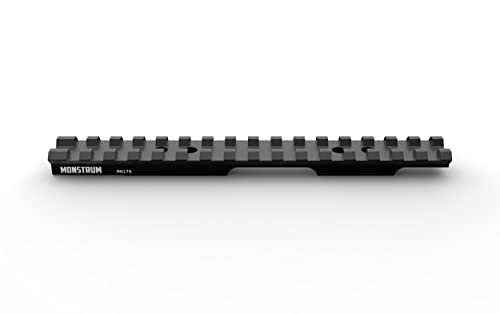
- Best for: a fast, no-fuss install using the holes Ruger already drilled.
- Mount type: Picatinny rail mount
- Installation: direct to receiver using factory mounting holes
- Hardware: #6 set screws included
- Fitment: Ruger American Rimfire models in .22 LR, .22 WMR and .17 HMR
a fast, no-fuss install using the holes Ruger already drilled.
the listing’s fitment is rimfire-specific, so do not assume it transfers to a centerfire Ruger American receiver.
Monstrum keeps this mount deliberately simple: it bolts directly to the receiver through the factory mounting holes, with the screws in the box, so there is no separate base-and-ring puzzle to solve. The listing ties fitment to the Ruger American Rimfire in .22 LR, .22 WMR and .17 HMR, and the rail gives Picatinny and Weaver rings a continuous surface to clamp. Shooters who want the rifle scoped the same afternoon the box arrives, with no extra parts run, are exactly who this design is aimed at.
WOSUWENGE Picatinny Rail Mount for Ruger American Rimfire
- Best for: shooters who swap scopes and red dots on the same rifle.
- Material: 6061 aluminum alloy
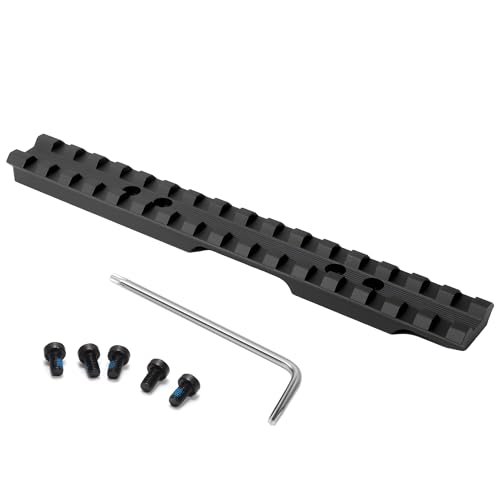
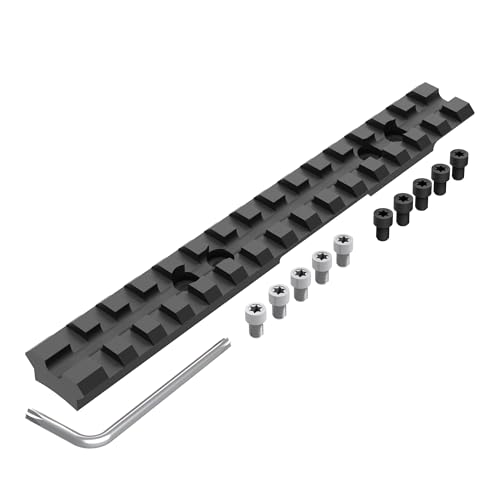
- Slots: 17 Picatinny slots
- Length: 6.9 inches
- Ring fit: accepts Picatinny and Weaver rings
shooters who swap scopes and red dots on the same rifle.
the rail is rimfire-only per the listing, and its extra length adds a little height over the receiver compared with short bases.
Seventeen slots across 6.9 inches is the headline here, and it is a genuinely useful one: ring spacing stops being a compromise, so a compact scope, a long target scope, or a red dot can each sit where the shooter’s eye actually needs it. The listing adds a thoughtful hardware touch, screws in both #6-48 and #8-40 threadings with blue threadlocker already applied, which covers the Rimfire receiver pattern without a separate purchase. It is the rail for owners who change optics often and are tired of re-solving the same spacing problem.
Eastern Tactical Supply Ruger American Rimfire Scope Base
- Best for: a light, compact base under a scope that will stay put.
- Material: 6061-T6 aluminum alloy
- Slots: 11-slot rail
- Length: 4.65 inches
- Weight: 1.5 ounces
a light, compact base under a scope that will stay put.
eleven slots fix your ring positions more than a full-length rail, so check your scope’s tube length against the spacing first.
At 4.65 inches and 1.5 ounces, this is the minimalist entry in the group: an 11-slot rail that covers the receiver holes, takes standard Picatinny or Weaver accessories, and otherwise stays out of the way. The listing specifies 6061-T6 aluminum alloy and included set screws, so the essentials are present despite the small footprint. A short base like this suits a lightweight hunting setup where the scope is a fixed choice, ring positions are predictable, and every extra ounce on a carry rifle is one you feel by the end of the day.
Ruger American Rimfire Scope Mount Set, Aluminum, Matte Black
- Best for: shooters who value an open receiver top and flexible ring spacing.
- Design: two-piece scope mount set
- Material: CNC-machined aluminum
- Finish: matte black anodized
- Hardware: 4 mounting screws included
shooters who value an open receiver top and flexible ring spacing.
two separate bases must be aligned carefully during install, and rings are not part of this set.
This two-piece set splits the mounting job between a front and rear base, which leaves the top of the receiver open for easy single-loading and generous bolt clearance. The listing describes CNC-machined aluminum with a matte black anodized finish and four mounting screws in the package, a combination aimed at corrosion resistance outdoors. Because each base seats independently, ring spacing can be adjusted to suit an awkward scope body. Confirm your exact Rimfire variant against the listing’s fitment notes before ordering, since the seller flags that check as well.
Which One Fits Your Situation
Mounting Your First Scope on a New Rimfire
Start with the EGW rail. Its full-length slots forgive the trial and error of finding eye relief for the first time, the flat 0 MOA incline keeps zeroing simple at normal rimfire distances, and the included hardware means the job finishes in one sitting. Once the scope is mounted and the screws rechecked after a session or two, there is nothing left to upgrade until your shooting genuinely outgrows it.
Chasing Varmints With a .17 HMR
The WOSUWENGE rail earns its place here because varmint scopes tend to be long, and seventeen slots let a big objective and a long tube sit far enough forward for a natural head position behind the rifle. The pre-coated screws also matter on a gun that gets carried across fields and rested on fence posts, where a base working loose ruins an evening quietly and completely.
Swapping Between a Scope and a Red Dot
Pick the Monstrum rail. A continuous Picatinny surface means the red dot and the scope rings both clamp to the same repeatable reference, and the direct receiver fit keeps the swap about the optics rather than the hardware. Mark the slot each optic uses, torque the screws the same way every time, and the changeover becomes a two-minute job instead of a fresh project.
Keeping a Carry Rifle Light and Simple
The Eastern Tactical Supply base is the lightest and shortest option in this group, and on a rifle carried more than it is shot, that restraint is the point. Pair it with a compact scope of known tube length, since the eleven slots leave less freedom to shuffle rings. If you would rather keep the receiver top open for loading, the two-piece set splits the difference.
Common Mistakes
- Buying a rail listed for the centerfire Ruger American and expecting it to fit the Rimfire receiver; the hole patterns differ, so match the listing’s fitment line to your exact rifle.
- Assuming Weaver and Picatinny rings interchange freely in both directions; Picatinny rings sit well on Weaver bases, but Weaver rings can rock in wider Picatinny slots under recoil.
- Skipping threadlocker or tightening one screw fully before the others, which leaves a base seated unevenly and free to shift as the rifle warms up and cools down.
- Choosing a canted rail for a rifle that never shoots past 100 yards, then fighting a zero that sits at the edge of the scope’s elevation travel.
- Mounting low rings over a large objective bell without checking bolt handle clearance, only to find the handle kisses the eyepiece at the top of its throw.
Frequently Asked Questions
Does the Ruger American Rimfire need a special mount?
It needs a mount drilled for its own receiver pattern, which is why every listing in this guide names the Rimfire directly. The receiver is drilled and tapped at the factory, so a correct base bolts straight on with its included screws. A generic rail or a centerfire Ruger American base will not line up with those holes, however similar it looks in a photo.
Will a Ruger American centerfire rail fit my Rimfire?
No. The centerfire Ruger American uses a different receiver and hole spacing, so its rails and one-piece mounts do not transfer to the Rimfire, even though the rifles share a family name and a similar look. Always read the fitment line on the listing: it should say Ruger American Rimfire and list .22 LR, .22 WMR or .17 HMR chamberings.
What rings should I pair with these rails?
Any Picatinny ring set in the tube diameter of your scope works on the full-length rails here, and most listings also accept Weaver-style rings. Ring height is the real variable: the objective bell must clear the barrel while the bolt handle clears the eyepiece. When a listing gives a weight or a slot count but no ring height guidance, measure your scope before choosing a height.
Should base screws get threadlocker?
A removable threadlocker is cheap insurance on a rimfire, because hundreds of small recoil impulses can walk an unsecured screw loose over a season. Some listings, like the WOSUWENGE rail here, ship screws already coated. If yours arrive bare, add a drop of blue threadlocker, tighten the screws in stages in a cross pattern, and check them again after the first range trip.