Our Short List of 3
All 3 Picks at a Glance
| Product | Specs | Action |
|---|---|---|
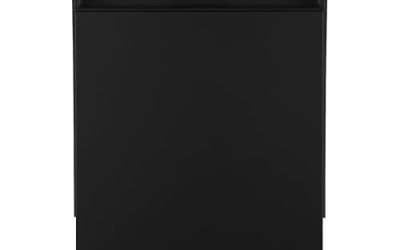
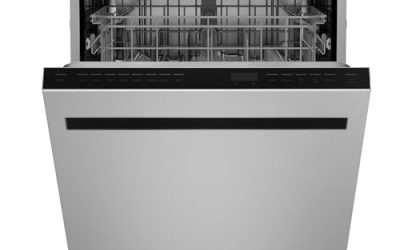
 COMFEE’ Portable Mini Dishwasher CDC22P2AWW | Check price on Amazon | |
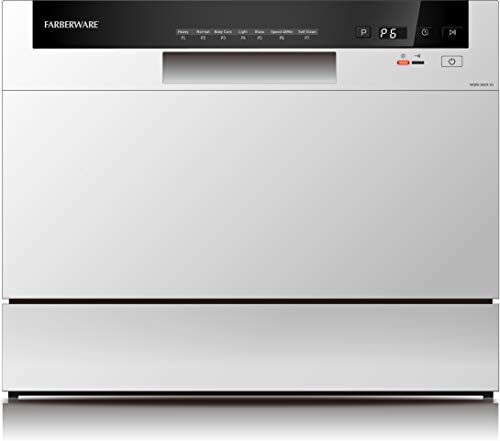 Farberware Professional FCD06ABBWHA | Check price on Amazon | |
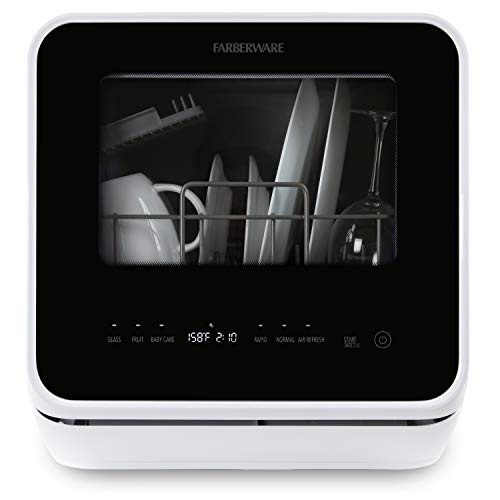 Farberware FDW05ASBWHA | Check price on Amazon |
Key takeaways
- Compare the best compact dishwashers for apartments, dorms and RVs with verified capacity, dimensions, wash programs, noise figures and water use for each.
A compact dishwasher solves a specific problem: a kitchen with no cabinet bay for a built-in machine, or a household small enough that a full-size tub would run half empty most days. Renters, dorm residents, RV owners and couples in small apartments all land in this category, and the machines built for them split into two clear groups. Faucet-connect models hold up to six place settings and behave like a shrunken version of a standard dishwasher, while smaller tank-fed models hold about two place settings and need no plumbing at all, because they carry their own water supply.
This guide compares three compact dishwashers that are currently sold on Amazon US, each verified against its Amazon listing. The picks rest on manufacturer specifications and listing details — capacities, dimensions, wash programs, noise figures and water consumption. Every model here is a countertop compact, so the real decision is not the category but the trade-off inside it: how much capacity you give up for a smaller footprint, and whether your sink faucet can host a quick-connect hose or you need a built-in tank instead.
Disclosure: As an Amazon Associate, we earn from qualifying purchases. Product details and availability can change; check the Amazon listing before you buy.
Quick picks at a glance
| Product | ASIN | Best for |
|---|---|---|
| COMFEE’ Portable Mini Dishwasher CDC22P2AWW | B096RYWSQM | Six place settings with the widest program menu |
| Farberware Professional FCD06ABBWHA | B07VMTF2Y4 | Six place settings with a fast 45-minute cycle |
| Farberware FDW05ASBWHA | B07VR22832 | No-faucet use thanks to a built-in water tank |
What matters most for compact dishwashers
Counter height and footprint. Almost every compact countertop unit stands about 17.2 inches tall, which is planned around the standard gap between a countertop and wall cabinets. Measure that gap before ordering, and measure depth with the door open, because a downward-swinging door needs clear space in front of the machine. Width separates the two groups: six-place models are roughly 20 to 22 inches wide, while two-place tank models can be as narrow as 16.5 inches.
Capacity in place settings — and plate diameter. Place settings are the headline figure, but the maximum plate diameter decides what actually fits. Most compact machines accept plates up to 10 inches, which excludes some dinner plates and serving platters. If your everyday plates are larger than that, check the diameter limit on the listing before anything else, because no wash program compensates for a plate that cannot go in.
Water supply: faucet connection or built-in tank. Faucet-connect models use a quick-connect adapter on the kitchen tap and drain into the sink. They offer the biggest interiors but tie up the faucet while running, and the adapter does not fit every faucet style — pull-down sprayer faucets are a common problem. Tank models carry around 5 liters of water that you fill with a pitcher, so they can run anywhere with an outlet and a place to drain, which is why they dominate in RVs, boats and dorm rooms.
Wash programs that match your loads. Program counts range from five to eight in this class. The cycles that earn their keep are a heavy or intensive cycle for pans, a glass or delicate cycle, a baby-care or high-heat cycle for bottles, and a genuinely short speed cycle for lightly soiled loads. A long list of near-identical normal cycles adds little.
Noise figure. Compact dishwashers sit in the room with you, often in a studio or open-plan space, so the decibel figure matters more than it does for a built-in behind a cabinet door. Figures in this class run from the high forties to the low sixties in decibels. A model in the high forties can run during a conversation; one in the sixties is better scheduled while you are out.
Water and energy consumption. Listing figures for compact models cluster around 2.85 to 3.1 gallons per cycle for faucet-connect machines, and a fixed tank volume per load for tank models. Annual energy consumption figures on the listings below run from 130 to 174 kilowatt hours, which gives a fair like-for-like comparison of running efficiency.
COMFEE’ Portable Mini Dishwasher CDC22P2AWW
Why it fits a compact kitchen. The COMFEE’ is the fullest-featured machine in this roundup. Eight programs is the widest menu in the class, and the useful ones are all present: a Baby-Care cycle for bottles, a Glass cycle for stemware, a 45-minute Speed cycle for a quick turnaround, and an extra-drying function that addresses the most common compact-dishwasher complaint, wet plastics. The 49-decibel noise figure is the lowest of the three picks here, which matters in a studio apartment where the kitchen and the living space are the same room. It connects to the faucet with the included adapter, and the listing notes it can sit on the counter or be fitted into a cupboard, which gives some flexibility in very small kitchens.
Trade-offs. At 46 pounds it is a lift-two-people-or-slide-it appliance, not something you will move daily. The 10-inch plate limit is the joint tightest here, so households with large dinner plates should measure before choosing it. It also needs the faucet for every run, so the sink is occupied while it washes.
Best for / Skip if. Best for couples and small households that cook daily and want one machine to cover everything from bottles to pans. Skip it if your faucet is a pull-down sprayer type that cannot take the adapter, or if your plates exceed 10 inches.
Farberware Professional FCD06ABBWHA
Why it fits a compact kitchen. The Farberware Professional matches the COMFEE’ on headline capacity — six place settings — and builds its case on speed and simplicity. The 45-minute cycle is the headline: for the typical small-household load of plates, glasses and cutlery from one meal, a cycle that finishes in three quarters of an hour changes the machine from an overnight appliance into something you can run between meals. Seven programs include the two specialty cycles small households actually use, Baby Care and Glass, and the included silverware basket keeps cutlery separated so it washes properly instead of nesting. The LED display keeps cycle selection straightforward.
Trade-offs. The listing confirms a faucet hookup is required, and unlike the tank-fed model below there is no alternative water supply, so faucet compatibility is a hard requirement. The plate limit is again 10 inches. The listing surfaces fewer published figures than the other two picks — no noise or annual energy figure is stated in the listing details reviewed — so buyers comparing running efficiency precisely will find less to work with.
Best for / Skip if. Best for small households that run the dishwasher after most meals and value a short cycle over a long program list. Skip it if you cannot connect to a faucet, or if you want a built-in tank for use away from the sink.
Farberware FDW05ASBWHA
Why it fits a compact kitchen. This is the smallest machine in the roundup and the only one that can wash dishes with no faucet involved. The 5-liter built-in tank is filled with the included pitcher, the drain hose goes to a sink or container, and the machine runs anywhere there is a counter and an outlet — a dorm room, an RV, a boat, an office kitchenette. At 16.5 inches wide it fits counters that cannot host a six-place model, and at 36.38 pounds it is the only pick here one person can move comfortably. Two details stand out against its size: it accepts dishes up to 12 inches in diameter, the widest limit of the three, and the program list includes a Fruit Wash cycle alongside Baby Care and Glass, which suits the snack-heavy, bottle-heavy loads of a single-person household. The quick wash takes 40 minutes.
Trade-offs. Two place settings is a hard ceiling: this is one person’s day of dishes, or one meal for two, and a cooking-heavy day means running it twice or washing pans by hand. The interior is plastic rather than stainless steel. The tank also adds a small chore — filling and occasionally cleaning it — that faucet models do not have.
Best for / Skip if. Best for single occupants, students, and RV or boat owners who need dishwashing with no plumbing. Skip it if more than two people eat at home regularly, because the capacity will frustrate you within a week.
How to choose between these picks
Start with the water question, because it eliminates options fastest. If your kitchen faucet accepts a quick-connect adapter and the sink can be occupied during a wash, both six-place models are in play. If the faucet is a pull-down sprayer, if you are renting and cannot touch the plumbing at all, or if the machine needs to live somewhere other than the kitchen, the tank-fed Farberware FDW05ASBWHA is the only workable pick of the three.
Between the two six-place machines, choose on cycle habits. If you want the widest program menu, the quietest listed noise figure and an extra-drying function for plastics and lunch boxes, the COMFEE’ CDC22P2AWW is the stronger specification sheet. If your loads are routine meal dishes and you would rather have them done in 45 minutes, the Farberware FCD06ABBWHA is built around exactly that pattern.
Then check the two measurements that cause returns: the height between your counter and your wall cabinets (all three picks stand about 17.2 to 17.3 inches tall, so this is rarely the problem) and your largest plate diameter (10 inches for both six-place models, 12 inches for the small Farberware). A plate check takes ten seconds and settles the question the place-setting figure cannot.
Setup, daily use and care
For faucet-connect models, setup is the adapter and two hoses: the inlet hose clicks onto the faucet adapter and the drain hose rests in the sink. Run the first cycle empty to flush the machine, and check the adapter connection for drips during that first run, since most leaks in this class happen at the faucet joint rather than inside the machine. Keep the adapter on the faucet only if your tap design allows it to stay; otherwise store it with the hoses so the parts stay together.
For the tank model, fill the tank with the pitcher until the machine signals it is full, and empty and rinse the tank if the machine will sit unused for more than a few days, so the stored water does not go stale. Position the drain hose so its end stays below the machine’s outlet and cannot slip out of the sink mid-cycle.
Daily loading matters more in a compact tub than a full-size one. Alternate cutlery up and down in the basket so pieces do not nest, face plates toward the spray arm, and keep tall glasses on the sides where the rack supports them. Use detergent made for dishwashers — pods, powder or gel — in the amount the manual states for a compact load; regular dish soap is not a substitute and will foam out of the machine. Scrape plates rather than rinsing them under the tap, which keeps water use at the listing figure.
For care, pull and rinse the filter on the schedule the manual gives — compact machines push the same food soil through a smaller filter, so it clogs faster than a full-size equivalent. Wipe the door seal weekly, run an empty hot cycle with a dishwasher cleaner or a cup of white vinegar on the top rack monthly if your manual allows it, and descale on the maker’s schedule if your water is hard, since heating elements in small machines scale quickly.
FAQ
Will a compact dishwasher fit under standard kitchen cabinets?
Usually, yes. All three picks stand about 17.2 to 17.3 inches tall, which is within the typical counter-to-cabinet gap. Measure your own gap first, and remember to leave room to open the door fully and to route the hoses to the sink.
How many dishes does a 6-place-setting compact dishwasher really hold?
A place setting covers a dinner plate, a side plate, a bowl, a cup, a glass and cutlery for one person, so six place settings is roughly a full day of dishes for two people who cook, or one meal for a family that then hand-washes the pans. The binding limit is plate diameter: both six-place picks here accept plates up to 10 inches.
Can I run a countertop dishwasher without connecting it to a faucet?
Only a model with a built-in water tank, like the Farberware FDW05ASBWHA with its 5-liter tank. Faucet-connect models such as the COMFEE’ CDC22P2AWW and the Farberware FCD06ABBWHA need the quick-connect faucet hookup for every cycle.
Do compact dishwashers dry dishes properly?
Drying is the weakest point of the class, because most compact models rely on residual heat rather than a fan or heated dry element. The COMFEE’ adds an extra-drying function, which helps. With any of them, opening the door slightly when the cycle ends and unloading the bottom rack first noticeably improves results, especially on plastics.
How much water does a compact dishwasher use compared with washing by hand?
The listing figure for the COMFEE’ is 2.85 gallons per cycle for a full six-place load, and the tank Farberware uses its 5-liter tank volume per load. A running kitchen tap for hand washing typically passes more water than either figure for the same number of dishes, which is the main efficiency argument for the category.
Conclusion
For most small kitchens, the COMFEE’ CDC22P2AWW is the pick: six place settings, the widest program menu of the three, the lowest listed noise figure and an extra-drying function, provided your faucet takes the adapter and your plates are 10 inches or smaller. If your household runs smaller, faster loads and values a 45-minute cycle above extra programs, the Farberware FCD06ABBWHA covers the same capacity in a simpler package. And if there is no faucet to connect to — a dorm, an RV, a boat, a rented room — the Farberware FDW05ASBWHA is the one that works anywhere, accepting the smallest capacity in exchange for complete freedom of placement. Measure your plates, check your faucet, and the right choice among the three makes itself.