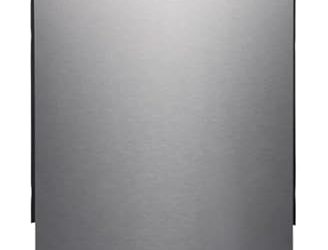
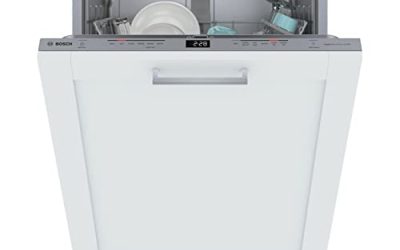
Our Short List of 3
All 3 Picks at a Glance
| Product | Specs | Action |
|---|---|---|
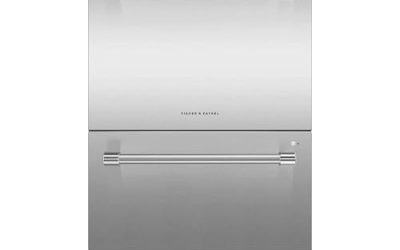
 Samsung DW80B7070US: fan drying with a door that opens itself | Check price on Amazon | |
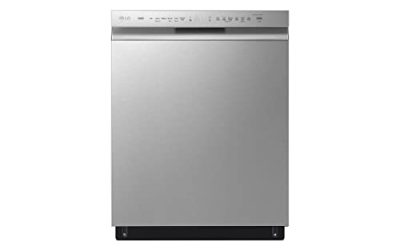
 Sharp SDW6757ES: full-size heated dry with a quiet figure | Check price on Amazon | |
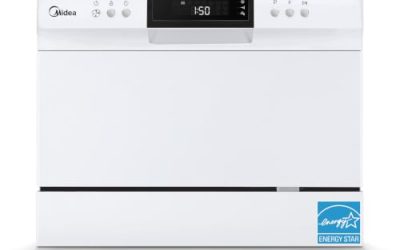
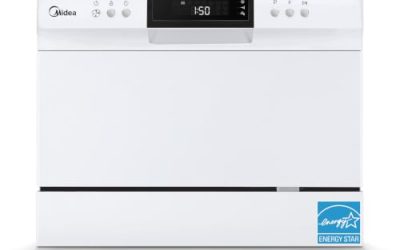
 Midea MDF18A1AST: heated dry in a slim 18-inch frame | Check price on Amazon |
Key takeaways
- Compare the best drying dishwashers by drying system: a heated fan with an auto-opening door, a full-size heated-dry model, and a slim 18-inch built-in.
A dishwasher can wash beautifully and still fail at the last step: unloading. Glasses come out spotted with standing water, storage containers drip onto the counter, and the top rack needs a pass with a towel before anything can go in a cupboard. If that is the frustration that brought you here, the fix is not a stronger wash cycle. It is a better drying system. Drying is a distinct piece of engineering, and models differ sharply in how they handle it: some rely on condensation alone, some add a heating element, some move air with a fan, and the strongest designs open the door at the end of the cycle to let humid air escape.
This guide is for buyers who rank dry dishes at the top of their list, whether the load is heavy on plastic containers and sippy cups, full of stemware, or run overnight in a small kitchen. The picks below are based on manufacturer specifications and Amazon listing details for each exact model, with an emphasis on the drying hardware each machine actually carries. One honest note on scope: several flagship drying technologies from the big appliance brands are sold mainly through appliance dealers rather than Amazon, so this guide focuses on drying-led models with verifiable Amazon US listings, across a full-size premium machine, a full-size heated-dry machine, and a slim built-in for narrow openings.
Disclosure: As an Amazon Associate, we earn from qualifying purchases. Product details and availability can change; check the Amazon listing before you buy.
Quick picks at a glance
| Product | ASIN | Best for |
|---|---|---|
| Samsung DW80B7070US | B0C3WTK1Y8 | Best overall drying: heated fan plus an auto-opening door |
| Sharp SDW6757ES | B08GFP9ZS7 | Best full-size heated dry, with a quiet 45 dBA figure |
| Midea MDF18A1AST | B0C84MCVWM | Best for small kitchens: heated dry in an 18-inch built-in |
What matters most when drying is the priority
The drying system itself. Condensation drying uses the heat of the final rinse: water sheets off hot dishes and condenses on the cooler tub walls. It is gentle and uses little energy, but it is the weakest option for plastics, which do not hold heat. Heated dry adds a heating element during the dry phase, which suits mixed loads better. Fan-assisted designs move the humid air instead of waiting for it to settle, and an auto-opening door goes one step further by venting steam out of the tub entirely at the end of the cycle. When you compare models, the named drying system tells you more than any marketing line about dry dishes.
Plastics and lightweight items. Plastic containers, lids, and baby bottles are the hardest things to dry because they cool quickly and water beads on their surface instead of sheeting off. If your loads are plastic-heavy, prioritize a fan or an opening door over condensation alone, and look for a heated dry option you can add to everyday cycles rather than one tied to a single heavy program.
Tub material and final rinse heat. A stainless steel tub holds heat from the final rinse longer than a plastic tub, and that stored heat is what drives evaporation during the dry phase. A hot final rinse, including a sanitize or high-temperature option, leaves dishes hotter at the start of drying and noticeably drier at the end of it.
Rinse aid and loading habits. Rinse aid lowers the surface tension of water so it sheets off glass and ceramic instead of beading, and every drying system in this guide works better with the dispenser kept full. Loading matters too: cups and containers placed at an angle shed water, while anything that sits flat and upright can pool it. No drying system fully compensates for a bowl loaded face-up.
Size, capacity, and noise. A slim 18-inch machine suits a narrow opening but holds fewer place settings, so it may run more often. Full-size 24-inch models carry family-size loads, and a low decibel figure matters if the machine runs while the kitchen is in use. Match the drying system you want to the opening you actually have, then check the noise figure against your routine.
Samsung DW80B7070US: fan drying with a door that opens itself
Why it fits a drying-first buyer. This is the most complete drying setup in the guide. Samsung’s Smart Dry pairs a heated fan with the AutoRelease door: when the cycle reaches its final stage and the temperature inside falls below 122 degrees Fahrenheit, the door opens automatically, roughly five to fifteen minutes before the cycle ends, so steam escapes instead of settling back onto the load. Moving air plus an open vent is exactly the combination that dries plastics and lids, the items condensation-only machines leave wet. The feature is on by default, and Samsung’s own support guidance notes that turning it off makes drying worse, which tells you how much of the result depends on it. StormWash+ handles the cleaning side with a heavy-duty spray action for pots and baked-on loads, and the 42 dBA figure keeps the machine unobtrusive in an open-plan kitchen. The third rack gives cutlery and utensils a flat, spread-out layer where water has fewer places to pool.
Trade-offs. The drying performance leans on electronics and a motorized door release, so there is more to go wrong over a long service life than in a simple heated-dry machine. The Bespoke design line also assumes you are comfortable managing settings through a smart control layout. Finally, an auto-opening door needs clearance and a household that is fine with the door standing ajar at the end of overnight cycles.
Best for / Skip if. Best for plastic-heavy family loads and anyone who unloads straight into cupboards. Skip if you prefer the simplest possible drying hardware or your installation leaves no room for the door to open on its own.
Sharp SDW6757ES: full-size heated dry with a quiet figure
Why it fits a drying-first buyer. The Sharp takes the direct route: a heated dry option that adds heat during the dry phase, paired with a stainless steel interior that holds the heat of the final rinse and keeps evaporation going. For mixed loads of ceramic, glass, and everyday plastics, that combination is dependable and easy to understand, with no door mechanism and no app involved. Soil sensors adjust the cycle to the load, the Power Wash zone concentrates spray on heavily soiled items, and the 45 dBA figure is low enough for evening runs in most homes. The interior lighting is a small detail that earns its place in a drying guide: it makes it easy to spot any item still holding water before you unload the rest around it.
Trade-offs. Heated dry here is an option to select rather than the centerpiece of the design, and there is no fan or opening door to pull moisture out of the tub, so the lightest plastics may still carry beads of water after a short cycle. Buyers who want the strongest possible plastic drying should look at the Samsung above.
Best for / Skip if. Best for full-size kitchens that want proven heated dry, a stainless interior, and quiet running without smart features. Skip if your loads are dominated by plastic containers and lids.
Midea MDF18A1AST: heated dry in a slim 18-inch frame
Why it fits a drying-first buyer. Slim dishwashers often cut corners on drying, and many compact machines rely on condensation alone. This Midea keeps a true heated dry function in an 18-inch built-in body, and the listing describes it as an extra drying function intended to leave dishes dry enough to put away without towel drying. The stainless steel tub supports that by holding rinse heat, and the Hi-Temp wash raises water temperature for loads that need it, which also leaves dishes hotter at the start of the dry phase. Six programs cover the everyday range for a small household, and the sanitize function suits bottles and chopping boards. For a condo, a galley kitchen, or an older home with a narrow dishwasher opening, it is the pick in this guide that does not ask you to give up heated drying for the sake of fit.
Trade-offs. Eight place settings is a small household capacity, so families will run it often. The listing notes the heated dry function does not apply to the Rapid and Self-clean cycles, so the fastest wash will not be the driest one. There is no fan or door venting, which keeps expectations in line with heated dry rather than the Samsung’s two-part system.
Best for / Skip if. Best for small kitchens, couples, and apartment-sized openings that still want heated dry. Skip if you regularly wash full family loads or entertaining-sized batches.
How to choose between these picks
Start with the opening in your cabinetry, because it removes options fastest. An 18-inch space points to the Midea, and it is a stronger drying machine than most slim models. A standard 24-inch opening leaves the real decision: how much plastic do you wash? If containers, lids, and kids’ tableware fill your top rack, the Samsung’s fan and auto-opening door solve the problem at the source, and its third rack spreads small items out so air can reach them. If your loads are mostly plates, bowls, and glassware, the Sharp’s heated dry and stainless interior will get them cupboard-ready with simpler hardware and a quiet figure. Finally, think about when the machine runs. Overnight running favors the lowest noise figure and a drying system that finishes the job without you opening the door yourself in the morning; on that count the Samsung’s automatic door and the Sharp’s heated dry both beat condensation-only designs.
Drying habits and care that make any of these work better
Keep the rinse aid dispenser full and set to the middle of its range; it is the single simplest improvement to drying, because water that sheets off cannot pool. Load plastics on the top rack, angled so their open faces point downward or sideways, and leave small gaps between containers so air can circulate. When a cycle ends on a machine without an opening door, crack the door ajar for a short while before unloading if you are nearby; the escaping steam is moisture that will not condense back onto the load. Unload the bottom rack first so water sitting on top-rack items does not drip onto dry dishes below. Clean the filter on the schedule the manual sets out, since a clogged filter leaves soil and moisture in the tub, and run a high-temperature or sanitize cycle for the loads you want driest, because a hotter final rinse starts the dry phase with hotter dishes. If drying results fade over time, check the rinse aid level and the spray arms before assuming the drying system itself is at fault.
Frequently asked questions
Why do plastic containers come out wet when plates are dry?
Plastic holds far less heat than ceramic or glass, so it cools quickly and water beads on its surface instead of sheeting off or drying away. That is why fan-assisted drying and an auto-opening door, like the Samsung’s Smart Dry, help plastics more than condensation drying does.
Does heated dry use a lot of energy?
A heating element draws power during the dry phase, so heated dry uses more energy than condensation drying, which relies on stored rinse heat. Annual energy figures for the models here run from 234 to 249 kWh per year, and using heated dry only on plastic-heavy loads is a reasonable middle course.
Is an auto-opening door worth choosing on its own?
For drying, it is one of the most effective features available, because it vents steam out of the tub at the moment condensation would otherwise form. On the Samsung in this guide it works together with a heated fan, and it is most valuable if you run the machine overnight or unload long after the cycle ends.
Do I still need rinse aid with a good drying system?
Yes. Rinse aid makes water sheet off surfaces instead of beading, which supports every drying method in this guide. Even the strongest fan or heated dry system leaves more water behind when the dispenser runs empty.
Can a slim dishwasher dry as well as a full-size one?
It can, provided it carries a real drying system rather than condensation alone. The 18-inch Midea here includes heated dry and a stainless tub, so its per-load drying is comparable to a full-size heated-dry machine; the compromise is capacity, at eight place settings, not dryness.
Conclusion
If drying is the reason you are replacing your dishwasher, buy the drying system first and the badge second. Choose the Samsung DW80B7070US if plastics and mixed family loads leave your current machine’s top rack wet: its heated fan and auto-opening door are the strongest drying combination in this guide. Choose the Sharp SDW6757ES if you want full-size heated dry with a stainless interior, quiet running, and no smart features to manage. Choose the Midea MDF18A1AST if your kitchen only fits an 18-inch machine and you refuse to settle for condensation drying in a small frame. Any of the three will unload drier than a condensation-only model, and pairing the right system with full rinse aid and angled loading closes most of the remaining gap.