Key takeaways
- The best windshield anti-fog treatments for the inside of your windshield, compared by format, tint safety, and bottle size, plus the application steps that stop streaks and haze.
As an Amazon Associate we earn from qualifying purchases.
Interior windshield fog is not a wiper problem and not an exterior problem. It forms on the cabin side of the glass when warm, humid air from passengers, wet coats, and damp mats meets a cold windshield. The moisture condenses into thousands of tiny droplets, and those droplets scatter light, which is why a fogged windshield looks white and opaque even though the water itself is clear. Your defroster can clear it, but it takes time, it needs the engine warm, and the fog often returns the moment you turn the blower down.

A dedicated anti-fog treatment solves the problem before it starts. These products leave a thin hydrophilic film on the inside of the glass. Instead of beading into droplets, condensation spreads into a flat, transparent sheet of water that you can see through. This guide covers five interior anti-fog treatments sold for automotive glass, compares them on format, tint guidance, and bottle size, and walks through the application steps that decide whether a treatment works cleanly or leaves haze.
Disclosure: This article contains affiliate links. If you buy through a link on this page, we may earn a commission at no extra cost to you. Product details and specifications are taken from the manufacturers’ listings and product pages, and we have not personally tested these products.
Quick Picks
Our Short List of 3
All 4 Picks at a Glance
| Product | Specs | Action |
|---|---|---|
| 1. Rain-X 630046 Interior Glass Anti-Fog — Best Overall | Check price on Amazon | |
| 3. Adam’s Polishes Anti-Fog — Best for Tint and Mixed Surfaces | Check price on Amazon | |
| 4. SHIELDOM Anti Fog Spray and Rain Repellent Spray — Best Dual-Action Pack | Check price on Amazon | |
 5. Rain-X AF21106D Anti-Fog Treatment — Best Glovebox Size | Check price on Amazon |
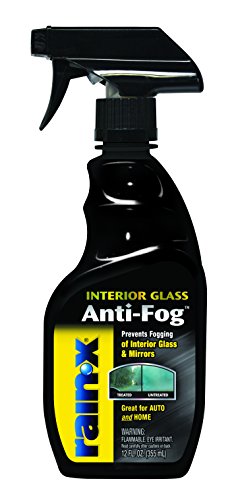
1. Rain-X 630046 Interior Glass Anti-Fog — Best Overall
Rain-X is the name most drivers associate with glass treatments, and the 630046 is its dedicated interior anti-fog liquid. The listing describes a 12 fl oz bottle formulated to prevent fogging of interior glass and mirrors, and it is rated for use in both automobiles and marine vehicles, which makes it a sensible single bottle for a car and a boat cabin. The formula works by treating the glass with a coating that attracts water, so moisture collecting on the surface disperses and thins out instead of building into fog.
The 12 fl oz size is the largest dedicated anti-fog liquid in this roundup, and that matters because interior anti-fog is a repeat-use product. You will reapply it through the wet season, and you will probably treat the side windows and rear glass as well once you see the windshield stay clear.
Application is wipe-on rather than spray-on. Rain-X directs you to apply the liquid to a clean, dry cloth or paper towel, wipe it onto clean interior glass, let it dry, and then buff lightly. That method keeps the product off the dashboard and trim, which is a real advantage over sprays in a tight cabin. The trade-offs are in the fine print: this treatment is positioned for untinted glass, so if your windshield or front side windows carry aftermarket tint film, choose one of the tint-stated picks below instead. It is also an interior-only product. It does nothing for rain on the outside of the glass, and it should never be used as a substitute for an exterior water repellent.
Choose the Rain-X 630046 if you want the straightforward, proven option: a large bottle of a single-purpose interior treatment from the brand that built the category, and your glass is untinted.
2. Invisible Glass 92472 Anti-Fog Interior Windshield Treatment — Best Streak-Free Spray
ASIN: N/A — the model 92472 listing is confirmed on Amazon US, but its ASIN could not be verified from the sources available at the time of writing, so no code is printed rather than risk an incorrect one.
Invisible Glass, made by Stoner Inc., takes the opposite approach to Rain-X: instead of the biggest bottle, it sells a finish. The 92472 is an 8 fl oz spray described as an anti-fog interior windshield treatment that prevents fogging while leaving no streaks or haze, and the listing lists residue-free and streak-free as its special features. That claim matters more than it sounds. The most common complaint about anti-fog products is not that they fail to stop fog; it is that a poorly buffed film catches oncoming headlights at night and turns the whole windshield into a glare field. A formula built around a clean finish is aimed squarely at that problem.
Stoner also publishes the clearest application limits in this group. The treatment is for interior glass only, it should be applied above 40 degrees Fahrenheit, and it should not be applied to a hot or sunbaked windshield. The directions call for clean, dry glass first, then a moderate amount sprayed onto a clean, dry, lint-free cloth rather than directly onto the glass, wiped back and forth until the coat is even. Spraying the cloth instead of the windshield keeps overspray off the dash and pillars, and it is the technique worth copying with any spray-format pick in this guide.
The bottle is smaller than the Rain-X, at 8 fl oz, and it is sold as a single bottle. Stoner’s guidance is to reapply every few weeks or after a deep cleaning of the inside glass, since a strong glass cleaner will strip the film along with the grime. The product is formulated and made in the USA, per the listing.
Choose the Invisible Glass 92472 if your priority is a clean, glare-free finish on the inside of the windshield and you are willing to reapply on a regular cycle to keep it that way.
3. Adam’s Polishes Anti-Fog — Best for Tint and Mixed Surfaces
Adam’s Polishes sells its Anti-Fog as a 4 fl oz spray that combines a cleaning step with an anti-condensation treatment. The listing positions it for glass, mirrors, shower doors, visors, and lenses, and describes it as safe for all surfaces, which is the widest surface guidance of any pick here. For a driver with tinted windows, a helmet visor in the trunk, and bathroom mirrors that steam up at home, one small bottle covers all of it.
The hydrophilic logic is the same as the other picks: the treatment lowers the angle at which water spreads on the surface, so condensation forms a thin, clear film instead of droplets. Adam’s states a very low contact angle for the treated surface, which in plain terms means water sheets flat rather than beading. The listing also states that there is no cure time, so the routine is spray, wipe to spread, and buff, without a waiting period before you drive.
The obvious limitation is size. At 4 fl oz, this is a small bottle, and if your only job is treating a large windshield and side glass every few weeks through a long winter, the Rain-X or Invisible Glass bottles will last longer between purchases. The Adam’s bottle earns its place for mixed use and for tint caution: where the Rain-X 630046 is positioned for untinted glass, this spray is the one in the group that advertises broad surface safety, including the visors and lenses that a windshield-only product never claims.
Choose Adam’s Polishes Anti-Fog if you have tinted glass, or you want one treatment that also handles a helmet visor, goggles, or a bathroom mirror, and you accept the smaller bottle as the price of that flexibility.
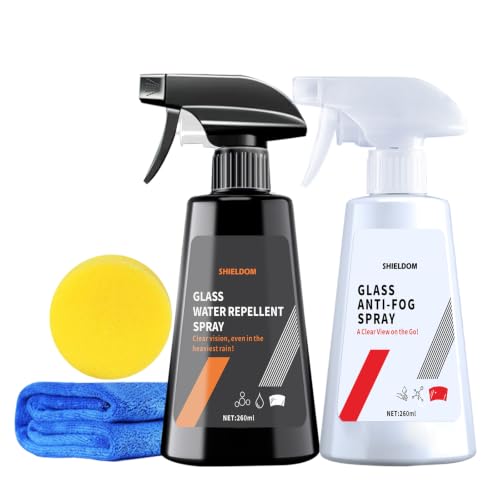
4. SHIELDOM Anti Fog Spray and Rain Repellent Spray — Best Dual-Action Pack
SHIELDOM packages the two sides of the windshield problem in one purchase: a pack of two 260 ml bottles, one a dedicated anti-fog spray for the interior and one a rain repellent for the exterior. That separation is the right way to build a dual product. Interior fog and exterior rain are different physics, and a single formula sprayed on both sides usually does neither job well. With this pack, the anti-fog bottle goes on the cabin side and the repellent bottle goes on the outside, where it forms a hydrophobic coating that beads rainwater so it rolls off the glass.
The listing covers a wide set of surfaces for the anti-fog side, including automotive windows, mirrors, glasses, goggles, and helmets, and SHIELDOM states the sprays are suitable for coated or tinted glass while recommending a small-area test first. That spot-test advice is worth following with any treatment on any vehicle: apply to a corner of the glass, check the finish in daylight and under headlights, and only then do the full windshield.
Because the pack splits its volume across two different jobs, it is not the most economical way to buy pure interior anti-fog capacity. If your only problem is cabin-side fog, the Rain-X 630046 gives you more dedicated product in one bottle. The SHIELDOM pack makes sense when rain sheeting on the outside bothers you as much as fog on the inside.
Choose the SHIELDOM pack if you want to treat both faces of the windshield in one order and you are comfortable doing a spot test on tinted or coated glass before the full application.
5. Rain-X AF21106D Anti-Fog Treatment — Best Glovebox Size
The second Rain-X entry is a different product, not a repeat: the AF21106D is the compact 3.5 fl oz version of the Rain-X anti-fog treatment, sized to live in a glove compartment or door panel rather than a garage shelf. The listing describes it as a treatment that prevents fogging and steaming on windshields and visors and improves visibility, with a formula that also reduces interior fogging and helps remove smoke residue from the glass. An anti-static quality is also cited for this version, which helps treated glass resist the dust film that makes fogging worse.
A small bottle changes how you use anti-fog. Instead of a scheduled garage job, it becomes a spot treatment: a quick wipe before a cold morning drive, a touch-up on the rear side windows, or a fix for a second vehicle you do not maintain often. The capacity is small, so it is not the economical choice for treating every window of a large SUV all winter, and the same untinted-glass positioning as the larger Rain-X applies.
Choose the AF21106D if you want anti-fog within reach in the car itself, for spot treatments and occasional use, rather than a bulk bottle for a full seasonal routine.
How to Apply an Interior Anti-Fog Treatment Properly
Most disappointing results with these products are application results, not product results. The film can only work if it goes onto truly clean glass and gets buffed to an even finish.
- Clean the inside glass first. Interior windshields carry an invisible film of plastic off-gassing, dust, and fingerprints. Use a proper automotive glass cleaner and a clean microfiber cloth, and clean twice if the car is older. An anti-fog coat applied over that film will smear.
- Start with dry glass. Wipe the glass dry and let any cleaner flash off completely. Applying treatment over damp glass dilutes the film.
- Apply to the cloth, not the glass, when you can. This is Stoner’s stated method for its spray and it works for the wipe-on liquids too. It prevents overspray on the dashboard and gives you an even coat.
- Cover the whole surface in overlapping passes. Work in sections, including the corners and the area behind the rearview mirror, which is the patch drivers most often miss and the first patch they look through.
- Let the coat dry, then buff lightly. A light buff with a second clean, dry cloth removes the excess that causes haze. If haze appears after drying, the makers’ guidance is consistent: buff again with a clean cloth rather than adding more product.
- Respect the temperature guidance. Apply above 40 degrees Fahrenheit where the maker states a minimum, and never apply to a hot, sunbaked windshield. A warm cabin on a cool day is the ideal working condition.
- Reapply on a cycle. Interior films wear off with cleaning and with wiping condensation away by hand. Expect to reapply every few weeks in the damp season, and always after a deep interior glass cleaning.
How to Choose the Right Anti-Fog for Your Windshield
Interior or exterior? This keyword is about the inside of the glass. Interior treatments are hydrophilic: they spread condensation flat. Exterior products are hydrophobic: they bead rain off. They are not interchangeable, and a bottle labeled as a rain repellent will not stop cabin fog. The SHIELDOM pack is the only pick here that deliberately includes both, as two separate bottles.
Tinted glass. If your vehicle has aftermarket tint film, check the maker’s tint guidance before anything else. In this group, Adam’s Polishes advertises broad surface safety and SHIELDOM states suitability for coated or tinted glass with a spot test, while the Rain-X interior liquids are positioned for untinted glass. When in doubt, spot test low in a corner of the glass.
Format. Wipe-on liquids like the Rain-X bottles give you control and keep product off the trim. Sprays like the Invisible Glass and Adam’s bottles are faster, but spray the cloth rather than the windshield to avoid overspray.
Bottle size and use pattern. A daily driver in a humid climate will go through treatment steadily, so a 12 fl oz bottle suits a full seasonal routine. A small 3.5 or 4 fl oz bottle suits spot use, a motorcycle visor, or a second car. Match the bottle to the habit, not the other way around.
Defroster habits. Anti-fog does not replace your defroster, and it does not clear frost or ice. It prevents the light condensation film that forms while driving. You will still use the defroster on the coldest mornings; the treatment means the glass stays clear afterward instead of fogging again at the first traffic light.
Common Mistakes That Make Anti-Fog Look Ineffective
- Applying over dirty glass. The off-gassing film on interior glass is the leading cause of streaks blamed on anti-fog products. Clean first, always.
- Using an exterior repellent inside. A hydrophobic coating on the inside glass makes condensation bead harder, the opposite of what you want.
- Skipping the buff. Excess product left unbuffed is what catches headlights at night. Buff until the glass looks like nothing is on it.
- Treating only the center. Fog forms edge to edge, and missed corners stay foggy.
- Expecting it to remove existing fog instantly. These are preventive coatings. Clear existing condensation with the defroster or a cloth, then let the film prevent the next round.
Frequently Asked Questions
How long does one application last?
It varies with humidity, how often the glass is wiped, and how often you clean it. Makers and listings in this category generally point to reapplying every few weeks during the damp season, and always after a thorough interior glass cleaning, which strips the film.
Can I use windshield anti-fog on tinted windows?
Only when the maker says so. Some treatments in this guide state they are suitable for tinted or coated glass, while the Rain-X interior liquids are positioned for untinted glass. Read the listing for the specific product and spot test a small area first.
Will anti-fog stop frost on the inside of the windshield?
No. Anti-fog prevents condensation from forming a fog film. Frozen moisture on the inside glass means excess water in the cabin, often from wet mats or a leaking seal, and that source problem needs fixing alongside any treatment.
Can I use these treatments on mirrors and side windows?
Yes, for the picks whose listings name mirrors and interior glass, including the Rain-X, Invisible Glass, and SHIELDOM entries here. The same clean, apply, dry, and buff routine applies.
Why does my windshield still look hazy at night after treatment?
Haze almost always means excess product or a dirty film underneath. Buff again with a clean, dry microfiber cloth. If the haze persists, clean the glass fully and reapply a thinner coat.
The Bottom Line
For most drivers, the Rain-X 630046 Interior Glass Anti-Fog is the safest starting point: a large bottle of a dedicated interior treatment with clear wipe-on directions, as long as your glass is untinted. If night glare from a hazy film is your biggest complaint, the Invisible Glass 92472 is built around a streak-free finish and publishes the most careful application limits. Drivers with tint or mixed surfaces should look at Adam’s Polishes Anti-Fog, drivers who want the outside of the glass treated too should look at the SHIELDOM two-bottle pack, and anyone who just wants a bottle that lives in the car should take the compact Rain-X AF21106D. Whichever you choose, the result depends less on the brand than on the prep: clean glass, a thin even coat, and a proper buff.