Our Short List of 3

- Best for: First-time buyers who want guided controls for photos and video
- 24.2 megapixel APS-C CMOS sensor with DIGIC X processor
- RF-S 18-45mm f/4.5-6.3 IS STM lens kit, Canon RF mount
- Dual Pixel CMOS AF II with face and eye detection
- UHD 4K video with 6K oversampling at 30p

- Best for: Travel, streaming and long-form video from a compact body
- DX-format mirrorless camera, Nikon Z mount
- NIKKOR Z DX 16-50mm f/3.5-6.3 VR lens included
- 4K UHD video recording
- Eye-detection autofocus for people and animals
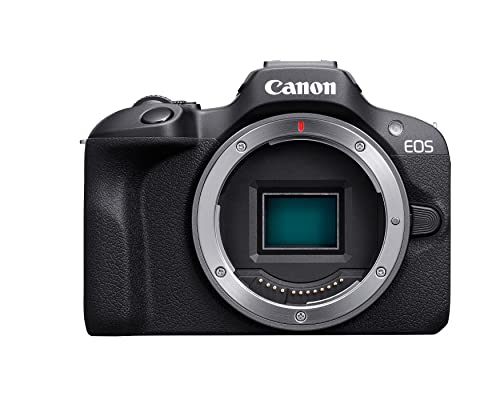
- Best for: Stills-first beginners who want the least complicated start
- 24.1 megapixel APS-C CMOS sensor with DIGIC 8 processor
- RF-S 18-45mm f/4.5-6.3 IS STM lens, Canon RF mount
- Eye Detection AF with Dual Pixel CMOS AF
- 4K video and Full HD recording
All 4 Picks at a Glance
| Product | Specs | Action |
|---|---|---|
| Canon EOS R50 Mirrorless Camera with RF-S 18-45mm Lens Kit |
| Check price on Amazon |
| Nikon Z 30 Mirrorless Camera with NIKKOR Z DX 16-50mm Lens |
| Check price on Amazon |
| Canon EOS R100 Mirrorless Camera with RF-S 18-45mm Lens Kit |
| Check price on Amazon |
 Sony Alpha a6400 Mirrorless Camera with 16-50mm Lens |
| Check price on Amazon |
Key takeaways
- Compare beginner mirrorless cameras by sensor, autofocus, screen design and kit lens, with five Amazon listings matched to first-time buyers and vloggers.
The real decision for a first mirrorless camera is not the megapixel count, it is how much the camera helps while you are still learning. A beginner needs autofocus that finds faces without hunting, a screen that shows exactly what the sensor sees, and a kit lens that covers everyday subjects so the first months are spent shooting rather than shopping. Cameras that bury these basics behind dense menus or assume a second lens purchase frustrate new owners quickly.
This guide is for first-time buyers moving up from a phone, parents recording family life, students, and new vloggers who want proper video. The five cameras below were chosen from their Amazon listings by comparing sensor size, autofocus features, screen design, kit lens range and included accessories, so each one suits a different starting point and learning style.
Quick Picks
As an Amazon Associate we earn from qualifying purchases
| Product | Best for | Key spec from title |
|---|---|---|
| Canon EOS R50 Mirrorless Camera with RF-S 18-45mm Lens Kit | First-time buyers who want simple controls and 4K video | 24.2 megapixel APS-C sensor with Dual Pixel CMOS AF II |
| Sony Alpha ZV-E10 II Mirrorless Camera with 16-50mm Lens Kit | New vloggers filming themselves at arm’s length | 26 megapixel APS-C sensor with vari-angle touchscreen |
| Nikon Z 30 Mirrorless Camera with NIKKOR Z DX 16-50mm Lens | Compact travel and streaming with long video takes | Compact DX-format body with 16-50mm zoom lens |
| Canon EOS R100 Mirrorless Camera with RF-S 18-45mm Lens Kit | The simplest start for stills-first beginners | 24.1 megapixel sensor with Eye Detection AF |
| Sony Alpha a6400 Mirrorless Camera with 16-50mm Lens | Beginners who want a viewfinder and room to grow | Real-Time Eye AF with 4K video and flip screen |
How to Choose
Sensor Size and Kit Lens Range
Every camera in this guide uses an APS-C sensor, which is far larger than a phone sensor and is the reason these cameras handle indoor light and blurred backgrounds better. What differs is the kit lens bundled in the listing. An 18-45mm or 16-50mm zoom covers wide group shots through to portraits, which is the right learning range. Check the exact listing contents before ordering, because the same camera body is sold as body-only, single-lens and two-lens bundles, and only the kit versions let you shoot on day one without another purchase.
Autofocus That Helps While You Learn
Autofocus is where beginner cameras earn their price. Face and eye detection keep portraits sharp while you concentrate on composition, and subject tracking holds focus on children and pets that refuse to sit still. All five cameras here offer some form of eye detection, but the newer systems also recognise animals and track subjects across the frame. If your main subjects move, prioritise the strongest tracking system over small differences in resolution. Touch-to-focus on the rear screen is the other feature to confirm, since it makes learning focus placement intuitive from the first day.
Screen Design and Video Limits
Decide early whether you will film yourself. A fully articulating vari-angle screen that flips forward is essential for vlogging and solo recording, while a screen that only tilts up works for low-angle stills and waist-level shooting. One model in this guide has a fixed screen, which is fine for photographers but limiting for video diaries. Also check the video specification on the listing: 4K recording is standard here, but frame rates and any recording time limits vary by model, and the Nikon is positioned for long continuous takes while others target shorter clips.
Lens Mount and Upgrade Path
A mirrorless camera is the start of a system, so the mount matters more than the first lens. Canon RF, Sony E and Nikon Z each offer growing ranges of affordable lenses, and your kit zoom will eventually be joined by a fast prime for low light or a telephoto for sports and wildlife. Before choosing, glance at the lens range for the mount you are buying into and confirm the listing uses the current mount, not an older discontinued system. Buying the body with the kit lens, as listed here, keeps the starting cost contained while you learn which focal lengths you actually use.
The 5 Best Options
Canon EOS R50 Mirrorless Camera with RF-S 18-45mm Lens Kit
- Best for: First-time buyers who want guided controls for photos and video
- 24.2 megapixel APS-C CMOS sensor with DIGIC X processor
- RF-S 18-45mm f/4.5-6.3 IS STM lens kit, Canon RF mount
- Dual Pixel CMOS AF II with face and eye detection
- UHD 4K video with 6K oversampling at 30p
First-time buyers who want guided controls for photos and video
Confirm the listing is the lens kit, since the same body is also sold body-only
The EOS R50 is the easiest starting point in this group for someone who wants the camera to handle exposure while they learn composition. Its Dual Pixel CMOS AF II finds faces and eyes reliably, the vari-angle touchscreen works like a phone screen for settings and focus, and the guided menus explain modes in plain language. The compact body and retractable kit zoom keep it light enough for daily carrying. Video creators get oversampled 4K from the same sensor, making it a balanced first camera for households splitting time between stills and clips.
Sony Alpha ZV-E10 II Mirrorless Camera with 16-50mm Lens Kit
The ZV-E10 II is built for beginners whose first project is video of themselves. The vari-angle touchscreen flips forward, a three-capsule microphone with a windscreen is built in, and the Background Defocus setting blurs the backdrop with one touch instead of a lesson in aperture. Real-time Eye AF covers people, animals and birds, and the larger battery format lasts far longer per charge than the previous generation. There is no viewfinder, so stills are composed on the screen, which video-first buyers rarely miss but traditional photographers should note before ordering.
Specs
- Approximately 26 megapixel APS-C Exmor R BSI CMOS sensor
- BIONZ XR processor, ISO 100 to 32000 standard range
- E PZ 16-50mm F3.5-5.6 OSS II lens kit, Sony E mount
- 4K 60p video and Full HD at up to 120 fps
- 759 autofocus points with Real-time Eye AF and tracking
- 3-inch vari-angle touchscreen with 1,036,800 dots
- Built-in 3-capsule directional microphone with windscreen included
- Model number ZVE10M2KB
Best for: New vloggers and creators filming themselves solo
Watch out for: There is no electronic viewfinder, so check you are happy composing on the screen outdoors
ASIN: B0D92VDW76
Nikon Z 30 Mirrorless Camera with NIKKOR Z DX 16-50mm Lens
- Best for: Travel, streaming and long-form video from a compact body
- DX-format mirrorless camera, Nikon Z mount
- NIKKOR Z DX 16-50mm f/3.5-6.3 VR lens included
- 4K UHD video recording
- Eye-detection autofocus for people and animals
Travel, streaming and long-form video from a compact body
No viewfinder is fitted, and the Creator’s Accessory Kit with grip and microphone is sold separately
The Z 30 is Nikon’s smallest Z-mount camera and suits beginners who want a compact body that still behaves like a proper system camera. The kit zoom retracts to keep the whole package short for travel bags, the screen flips out for self-recording, and the camera is designed for long continuous video takes, which makes it a sensible pick for streaming and lessons as well as clips. Eye-detection autofocus covers people and pets. It skips a viewfinder to stay small, so it works best for screen-based shooters coming from a phone.
Canon EOS R100 Mirrorless Camera with RF-S 18-45mm Lens Kit
- Best for: Stills-first beginners who want the least complicated start
- 24.1 megapixel APS-C CMOS sensor with DIGIC 8 processor
- RF-S 18-45mm f/4.5-6.3 IS STM lens, Canon RF mount
- Eye Detection AF with Dual Pixel CMOS AF
- 4K video and Full HD recording
Stills-first beginners who want the least complicated start
The screen is fixed, so it cannot flip forward for selfies or vlogging
The EOS R100 is the simplest camera here and the right choice for a beginner who mainly wants better stills than a phone without learning video production. It keeps a traditional layout with a fixed rear screen, a built-in flash and straightforward auto modes, and its Eye Detection AF quietly keeps faces sharp. The trade-offs are deliberate: the screen does not flip for selfies and the controls are more basic than the R50. For a student or parent who shoots photos first and only occasional clips, those compromises keep the starting point uncomplicated.
Sony Alpha a6400 Mirrorless Camera with 16-50mm Lens
- Best for: Beginners who want a viewfinder and a large lens system to grow into
- 24.2 megapixel APS-C Exmor CMOS sensor
- E PZ 16-50mm f/3.5-5.6 OSS lens kit, Sony E mount
- Real-Time Eye AF and Real-Time Tracking
- 4K video recording
Beginners who want a viewfinder and a large lens system to grow into
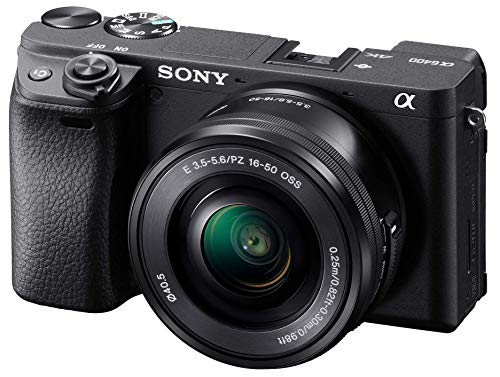
The screen flips up rather than out to the side, which can be blocked by a microphone on the hot shoe
The a6400 suits beginners who expect to grow into photography rather than stay on auto. It includes a real electronic viewfinder for bright days, a screen that flips up for selfies, and Sony’s Real-Time Eye AF and tracking, which remain strong for portraits and moving subjects. The metal body feels a step above the plastic starter models and the E-mount lens range is the deepest in this guide. Its menus are older and less guided than the newest rivals, so expect a slightly longer learning curve in exchange for the stronger long-term platform.
Which One Fits Your Situation
First Camera for Family and Travel Photos
Pick the Canon EOS R50. The guided menus, dependable eye detection and light kit zoom make it the least intimidating way to get sharper family photos than a phone, and the flip screen handles group selfies without a tripod partner. The Nikon Z 30 is the alternative if an even smaller bag footprint matters more.
Starting a Vlog or Video Channel
Pick the Sony ZV-E10 II. Its forward-flipping screen, built-in directional microphone with windscreen, one-touch background blur and long battery life are all aimed at solo creators. The Nikon Z 30 runs it close for longer continuous recordings such as lessons, podcasts and streams filmed from a desk.
Learning Manual Controls Step by Step
Pick the Sony a6400. The viewfinder, twin dials and deep E-mount system reward the effort of moving from auto to aperture and manual modes, and the tracking autofocus keeps results sharp while you experiment. The Canon EOS R50 is gentler at the very start thanks to its guided interface explaining each setting.
Simple Photos Without Video Ambitions
Pick the Canon EOS R100. If the camera will mostly take stills of family, school events and trips, its fixed screen and basic controls stop being drawbacks and its simplicity becomes the point. Spend the saved effort learning composition, and add a faster prime lens later if indoor photos need help.
Common Mistakes
- Ordering a body-only listing by mistake and having no lens to shoot with on the first day.
- Choosing a camera with a fixed screen and then trying to vlog with it.
- Ignoring the lens mount, then finding the lenses you want are not made for your system.
- Buying the largest bundle of third-party accessories instead of the standard kit from the camera maker.
- Skipping a memory card, since most camera kits do not include one in the box.
Frequently Asked Questions
Is a kit lens good enough for a beginner?
Yes. The 18-45mm and 16-50mm zooms bundled in these listings cover wide scenes, everyday snapshots and portraits, which is exactly the range a beginner shoots most. Learn on the kit lens for several months, notice which focal length you use most, and only then consider a prime or telephoto that matches your actual habits.
Do beginners need a viewfinder?
Not necessarily. Screen-based shooting feels natural if you are coming from a phone, and most vlogging cameras omit the viewfinder entirely. A viewfinder helps in bright sunlight and steadies the camera against your face for stills. If you plan to shoot outdoors at midday often, the a6400 or R100 design will suit you better.
Can these cameras record good video for YouTube?
Yes. All five record 4K video, and the Sony ZV-E10 II and Nikon Z 30 are designed specifically around creators, with flip screens and microphone support. For talking-head videos, clear audio matters as much as resolution, so plan for the built-in microphone options first and an external microphone only when your format demands it.
How many megapixels does a beginner need?
Around 24 megapixels, which is what most cameras here offer, is more than enough for large prints, cropping and social sharing. Sensor size and autofocus quality affect beginner results far more than small resolution differences. Do not pay extra for megapixels alone; put the priority on the kit lens, screen design and autofocus system instead.